Blogs
|
Back in 2012 I posted about different card decks I’ve seen and used while facilitating (mostly face to face.) It turned out to be a popular post, so when I see new decks (like with then FABULOUS Groupworks Deck came out) I blog about them. Today one of the folks from the Open Innovators group at the Hague University (where I have fun facilitating in the autumn) posted about a deck I hadn’t seen on facilitating behavior change and I thought I’d add this one to the evolving list. (Update: Here is another great list.)The behavior change cards come from the Artefact Group. (Hey, they are in Seattle!) Here is their blurb:This set of 23 cards was crafted to help designers, researchers, and anyone facing a behavior change challenge, think through strategies to nudge people toward positive behavioral outcomes. They work particularly well when you have in mind a specific behavior that you want to change (e.g., "We want to get more people to ride the bus," or, "We want people to stop smoking"). We focused on making these strategies easy to grasp, incorporate, and act on.The set is divided into five thematic sections, each featuring strategies and examples that will help you understand whythe strategies are effective, and prompt you to think through how they might be used.Make it personal: The persuasive power of "me" and "my" (cards 1- 6)Tip the scales: How perceptions of losses and gains influence our choices (cards 7- 13)Craft the journey: Why the entire experience matters (cards 14 - 17)Set up the options: Setting the stage for the desired decision (cards 18 - 21)Keep it simple: Avoiding undesirable outcomes (cards 22 - 23)These cards should be considered a starting point, to help you think through strategies and brainstorm new ideas you may not have previously considered. Keep in mind that any given strategy, on its own, is unlikely to be a silver bullet. And while some of these strategies may work in the short term, they don’t necessarily guarantee long-term success. At the end of the day, the only way to make sure that what you’re designing has the outcome you desire is to test it with real people.From a quick glance the cards have a product design perspective, which makes sense as the Artefact Group works in design. I scrolled through them to consider how they might work the international development contexts I often find myself. The images feel pretty North American to me, and reflect a strong consumer culture. I could see using the cards in the US even outside of commercial product design because the examples are familiar and would offer good thinking triggers. In international development the consumer emphasis and images would not translate well. The tips and ideas are useful and I think they would resonate in other cultures with appropriate reframing for different contexts. A little side note: As an American, I have to be particularly sensitive as people often default to a "disregard that - just another American thing" when I bring them, even if the thing I bring is NOT American. Our cultural identities and our perceptions are strong! My behavior is deeply connected to my roots, so the act of carrying ideas across boundaries is essential to my work, but it has to be done with quite a bit of care. And I still mess up!This is one of the really tough things with any of these decks is how to make them useful across domains and cultures. Wouldn’t it be nice to be able to take a deck and remix the images? Tweak the text and create a remixed deck altogether? Someone clever could program that, I’m sure.In the meantime, the resonance of all the decks I’ve tried is the mix of the visual with the images, the tactile experience of the cards (moving them around, sharing them in a group setting, etc.) and the triggers that both the images and the words offer us to step, at least slightly, out of our practiced thinking and behaving pathways. (Yeah, ruts!)While you are on the Artefact Group’s site, check out their larger set of resources. I was drawn a couple of other toolkit elements with a strong visual focus. Check out Designing for Empathy and their relationship map (see also their whitepaper which is actually YELLOW!) . I have also downloaded "Designing to Incentivize" but haven’t read it yet. (And yes, I still dislike the word "incentivize" but I’m very interested in when incentives help and when they screw things up!) Clearly these folks have a good sense of humor. Here is a screen shot of the page with the summary of the incentives piece:
Nancy White
.
Blog
.
<span class='date ' tip=''><i class='icon-time'></i> Aug 18, 2015 11:29pm</span>
|
|
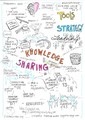
Thanks to a serendipitous conversation with friends im Benson (@ourfounder), Tonianne DeMaria Barry (@sprezzatura), I was able to pop in for 1/4 of the Seattle #KaizenCamp. If I were pitching a Hollywood script, I’d say "Open Space" meets "Lean Coffee" meets "Liberating Structures." A group of smart, engaged people conversing about ways of working in a lovely place (The Foundry) with good food and coffee.I sat at two rounds of "lean coffee," one about Storytelling and the Arts, and one about Knowledge Sharing. I made a couple of sketch notes and captured some of the resources and I wanted to get them up and out, tagged and tweeted, before I rushed on to the next thing. (Rushing— sucks!) So here we go…Storytelling and the Arts URLs/Resources Shared:Liberating Structures http://www.liberatingstructures.comFred Hutchison "Innerspace" project (could not quickly find a link!)Frye Museum "Here, Now"Group Works Deck (facilitation pattern language) http://www.groupworksdeck.orgVisuals Speak cardsGraphic Facilitation resources from me (and our summer workshop)Facilitation Card DecksAnd finally, the image I drew to summarize my learnings, using the Liberating Structure "Drawing Together." Knowledge Sharing URLs/Resources:The Knowledge Sharing Toolkit http://www.kstoolkit.orgLiberating Structures http://www.liberatingstructures.comCynefin complexity framework from http://www.cognitive-edge.com
Nancy White
.
Blog
.
<span class='date ' tip=''><i class='icon-time'></i> Aug 18, 2015 11:29pm</span>
|
|
There is so much to learn from the THE THREE "RULES" OF ETEGAMI, a Japanese style of painting. I could write so much more, but it could not add to these three amazing rules.1 The motto of Etegami is "It’s fine to be clumsy. It’s good to be clumsy." What matters is whether or not you have put your heart into your painting, not whether the painting is a fine work of art. Your earnestness communicates to the person who receives the card, and touches his heart. Each etegami should express something of the character of the person who painted it.2 Etegami is a one-shot deal; there is no underdrawing or practicing on another piece of paper before doing the actual painting. Every time you paint an etegami, you are, so to speak, "broadcasting live." There is no concept of a "failed" or "ruined" etegami. Every etegami you paint should be placed in the mail box and sent on its way to someone else.3 Unlike many other forms of traditional Japanese art, there is no "model" etegami painted by a master for you to imitate. The flowers and vegetables created by the hand of God are your best "models." Observe these models closely before you begin to paint them.via dosankodebbie’s etegami notebook: a review of the "rules" of etegami.And because it is Monday and it has been so long since I posted a Monday video, here is Etegami in practice:
Nancy White
.
Blog
.
<span class='date ' tip=''><i class='icon-time'></i> Aug 18, 2015 11:28pm</span>
|
|
Note: Faciliplay: Play as an Online Facilitation Technique was a post I wrote way back in the early life of this blog, before I moved to WordPress. A lot of those posts feel lost, so I’m picking a few and reposting them. Some, like this one on play, need updating or at least contextualizing. This was written in the day when online interaction was centered on discussion forums, so the advice is framed in that context. It is almost quaint. Today we can imagine and improvise a much broader repertoire of faciliplay. If you have any great examples, please add them in the comments.Faciliplay: Play as an Online Facilitation Technique (in discussion forums)by choconancyFirst of all, the members of the Fall 1999 Knowledge Ecology University (now defunct) Online Facilitation Course inspired me write this. Their wonderful expressions in "Just Three Words" confirmed what I’ve felt for a while that play can be a liberating, powerful tool for groups and individuals.The online manifestations for play are varied. Like offline humor, we need to take care that our choices respect or bridge personal and cultural differences. Segmentation of "playful" spaces and activities help maintain topical and project work in the "serious" spaces. The terms "playful" and "serious" don’t need to be so separate, so inviolate. They can be merged with some attention to group dynamics. But that’s for another time.What I’d like to share here are some resources on incorporating play into your facilitation repertoire for online conference/discussion spaces; a "bag of toys," if you will, which you can spread out on the "virtual table." These are primarily for use in asynchronous bulletin boards or discussion forums but if you use your imagination, I bet you can find many other ways to use them.As background on the use of play in facilitation, you may wish to check out Bernie DeKoven’s "Deep Fun" site at http://www.deepfun.com. Bernie is the author of The Well-Played Game. Bernie has created a playground to share ideas on play for facilitators, therapists and healers. Check it out. Add your ideas. Let’s play!Playful TopicsThere is a rich tradition in online play topics from social communities across the net. Many of them became "institutions" at such places as the http://www.well.com, and other communities. Here are some examples:Just One Word/Just Three Words: as the topic explains, each post has a word limitation. This creates a quick interaction opportunity, allows each poster to "riff" of the previous and can spawn some interesting creative runs. Good for freeing up thinking while brainstorming or using other divergent, creative facilitation strategies. Safe place for anyone to post… you don’t have to create a great literary piece to post! If you want to ratchet it up a notch, try approaches like "rhyme two lines:"It’s better to jump in and try it yourself Than let a forum linger, closed, on the shelf…The Never-Ending Story/Limericks, and other Continuation Topics: Group creation of a story, poem or limerick draws people back because they want to see how the next person has built on their contribution. This also demonstrates how responding to others and reciprocity can help build the group. Plus, it can be a creative kick in the pants. In watching these topic grow, a facilitator can also get an idea of what type of team player each participant might be. There will be those who will adhere to the story line, and those who always veer. Both are important parts of a group. But it’s nice to know who is who, eh?Community History Topics: Online architect Amy Jo Kim is a strong proponent of a community "backstory" or history. By providing space for the group to record and comment on the history, to actually create it, you can provide ownership and a place to be "seen" by the community through specific additions to the record.Bars/Grills/Coffeeshops: Hanging out, shooting the breeze, playing around with simulacrums of food and drink is very engaging for a portion of your group. These places are safe spots to let us slowly reveal more about ourselves, both in and out of our "task" or "work/business" concepts. They provide some metaphorical "body language." What Are You Reading/Eating/Thinking: Easy places to drop information, have fun without a high intellectual or time overhead. And get great tips on new books, movies or chocolate recipies. Good for longer term communities and groups. These topics don’t build the critical mass in shorter, time-delimited settings unless, of course, it is a topic about chocolate (only kidding…) Confess and Be Absolved: Sometimes you just need to get it off your chest. Master storyteller Paul Beleserene of Vancouver BC started this topic in the old Electric Minds. It was a people magnet. It could be funny, poignant, it could be a safe way to apologize to a fellow community member. And Paul, as host, absolved every single person and sent him or her on their way feeling just a little bit better about themselves. I confess I still love this topic.Playful Applications of Interaction SpacesBulletin Boards/Forums/Discussions: Consider creating a segment of your online space for play to ensure it doesn’t jeopardize your "serious" topics. Not everyone likes to goof around. Make sure your names reflect the purpose of those spaces.Chat: Provide open chat room areas for people to spontaneously chat and get to know, talk about non-project issues or just goof around. Schedule chat times for the group as a coffee klatch or cocktail party as a "get to know" function.Instant Messengers: Quick compliments, silly one liners or a quick emoticon wink can create deeper context for your more serious, recorded activities in a conference. Find a place to share IM contacts.Playful Communications ToolsEmoticons: There are tons of emoticons that serve as text "body language." Some disdain them, but it is helpful to include a little if you are using irony or sarcasm in the space where tone and facial expression are absent. Here are a few along with some acronyms commonly used online: or are smiley faces composed of a colon and a right parenthesis mark or or or ;-> is a more tongue in cheek smile, wink, employing a semi-colon :O = surprised face (and there are hundreds of variations)<g> = grinD or = big grin:/ or :-/ = chagrin, disappointment, etc. or = frownbtw = by the wayimo = in my opinion (or imho = in my humble opinion)rotfl = rolling on the floor laughinglol = laughing out loudFor more emoticons, see Emoticons: Online Body LanguageImages and Fonts: Sometimes adding a little color or images to a communication can help enhance a message. Here is one of my favorite animated gifs that a member of one of my online communities made in reference to people getting a wee bit too touchy about issues and feeling attacked: Image courtesy of Steve Ruano, ©1999 (alas, gif is gone!)Snarfs and Post-a-thons: These are really down-and-dirty techniques that are not for just any online interaction space, but for die-hard online addicts. Most often found in purely social communities, they can inspire quite intense participation and engagement. Now, definitions! A snarf is a post with a particularly toothsome number. Century snarfs (100, 200, 300) are pretty common in big, public communities. Big K’s (1,000’s) are rarer and more prized. Then there are the other odd number combinations which include repeat numbers (555, or the infamous Karen Valentine snarf — 222), numbers with other significance (777, 69) or sometimes people like to snarf numbers that have personal significance like birthdays (51558) or anniversaries. It is totally silly. It can catch like wildfire. It can also destroy the experience for those who do not like snarfing. Consider yourself warned.Post-A-Thons are group efforts to drive up the number of posts in a topic. Again, this is a social community thing. Don’t ask me. I’ve done it. I confess. I really burned out a wrist one weekend trying to get 7,000 posts in one topic as a form of social protest to site management’ capricious decisions at a community that will go unnamed. But you would be amazed how it builds a group over a short period of time. Kind of like a strong, addictive drug. Again, you’ve been warned…. The best way to understand these playful applications is to visit some online communities and join in. (ALAS, so many of these are gone!) Check out http://www.electricminds.org, (especially the Playground conference),http://www.salon.com (click on Table Talk) or http://www.utne.com . And have fun!Image of purple lady from Jeffrey Zeldman Presents
Nancy White
.
Blog
.
<span class='date ' tip=''><i class='icon-time'></i> Aug 18, 2015 11:28pm</span>
|
|
Some words just catch us.I was scanning this transcript of an interview with Clay Shirky (thank you Twitter network) and came across this quote:So the collaborative penumbra around 3-D printing is a place where you don’t have to have someone who can do everything—from having the idea to making the mesh to printing it. You can start having division of labor. So you’ve got all of these small groups that are just working together like studios and still able to play on a world stage.via The disruptive power of collaboration: An interview with Clay Shirky | McKinsey & Company.I just loved the term, "collaborative penumbra."I continue to rabbit away at what has become my hobby research, how international development organizations plan for, pick, provision, monitor and evaluate their online collaboration platforms. What comes up again and again is that organizations have very limited ideas about the meaning and possibilities of collaboration. There is still this idea that it is composed of two things: document sharing and project management. And document sharing covers the territory of "knowledge sharing." Sigh. I keep looking for useful anecdotes to demonstrate the rainbow of possibilities. But each example then points to the fact that this is a fundamental shift in the way work is done. That scares people. They like their "habitus" as Zaid Hassan talks about in his book, "The Social Labs Revolution."Here is another quote from the interview (emphasis mine):"And all the way at the other end of the spectrum, you’ve got these collaborative environments where almost no one has to coordinate with anybody else. When I upload something to Thingiverse, or I make an edit on Wikipedia, it’s not like I need anybody else’s help or permission. So the collaborative range is expanding. The tight groups have more resources, and the loose groups can be much more loosely coordinated and operate at a much larger scale. And I think the people who think about collaboration want to know what’s happening to it, and the answer is everything."Go read the rest. There are more gems there… go to the source!
Nancy White
.
Blog
.
<span class='date ' tip=''><i class='icon-time'></i> Aug 18, 2015 11:28pm</span>
|
|
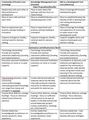
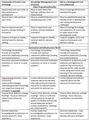
Warning: LONG thinking-out-loud post! And note, the best stuff is in the comments!For the last month or so there have been some very interesting conversations on the KM4Dev email discussion. One of them has been a reflection on the governance of KM4Dev, particularly the role of the current Core Group and the overall business model. KM4Dev has been around for over 10 years and grown to be a vibrant and respected community. It certainly is one of my very central communities of practice and I love and fret over it a lot. I was on the Core group from its inception until about 18 months ago when I stepped out, partly from burnout, partly from frustration, but keenly aware that my "just do it" attitude had longer term ramifications of people expecting me and the other "do-ers" to, well, just get it done. That is dis-empowering. (And I can be, um, a little dominating? ) Now, back to the question of governance.This begs the question, what kind of animal IS KM4Dev? A community of practice (CoP)? A loose, affiliated network of people interested in KM in development? A service? How should this inform our choices? Are there sufficient distinctions in the governance and supporting infrastructure of a larger network, versus a more bounded community? Or is it more dependent on the nature of that community or network?As I read the messages, there were those who advocated a strong group for governance, for a paid secretariat staff. For formality. Others suggested developing multiple local offshoots and centralize the support functions in those volunteer hubs. From ideas for spin offs that embrace diverse business models, pleas for funding, to a very open, "let it be" model, all struck me as models that reflected each person’s world view. Some fundamentally urged the group to become more of an advocate for KM in development as a community, while others kept a more CoP-traditional perspective of the group as a place for its own learning. Do academics prefer more formality? What causes people to think paid positions are more generative for the community than volunteering? Are there ramifications beyond reliability? SOOOO many things to consider.I then sent the following message to the group (this is just part of the message. It was a rambly, early morning thing!):Here is my perception (NOT FACT) Those of us who prefer structure and some degree of formality discussed more about governance and secretariat (and I suppose, have a clearer idea about that differentiation. It is not a language used outside of development much here in the US!) Those of us who prefer informality (or perhaps, just fleeing too much structure!) emphasize the more emergent and adhoc options. Those who are taking a strong community lens focus on the community aspects of volunteerism and self organization. Those with a KM lens, (which in fact, have not stood out in my memory of reading these threads — INTERESTING) advocate for structures which focus on KM and finally, some have advocated structure that in fact advocates for international development.How do we find your way forward with all these options? Furthermore, how do you discern options where people will "walk their talk" and pick up leadership. It is all nice and good to say "YOU should do this or that." But in the end, if no one in the community is willing to step up to the tasks, all is probably lost. If no one cares enough to value and use what is provided - paid or not, what is it worth?Consider this: if you look at the number of people posting in the thread (less than 20?) compared to the list of members on the email list and/or our NING site (2500+), how do you reconcile the individual advocacy for a particular path forward with the huge, silent, larger whole? To whom does this "governance" thing matter? Is it important to those who simply see KM4Dev as an email list they can dip into when they need it - a sort of service? To those who avidly read, but rarely or never post for a host of reasons? To those of us who perhaps love KM4dev too much? So I started doodling. Is it useful to examine our governance and structure questions from a variety of lenses, and then find out if there is a sweet spot between them? From the conversation I discerned three possible lenses or perspectives including: Community, KM (in development) and Advocacy for KM in Development. Here is what I sketched on my notebook.For example, philosophically I absolute love the idea that KM4Dev should be more altruistic and more actively serve development. The realist in me says this is a structural mismatch, that indeed, by focusing on community and KM, we become stronger agents of that wider change through other, more formalized structures (of our orgs, etc) and we become INFLUENCERS as a network. But that does not exclude forays into advocacy. The lenses do not imply "either/or" but simply help us explore from a variety of perspectives. Here is a very imperfect first try and looking across the three example lenses : If I look across the three, there is less difference between the community lens and the domain lens, while the advocacy lens presents unique benefits and needs. As noted above, it looks to be a far stretch for KM4Dev to pull that off. That said, KM4Dev might be an amazing incubator for a more focused group working on the advocacy.So the next level of resource implications are about the degree of importance KM4Dev activities and artifacts have to be polished to the level of acceptance by development organizations and practitioners outside of the community. In other words, legitimacy beyond the community. This seems to require more infrastructure and thus more refined business models (funding) and processes.So the question is, what does the community want and what can it pull off. And I’d personally add, how does it differentiate itself from yet another organization?Help me improve my thinking.P.S. If you look back up to the first image, you will see some scribbling on the lower right of the notebook sketch. I’ll post about that in the next blog post. Stay tuned for Part 2 of Nancy’s Ramblings….
Nancy White
.
Blog
.
<span class='date ' tip=''><i class='icon-time'></i> Aug 18, 2015 11:28pm</span>
|
|
Well, it is on the schedule for tomorrow morning, so I had better be ready for my keynote at the Canadian Network for Innovation in Education Conference. This is a placeholder blog where I’ll post the talk artifacts (song lyrics, visuals, and whatever else we create) and resources. The resources below are placeholder for now, so stand by until tomorrow night! I’m talking without slides, with uke and probably (as usual) trying to pack too much in. But hey, if you aren’t learning, why do a keynote, right? Wish me luckResourcesLiberating Structures http:/www.liberatingstructures.comDigital Habitats: stewarding technology for communities http://bit.ly/RFhWzOCynefin framework http://en.wikipedia.org/wiki/CynefinThe Social Labs Revolution http://social-labs.org/Aldo deMoor’s site on pattern language for collaboration (ask him about his Blackboard study) http://www.communitysense.nl/Group process pattern language http://www.groupworksdeck.orgSource of the Curtis Ogden quote: http://interactioninstitute.org/blog/2014/05/14/do-acracy-vs-democracy/Source of the Wenger-Trayner quote http://cpsquare.org/2014/05/reporting-on-systems-convening-and-landscapes-of-practice-conference/Intellectual Estuaries of Alice MacGillivray http://onlinefacilitation.wikispaces.com/CNIE+2014+Intellectual+EstuariesRelated and Interesting Stuffhttp://citeseerx.ist.psu.edu/viewdoc/download?doi=10.1.1.130.1129&rep=rep1&type=pdf
Nancy White
.
Blog
.
<span class='date ' tip=''><i class='icon-time'></i> Aug 18, 2015 11:27pm</span>
|
|
I strongly recommend all of you who (still!) read this blog and who work in nonprofits, care about the role of service in our communities, have been served or have served a non profit, (etc. etc. etc.) to read Vu Le’s post, General operating funds, admin expenses, and why we nonprofits are our own worst enemies . So that means ALL of you who are readers from the US. And this applies to NGOs as well, so that probably means ALL of you.I have worked for non profits as staff, consultant and/or volunteer most of my adult life and all I can say to Vu is AMEN! The farce of fundraising language used to drive me crazy as a non profit staffer. The way we fund and account for money in US non profits is insane, and take that in the context of the proliferation of non profits, the whole thing starts sinking. And if you think the US is crazy, look into large NGOs and UN agencies. Mama mia!And at whose expense is this farce? Those we seek to serve. So get our your checkbook, bitcoin, credit card or even cash. Walk over to your favorite non profit and give them money with no strings.Accountability you say? Here is the magic sauce. After you fork over your money, fork over your time. Pay attention to what’s happening around you. Then you become part of the real accountability process. Is something good happening that the organization with and for its constituency? Is there learning happening through both successes and failures? Are more people talking about and aware of the organization and its mission, bringing in more support?Vu also outlined 7 ways non profit staff can help shift towards more honest funding and accountability. I’m putting in some snippets here:Stop saying "100% (or 98%, or 95% or whatever) of your donations go into programming." …The next time you attend a fundraising event that says "100% of your donations…," forward them this blog post. Or, raise your paddle and then loudly proclaim, "I want my donations to support administrative expenses!"Publicly recognize funders who support general operating funds. …These are our strongest allies, like Unmi Song of the Lloyd A. Fry Foundation or Paul Shoemaker of Social Venture Partners. Stop using the term "overhead" or "indirect." We need to change these crappy words and phrases with all the negative connotations. …From now on, in all our annual reports and in general, let’s call it "critical infrastructure" or "core support" or "Things We Need in Order to Do Our Jobs and Make the World Better Dammit" (TWNODOJMWBD)Stop artificially deflating numbers and apologizing for percentage spent on critical infrastructure…."There is no standardized way to calculate admin expenses, so the comparison is meaningless. Plus, we strongly believe that investing in critical infrastructure like staff development leads to much better outcomes."Stop seeking the approval of charity watchdog organizations like Charity Navigator, Charity Watch, and Better Business Bureau/Wise Giving Alliance. …until they figure out a way to accurately measure organizations’ effectiveness, their rankings are misleading and distracting.Write in a line-item for reserve funds in your organization’s operating budget. … Build in a line for reserves, and if anyone whines about it, explain why it’s important and ask them to support it or else to stop asking about sustainability.Push back, and be willing to lose a funder. …Sometimes, telling the truth or refusing to break down our expenses and forcing people to focus on outcomes, or refusing to accept funds to do things that would ultimately cost us more than it brings in revenues, may cost us a funder or donor, but this short-term sacrifice may be far better for our organization and for our sector in the long run.I’ve forked over my money. Now I have to hold ME accountable and return to forking over time.A confession: A few years ago I did some work for Social Venture Partners here in Seattle. I was deeply impressed with how they operated at every level and their strong intentions to see and work at a systems level. I almost became an investor, but personally felt outside of the culture of the other investors so I shied away. But as I read Vu’s comments about the value and importance of how SVP invests in its communities with both money and time, I am reminded how important these approaches are. Whether I join an SVP, or I find a kindred approach, I reconfirm my intention that it is not just what we do to support our communities, but how we do. And funding all facets of the work is critical.
Nancy White
.
Blog
.
<span class='date ' tip=''><i class='icon-time'></i> Aug 18, 2015 11:27pm</span>
|
|
I was bummed to miss the September Liberating Structures Seattle User Group meeting as it was about using LS online. (If you don’t know what LS is, click that first link!)I am passionately interested in this. Today, I had a chance to see the notes and a "minimum specs" document in the works and was VERY HAPPY. (I uploaded it to GoogleDrive so we can all play with it together! I hope that is OK with Keith McCandless, Jim Best, Alex Dunne and Fisher Qua. Guys, ok?I first want to share the notes. I’m adding my comments in bold.User Group members got a good start on Min Specs for bringing virtual meetings back to life.1. Distributing information must not be the purpose of convening a virtual meeting. Firmly invite participants read the material in advance-no ifs, ands, or buts. Stop the madness of long-boring-stifling-ineffective PPT presentations. AMEN. True online and offline, but I think even more toxic online. People multitask themselves into oblivion. This is also one of the challenging points to convey to "meeting" sponsors. So thinking more about how to engage positively and proactively on this set up issue is on my mind.2. Asking questions that invite participants to explore a shared challenge must be part of the virtual meeting purpose. For example, if the topic is "what can we do about poor employee engagement scores?," a set of productive questions could include: How do you know when people are not engaged? What do you do to maintain your own focus? How do you help others do the same? What makes it difficult to maintain a positive and engaged attitude? Do you know anyone or any group who is able to maintain high engagement consistently or effortlessly? How?? Are any good ideas coming to mind? Any 15% Solutions? What first steps could we take together? [Adapted from Discovery and Action Dialogue] This set of questions sparks both self-discovery and action to move forward together. Ahhhhh. For me this is true online and offline. So the online elements are how people respond (voice, text, group size — i.e. 1-2.4-all) and what type of design and facilitation enables coherence if we cross different communication forms. Some people type. Some need to talk, etc. 3. Contributing ideas must be very simple and safe for every participant. More coming… This builds on my last note from an operational perspective. I also think that sometimes the anonymity or semi-anonymity of the online space can actually make it "safer" than F2F.via Liberating Structures - User Group Startup.I keep waffling between the approach - find and adapt a tool and grow from there the practices, or use whatever is at hand and adapt the practices. The practical me says the latter. What do you think? (See more of our collective thinking here and here.)P.S. I know, it has been a LONG time since I blogged. Longest gap ever. And this is a fast post, but I figured better fast than never!
Nancy White
.
Blog
.
<span class='date ' tip=''><i class='icon-time'></i> Aug 18, 2015 11:27pm</span>
|
|
Warning: The following was written in haste, has repetition and can very much stand a good edit. But if I don’t hit post, this won’t go out. Life is busy.Earlier today my friend and respected KM/KS practitioner Ian Thorpe Tweeted a link to a consultancy announcement.Consultancy for Writing, Editing and Production of UNICEF Knowledge Exchange Toolbox (with my team) pls share http://t.co/XpzMwxgZVW— Ian Thorpe (@ithorpe) October 8, 2014I blithely responded: @peterballantyne @ithorpe @GH_Knowledge http://t.co/xbuZx56wvz Sounds like wheel recreation http://t.co/mFaIbIrNIY & many others! — Nancy White (@NancyWhite) October 8, 2014Now, I was pretty tough on Ian and did not offer any context. Later this morning he posted a really thoughtful blog post on the thinking behind his organization’s desire to have their own internal Knowledge Exchange Toolbox. I started to post a comment, but the comment grew so large I decided a post here was called for.I’m going to quote a sizable chunk of his post and then my response. But if this interests you, please go read the whole thing.But, I think there are actually a few good reasons to reinvent or at least adapt.People working in an organization tend to have more trust, and are thus more likely to use something that has been specifically created for them and has some form of official endorsement. This sounds like "not invented here syndrome" - but it’s not quite that.The advantages of developing your own toolkit (or platform, strategy, bibliography, taxonomy etc.) include:It can be written in the kind of language (and jargon and buzzwords) people in the organization understandIt can include tools selected to meet the specific needs of the organization, and the tools selected (even when sourced from elsewhere) can be adapted and tailored to the organizational context.The tools can be tested on real organizational problems and the feedback obtained can be used to improve them and help communicate them better.The tools can go through a quality review and sign off process that the organization understands and respects.The fact that the toolbox is developed together with internal as well as external expertise means that staff know who they can follow-up with for advice and support on when and how to use them.Overall these points mean that there is a sense of organizational ownership of the toolbox meaning not only is it officially sanctioned, but also officially supported and adapted to what the organization needs.Thanks for adding really useful context, Ian. I find your reasoning totally logical. I have also heard it many times at other organizations.First, can we connect usage to the factors you noted above in the context of ownership? Has anyone objectively looked at how usage of such a tool matters if it is internal or external?I strongly suspect usage is driven by other, less visible, more informal things like seeing other peers use the tools, having colleagues they value endorse or role model, etc. I don’t have data. But in considering this, I wonder about our assumptions aboutthe use of these toolkits in general, andthe importance of the points you make toward use (and improvements going forward).Or are we just masking or missing the deeper, underlying issues? I really don’t know and I’d really LIKE to know.I confess, I get totally frustrated when my own clients hire me to do things that are already done. The KS Toolkit came out of that frustration after three separate clients asked for the SAME thing and the differentiating factor was not whether the tool was on a private intranet or public, but branding. Yes, branding. Does that change the value of the toolkit? Should it? Now, that said, over time the existing Toolkit product needs improvement. And your focus on adaptation is to me SUPER IMPORTANT. The issue of how to create and improve cooperatively sourced products alone deserves another blog post. (Note to self). But lets go back to rationale for internal vs. cooperative, shared resources.I think a lot of the points you make are right on, but I also worry about some of the underlying causes that make these ideas of "needing internal validation," "our language" and stuff so important in a field like international development and cooperation. From where I sit, I thought our field has shared goals. So why do we have these counterproductive insider, invented here, not invented here, we are different from everyone else, etc attitudes? What do they represent? Control? Power? Fear? Territoriality? Reliance on the status quo?Do we really understand if and why we need our unique products? Or is our vision too limited to see both the value and possibility for, and the mechanisms to cooperatively create, use, and improve resources?Let me get more specific and look at each of Ian’s reasons for a customized product.It can be written in the kind of language (and jargon and buzzwords) people in the organization understand. Having a sense of identity and ownership is important. But reinforcing organizational buzzwords and jargon does not help wider cooperation in the development field, no? Why might we want to reinforce this behavior? Think of the "beneficiaries" as well. Doesn’t our insider language and jargon distance us from them? It can include tools selected to meet the specific needs of the organization, and the tools selected (even when sourced from elsewhere) can be adapted and tailored to the organizational context. This is a compelling argument for internal platforms. Curation, adaptation and tailoring are really useful "value added" to a toolkit. But why not do that adaptation in a public, cooperative platform where others can learn from what you do, particularly those closest to your organizational domains. Why not do it WITH those others? Hm, as I write this, I wonder about shifting from "organizational" context to "practice" or "domain" context. So if tool X is more useful in working with Y population, lets make sure all of us working with Y population have access to that tool adaptation and can contribute towards its ongoing improvement?The tools can be tested on real organizational problems and the feedback obtained can be used to improve them and help communicate them better. I can’t figure out the value of this being internal to an organization. Again, it relates to the practice, no? The global public good here is pretty darn high…The tools can go through a quality review and sign off process that the organization understands and respects. Why can’t this happen in a cooperative platform? Heck, it might even contribute to better interorganization practices as a whole? And who is the arbiter of quality at the tool level when we rarely seem to care or pay attention at the application level where the IMPACT happens, right?The fact that the toolbox is developed together with internal as well as external expertise means that staff know who they can follow-up with for advice and support on when and how to use them. Again, I can imagine this same value on a public/cooperative platform.Adaptation is an important thing we ignore very often in KM. There is too much sense that replication and scaling are the solution. So I deeply respect this aspect of adaptation that I sense in Ian’s response.My "yes, and" perspective is that what you learn/do through adaptation is of value beyond your org. And insights come from beyond your org. And your org exists for public good, right? Why not build more nuanced structures that facilitate open, public, crowdsourced resources, ones that add that layers of adaptation - for example there are other orgs sharing UNICEF’s targets and goals who might also benefit from this need to improve tools.I fully know that what I’m suggesting is not easy. We have learned through the KSToolkit.org that people DO have different needs, need the material organized or expressed differently. But those reasons don’t appear to be organizational. They appear to be driven by the users context and practice. And that these contexts and practices vary WITHIN organizations, and are often shared ACROSS organizations. And cooperatively creating and supporting a shared resource doesn’t fit into most organizational process or budgeting parameters, so when we see things like the KSToolkit.org we are seeing the work of committed individuals who make things happen, often in spite of their organizations. (And deep bow to all of you, including Ian who has been a toolkit supporter.)I think there is a much larger, more valuable proposition of opening up some of this work across organizations and getting off the focus on our organizations. Lets focus on our goals and the ultimate reason we are doing this. So every human being has the right to and access to food, clean water, housing, education and human dignity.So what are the barriers? What is it we are really avoiding by sharing this "knowledge infrastructure?" Is it convenience? When we work for global public good, what is the cost of this "convenience?" What is keeping us from shifting towards more cooperative and networked structures which can tap a potentially broader and more diverse set of expertise, share the burden of refinement, adaptation, improvement and just simply reduce this recreation? We all need and benefit from the process of adapting and improving tools. Many of the tools in a Knowledge Exchange toolkit will have relevance to wider audiences. At the same time, so much of what is in these toolkits is not rocket science. What IS rocket sciences is the organizational shifts and changes that actually enable people to USE this stuff. Toolkits are just a resource. And this opens another Pandora’s box for another blog post!I’ll say it. Lets start breaking down more walls instead of using what is convenient and conventional to maintain the status quo. And a little starting point like KM and KS toolkits seems like an ideal laboratory to find new, cooperative, networked ways to maximize value and minimize waste. Let’s recreate and improve together. Otherwise we are supporting wheel reinvention.And Ian, thanks for lighting me up to write about this today. You have helped me clarify my thinking. The next two things we need to consider is what it takes to cooperatively create global public goods (and a lot of good people have been doing some great work in other domains from which we can learn), and how to move the tools from toolboxes into practice!via Why we sometimes need to reinvent the wheel | KM on a dollar a day.
Nancy White
.
Blog
.
<span class='date ' tip=''><i class='icon-time'></i> Aug 18, 2015 11:27pm</span>
|