Blogs
|
In my life, I've had some of the most profound and important realizations about myself when I've been working with relative strangers. I was thinking about this in regard to my upcoming Dream It/Do It Retreat where I'll be bringing together a group of people who don't know each other to work on their creative projects.
I've found that people are often reluctant to do really personal work around people they don't know. They have concerns about trust and privacy that I definitely understand. We are worried about being judged and with strangers, we don't know what their reactions will be to who we are.
Interestingly, though, I think it's with strangers that we can sometimes most be ourselves. We are not tied into the identities that people close to us most expect. We are not forced into certain roles that we are required to play depending on the group we are with.
In a group of relative strangers, we are free to be whoever we want to be. When we are working on new ideas, it is actually this freedom from the tyranny of our old roles and identities that is most needed. This gives us the space to try on new ways of being without someone we know well judging us for it.
The reality is, the people we know well are often as invested in our old identities as we are. Especially at work, our bonds have been formed around us being a certain type of person in a certain role.
When we are exploring new options, especially in the early stages, I've found that it can actually be more effective to do this work with people we don't know who are engaged in the same quest. They are less wedded to our old identities and have nothing to lose if we talk about changing. They don't have hidden or unconscious motives to keep us where we are and so, are more likely to be objective and supportive in their interactions with us. And they understand on a deeper level the changes that we are going through and so can relate better to the emotions and decisions we face along the way.
I find that there's a special intimacy that can develop among strangers who are on a journey together, an intimacy that can be more helpful than that we find with our friends, families and co-workers.
Have you experienced this? How has it helped you to grow?
______________________________________________________________________
If you want to enjoy the intimacy of strangers as you plan for a new creative venture, join me on November 9-11 for the Dream It/Do It Retreat.
Michele Martin
.
Blog
.
<span class='date ' tip=''><i class='icon-time'></i> Aug 19, 2015 04:18am</span>
|
|
As regular readers know, I've been focusing a lot on conversation this year. I see it as a tremendous professional development opportunity, but I also think conversations are fun.
For the past several months, I've been kicking around the idea of bringing together two of my favorite things--food and conversation--into a fun event that would help build connections and community. One of my observations of modern society--at least in the US--is that we don't have opportunities to connect with different people who have had different experiences. Homophily is definitely a problem.
I've also been frustrated at times with the quality of discussions. We spend an awful lot of time talking about things that don't really matter and not as much time pursuing intriguing questions that help us share our authentic selves and build a sense of community.
With those thoughts in mind, my husband and I have devised a local event, a Conversation Cafe. We're bringing together 30 strangers to share three courses and three rounds of conversation. For each course, diners will move to a new table where they will meet new people and engage around new questions. It's meant to entertain, challenge, inspire and, most of all, connect people to one another.
We're planning our first Cafe for September 29, 2012 from 7-9 p.m. If you're in the Philadelphia area and want to join us, registration info is here. We'd love to see you!
Michele Martin
.
Blog
.
<span class='date ' tip=''><i class='icon-time'></i> Aug 19, 2015 04:18am</span>
|
|
One of the best tools I've found for my own ongoing professional development is a career journal.
I began journaling for professional purposes about 7 years ago when I bought an artist's sketchbook to maintain all of my ideas related to a particular project I was working on. Since then, my journaling practices have evolved and in this post I want to explore the different ways you can use a career journal to support your positive professional development.
Career Journals as Collections
In their most basic iterations, career journals are a place to collect things--ideas, quotes, articles, images, lists, notes, etc. I have journals that are devoted to specific projects as well as more general journals and in each, I'm collecting those snippets of ideas and information that feed my thinking processes.
When I read, I jot down quotes in my journal. When I find an article I will print it out and glue it into my journal. I also use it to collect random Post-It notes, images I find in magazines that may convey an idea or experience I want to capture, and examples of work that others do that I admire or think may have connections to my own work.
Career Journals to Process
Another way I use my career journals is to process information. I'm someone who often writes her way to understanding, so my journals are filled with entries where I've re-worked ideas, thought through connections, reflected on experiences and applied my understanding of concepts from other fields to the work that I do. There are also tons of mindmaps and VisualsSpeak collages I've used to process my ideas.
Often when I'm stuck, I will use my career journal to work through an idea or concept as a way to get it out of my head and on to paper.
Career Journals to Document
Another way to use a career journal is to document. To me, this is separate from collecting items and ideas in your journal. Documenting information carries more intent. I'm writing things down for a purpose, rather than to collect it for some future use.
Mostly I document plans and "to do lists" in my journals. Often I will see the evolution of a project this way, how it morphs from one iteration to another. But you could also use your journal to document achievements , experiments like the 30 Day Trial, your One Sentence Journal responses or to keep your question log.
Ways I Haven't Used My Journals. . . But Could
In looking through my journals to write this post, I also noticed how I typically do NOT use my journal, but really could.
For reflections on my daily work habits--I know that I'm not as productive and effective as I could be and that if I made more of an effort to use my journal to log and experiment with daily career habits, I think that could be very helpful. I recently finished Gretchen Rubin's Happiness Project and was struck with how successful she was in using her Resolution charts to reach her happiness goals. I think it's an idea that could carry over to careers and to working with in my career journal.
To document emotional reactions to career experiences--I tend to save my emotions for my personal journaling, but think that if I did more to document where I feel energized or inspired by plans, there might be some value in that. I'm trying to live a more integrated life, where I'm not keeping my emotions out of my work, but my journals don't reflect this.
To reflect on what I'm learning about myself and how I like to work--Periodically I will feel stuck or run up against a need to re-invent myself and my journals often reflect this in terms of the projects I pursue and document there. But it might be helpful if I did something that was more ongoing--even weekly or monthly check-ins with myself about how I'm developing. Keeping track of how I'm developing could show me sooner when I'm starting to get restless or dissatisfied.
Debriefing on what did/didn't work with a particular activity--This is a habit I want to make more regular in terms of actually documenting my after action reviews. I tend to do these mentally, but not actually write anything down, which could be helpful for later review. Occasionally I've done that type of reflection here on my blog, but it's not included in my journals.
Benefits of Career Journaling
As I was going through my journals, I started thinking more about what I've found beneficial in using them:
Great method for helping me process learning--I learn by talking to people and by writing. So writing my ideas, thoughts, concepts, etc. in my career journals has given me a lot of insight and understanding. It's also helped me find clarity on the projects I'm working on. I have a quote over my desk that says "Our job is not to control our idea. Our job is to figure out what our idea is (and wants to be) and then bring it into being." My journals help me do that.
An archive of ideas to return to when I need inspiration--Sometimes I have ideas that I write in my journals and then other parts of my life get in the way. When I need inspiration, I can go back through my books and find nuggets that suggest new things I could do or new twists on what I've been doing. Very helpful.
I can see trends over time--As I go through my journals, I see ideas that I keep returning to and questions I keep wrestling with. Recognizing one of these trends led me to write a paper with a colleague at Rutgers University. Another trend was in-person retreats, which led me to plan for Dream It/Do It. I don't always act on my ideas immediatly. But when I see that I'm returning to something again and again, I start looking for ways to bring it into being.
Some Career Journaling Resources
If you're interested in starting your own career journal, here are some resources to get you going:
6 Ways Keeping a Career Journal Can Help Your Career
Using a Career Journal to Further Your Career Development and Empower Your Job Search
How Journaling Can Improve Your Career
Self-Discovery Through Journal Writing
8 Great Journaling Tips
Journal Your Way to a New Job
I'd love to hear from you if you keep a career journal. How do you use it? How has it helped you in your career?
______________________________________________________________________
Do you have a creative dream you want to bring to fruition? Join me on November 9-11 for the Dream It/Do It Retreat.
Michele Martin
.
Blog
.
<span class='date ' tip=''><i class='icon-time'></i> Aug 19, 2015 04:18am</span>
|
|
When I first started playing around with writing about career journals, I asked on Twitter if anyone was using them. I heard back from Harold Jarche, who wondered if a blog "counts" as a journal. Of course it does and many of us use our blogs this way, collecting, processing, documenting and thinking things through.
But I tend to think that we may miss something if our blogs are our only form of career journaling. Some things are just too raw to share publicly--ill-formed ideas you're barely ready to see yourself, let alone share with others. Or stories of how something may have gone horribly wrong, but you still want to learn from it. Some things that are in my career journal feel too personal to share--the work I do when I'm feeling really stuck comes to mind here. And certainly to do lists and plans aren't blog fodder.
I also have to say that in terms of process, my career journals answer a different need. When I do a blog post here, it's more for my readers than for me. Sometimes there's overlap, but often there isn't. When I write in my career journals, I'm doing that strictly for me with no worries about an audience or what they need or want to read.
I also, quite simply, enjoy the physical process of writing in a book. It taps into a different part of my brain, is more liberating and free-form. When I blog, there's a structure to it that doesn't always fit in with where I need to go in my thinking. And typing, for me, is about producing and communicating, while writing has a quality of "thinking out loud" that I just don't get from my keyboard.
Ultimately, I think that my blog has been a great complement to my written journal. Writing for an audience forces me to put some of my thoughts together in a more coherent way. It has also encouraged me to be more reflective about what I do and how I do it. For example, many posts here have been a result of conversations I've had with people or insights I've had in working with them that didn't make it to my career journal. If I didn't blog, then I'm not sure I would have been as good at teasing them out.
In the end, I would say that blogging as a form of career journaling can be incredibly helpful. At the same time, I also think you need a space to maintain those things that aren't ready for public consumption. I'd argue that you want to have both to get the full benefits of the process.
What do you think? How do blogging and career journaling fit together?
Michele Martin
.
Blog
.
<span class='date ' tip=''><i class='icon-time'></i> Aug 19, 2015 04:18am</span>
|
|
Last week Allison Jones pointed to an excellent post from Amber Nusland on letting go of the things you're not good at. In it she says:
Part of why people struggle in their careers is our collective insistence that they do things that they aren’t really good at. Almost every bit of business literature you read these days (don’t even get me started on some of it) talks about how successful business leaders are great mentors, or great team leaders, or great strategists, or great marketers. And I just don’t think it’s that simple.
There’s probably something that you don’t know much about, or that you aren’t really good at, but that you’ve felt compelled to do anyway because it was considered a prerequisite of a promotion or a different step in your career that you wanted to take. You probably struggled with it, felt guilty that you weren’t good at it, hesitated to talk to your boss about it because if you admitted that it wasn’t your strong suit, you’d probably limit your career development opportunities.
I agree wholeheartedly with this sentiment! While we all have things that we have to do that are just part of the job, many times I find that people become unhappy or are less succesful in their careers than they could be because they are playing to their weaknesses instead of to their strengths. They begin to doubt themselves instead of realizing that they are trapped in a cycle of spending so much time trying to fix their weaknesses that they have no time to build on their strengths.
Letting go of your weaknesses is one area where "letting go" is good for your career. But this got me to thinking about other things we need to let go of in order to focus on our positive professional development. Some other things to let go of:
Bad situations that aren't going to change--They say that the definition of insanity is doing the same thing over and over again, expecting a different result. When you find yourself in the same scenario again and again, it's time to move on from it. Change your reactions or change your situtation, but don't stick with what doesn't work.
The wrong crowd--Are you surrounded by complainers, work-obssessed people, or overly competitive folks? Do you find that you're drained after your interactions with certain people? Whether we realize it or not, the wrong people can contribute in a major way to our career unhappiness. Sometimes we have to let go of the people who sap our energy or suck us into their negative ways of viewing the world.
Outmoded ways of thinking--I meet many people who cling to old paradigms when all around them has changed. They are fighting against a tide that will eventually beat them down. I also see many people who have old beliefs about themselves--their capabilities, their options, and so forth. It's helpful to step back sometimes and look at how our thinking may need to change and adapt to the circumstances we are now in. Often it is our own thinking patterns that may be holding us back.
Our clutter--Periodically I will look around my office and realize that I've allowed piles of paper, books, files, etc. to build up around me. Simultaneously I will notice that my focus and energy has evaporated. Simply cleaning up and clearing out opens up new space for me to think and create.
"Good enough"--Sometimes we find ourselves in situations that are "good enough," but somehow they still sap our energy. We can't put our finger on it, but we know that it's not where we want to be. In these cases, we do well to consider if letting go of good enough might not make way for "great" to find us.
Although we may tend to think that our careers are based on what we build with, they are also based on what we release. We have to let go of the old and what isn't working to make space for the new. This can require a leap of faith, but it's faith well-placed.
What do you need to let go?
______________________________________________________________________
Do you have a creative dream you want to bring to fruition? Join me on November 9-11 for the Dream It/Do It Retreat--two days of solid dreaming and work time to move your career or your creative project forward. You'll be surrounded by a supportive group of kindred spirits, plus great food and access to a fully-stocked art studio!
Michele Martin
.
Blog
.
<span class='date ' tip=''><i class='icon-time'></i> Aug 19, 2015 04:17am</span>
|
|
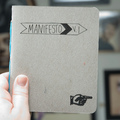
Thanks to Robyn Jay, I was pointed this morning to John Hagel's Labor Day Manifesto for the Passionate, Creative Worker. What a gem! Eleven simple truths to live our lives by. Here are a few that stood out for me:
Blaze new trails.
John says, "There is no established path to greatness." So true.
In Crossing the Unknown Sea, David Whyte writes:
"A life’s work is not a series of stepping-stones onto which we calmly
place our feet, but more like an ocean crossing where there is no path,
only a heading, a direction, which, of itself, is in conversation with
the elements."
I've found that when the path ahead is clear, then we are most
likely on someone else's journey. It's when we step off the road that we
meet our own personal avenue to greatness. It won't be clear. We can
only choose direction over destination.
Recognize that institutions exist to serve people.
Sometimes I fear we've forgotten this, that we live our lives in thrall to the insitutions we've created rather than seeing that they should be serving us.
Umair Haque's Bettnerness: Econmics for Humans gets this, outlining a capitalism that is based in humanity, rather than in institutions. I think that each of us has a responsibility to ourselves and to each other to contribute to creating insititutions that reflect the best of who we are, serving all of us.
Escape the trap of wasting time by being busy.
Tim Kreider's manifesto on the "busy" trap reminds us that we are making ourselves feel anxious and that we are missing the best parts of our lives in pursuit of being "busy." But are you really THAT busy? How are you choosing to spend your time? Because it's always a choice. Creative people need to give themselves the space for serendipity and fallowness and the opportunity for the muse to visit. "Busyness" is the enemy of greatness.
Continually reinvent ourselves.
John writes:
We know that passion is the key to personal growth; it compels us to
take risks, overcome fears, and attempt things never done before. And as
a result, passion transforms the passionate. Only as we continually
reinvent ourselves can we start to discover and reach our full
potential.
"Passion transforms the passionate." Yes! But we must allow our passions to transform and shape us. When we cling too tightly to who we've been and to who others think we should be, then we strangle that passion. We lose the power of that wonderful energy.
Reinvention is a very practical need, too. We live in a world where fast, transformative change is a given, not an option. We can choose to reinvent ourselves or we can react to circumstances that will force us to change. I personally prefer the first option.
As John's manifesto concludes , we need to help each other on this creative journey:
We all have the potential to become passionate creative workers. Let us
join forces and help each other along the way to become better, far
better, than we ever could alone. And, let’s have a hell of a time along
the way.
That's what we need most--community and engagement, working with each other to go further than we can on our own.
This is the energy and spirit I want to cultivate through the Dream It/Do It Retreat, one where we support each other in our creative journeys and in our development as passionate people. We need quiet contemplation for our thoughts to percolate and spirited, supportive, nurturing discussions to further shape and refine our creativity.
What do you think of this manifesto? How do you see yourself living out these principles?
______________________________________________________________________
Do you have a creative dream you want to bring to fruition? Join me on November 9-11 for the Dream It/Do It Retreat.
Michele Martin
.
Blog
.
<span class='date ' tip=''><i class='icon-time'></i> Aug 19, 2015 04:17am</span>
|
|
A few weeks ago I read Gretchen Rubin's Happiness Project, which chronicles Gretchen's year of personal experiments to increase her happiness--her version of the 30-Day trial! .
One section on goals vs. resolutions really struck a chord with me. This is what she writes on her blog about it:
You hit a goal, you achieve a goal. You keep a resolution.
I think that some objectives are better characterized as resolutions, others, as goals.
"Run in a marathon" or "Become fluent in Spanish" is a good goal. It’s specific. It’s easy to tell when it has been achieved. Once you’ve done it, you’ve done it!
"Eat more vegetables" or "Stop gossiping," or "Exercise" is better cast as a resolution. You won’t wake up one morning and find that you’ve achieved it. It’s something that you have to resolve to do, every day, forever. You’ll never be done with it.
. . . it can be easy to get discouraged when you’re trying to hit a goal. What if it takes longer than you expected? What if it’s harder than you expected? And what happens once you’ve reached your goal? Say you’ve run the marathon. What now - do you stop exercising? Do you set a new goal?
With resolutions, the expectations are different. Each day, I try to live up to my resolutions. Sometimes I succeed, sometimes I fail, but every day is a clean slate and a fresh opportunity. I never expect to be done with my resolutions, so I don’t get discouraged when they stay challenging. Which they do.
This idea of goals vs. resolutions really resonated for me in regard to the work we do in our careers because I think that ongoing professional development is largely about keeping resolutions. While having goals can be helpful, they also require us to have some sense of the destination--where it is we want to end up.
But so many of us work in a world where the destination is often unclear, or we are in the midst of transition, so we are working on direction, not destination. In those cases, resolutions seem far more appropriate for what we want to do. They are a way to keep moving forward, to keep developing.
Career resolutions are really the habits we create for ourselves that we do on a regular basis. How do we spend that first hour of work? What rituals have we created for ourselves daily, weekly, monthly?
Goals give us a sense of destination, while resolutions are the habits that can take us there. And even when our goals feel unclear, we can still keep our resolutions as a strategy for continuing to develop even if we feel stuck or lost.
What do you think of this idea of career resolutions vs. career goals? Does the concept of career resolutions resonate for you?
______________________________________________________________________
Do you have a creative dream you want to bring to fruition? Join me on November 9-11 for the Dream It/Do It Retreat--two days of solid dreaming and work time to move your career or creative project forward. You'll be surrounded by a supportive group of kindred spirits, plus great food and access to a fully-stocked art studio!
Michele Martin
.
Blog
.
<span class='date ' tip=''><i class='icon-time'></i> Aug 19, 2015 04:17am</span>
|
|
I first "met" Soha El Borno online when she was working at Wild Apricot as a Web Copywriter and blogger. She always posted great content and was an excellent resource for social media and nonprofit work.
When I put out a call for your career transition stories, she responded to me quickly by email, telling me she wanted to share hers.
As you'll see, she's like a lot of women who go through career transition when they start trying to juggle a desire to be home with their children with their professional identities. My own foray into self-employment began when motherhood and career aspirations collided and I know a lot of other women who pursue the freelance route to better meet their needs for career and family.
Here's Soha's story:
Q. Can you give us some background on yourself, just for some context?
I hold a bachelor's degree in Marketing and published my first article about a year after I graduated. I started out doing marketing writing -- specifically marketing communications and PR - for a few years. I then moved to a software company, where I did all their copywriting and blogging. I transitioned into freelance writing gradually over the years. During that time, I held my full-time day jobs and took onfreelance assignments on evenings and weekends.
Q. Like happens for many women, your career change was precipitated by starting a family and juggling the demands of family and working. How did that factor into your deciding about what new career direction you wanted to go in? How has that shaped your career identity?
Deciding to get into freelancing really came about as a natural next step for me. I always loved writing and got to do a lot of it in all my previous roles, but being a parent was also a high priority for me. I knew that if I was happy with myself and my career, that I was going to be a better mother. I also wanted more flexibility to be with my children. It just seemed like the right choice and I'm happy I took that step.
Q. What kinds of emotions have you dealt with in making the transition? How have you dealt with them?
I'd freelanced before, so I knew the basic drill. I took on extra freelance assignments while working full-time but this time around I didn't have the security of a job. So the pressure was stronger and I needed to find a lot more work. Emotionally, it was very hard, but worth the pain. I was determined to make it work so I started marketing a lot. I began by telling all my colleagues and friends that I was freelancing and many of them offered me some writing work right away. I also started using linkedIn, Facebook, Twitter and networking and that helped me get more work.
Q. What has been most challenging for you in making the transition?
The biggest challenge was juggling motherhood and work all at the same time. Trying to fit in freelancing where I can while delivering a high level of quality in my work was overwhelming. So I learned to be to a very early riser and got all of my writing work done in the early morning. That was the best time for me to finish my work and get some peace and quiet.
Q. What has been most rewarding?
There a lot of rewards. I love the flexibility and the fact that I can be involved in my children's life. And it's a wonderful mental exercise every day. I'm always learning and building my skills and meeting different people.
Q. What would you do differently if you could do it all over again?
Honestly, I wouldn't change a thing.
Q. What advice do you have for other people who want to make a transition? What was the most valuable advice you received from someone else.
Transitioning into freelancing takes time and patience. But don't let that scare you. If this is what you truly want, then go for it. Never give up on your dreams. When I was first starting out, I was working full-time and taking on extra freelance assignments. I worked during the day and on many evenings and weekends and all my hard work has paid off. If you're determined to make it happen, you will find a way.
Michele Martin
.
Blog
.
<span class='date ' tip=''><i class='icon-time'></i> Aug 19, 2015 04:16am</span>
|
|
Just about a year ago, I wrote a post about the dark side of creation--that time when we draw into ourselves to let things ferment. Harriet Wakelam, whose own experiences inspired my post, talks about it this way:
I have recently been through one of those 'life reinventions'. Unlike the current 'sexy' portrayal of creativity the process was absorbing, consuming and sometimes dark and scary. During the process I switched off from my networks. One minute I was talking, the next I was disconnected.
This is me--one minute I was talking and the next I disconnected. For months I was full of ideas and plans and then, like that, they switched off. I found that I had gone as far as I could go at that time in talking about careers and career re-invention and professional development. My blog posts dried up, I stayed off Twitter, my participation in LinkedIn groups dwindled and my Facebook updates have largely been about art-related topics.
At first I thought it was a temporary thing, that I just needed to take a few weeks off from the connections. But the few weeks became a few months and I felt dry as a bone. I've also felt guilty for my silence here, but silence seemed preferable to writing from the dry, silent place.
I've discovered, over time, that this is how my creativity works. Deeply productive and abundant periods of growth followed, inevitably, by long periods of fallowness. I cannot anticipate or control the times when the Muse is silent, any more than I can force the periods of creative abundance to occur. Each has its own season and I can only honor both periods, the yin and the yang of the creative process.
As we enter 2013, instead of a New Year's resolution, I am going with a "Word of the Year"--a word that can guide my activities and my intentions. My word for this year is "Release." I chose it because I turn 50 in September and as I move into a new phase of my life, it feels important to me to let go of the habits, thoughts, activities and connections that no longer serve me well. After almost 50 years, I need to make some space for new things in my life.
One of the things I want to release is the judgement I place on myself for the fallow periods. I also want to release the pressure to always "produce" and the need to "say something, "when silence is really what's called for. Sometimes the most learning and growth takes place in the gaps.
Here's hoping that in release, the fallow fields begin to produce again. . .
Michele Martin
.
Blog
.
<span class='date ' tip=''><i class='icon-time'></i> Aug 19, 2015 04:16am</span>
|
|
For the past several months, I've been doing more work than usual with people who have been laid off from their jobs. I've listened to their stories of how the lay-offs occurred--usually in a brutally swift and cruel fashion--and been witness to their pain at having done all the right things, only to be told their services are no longer needed. It's heart-breaking, really, to see how they try to recover from this assault, accepting their disposability as inevitable in some ways.
I contrast this with the marketing messages we receive from companies and other organizations about the need to re-use and recycle. Inherent in this is the idea that we can be more responsible stewards of the earth's resources, finding ways to renew and re-use things, rather than throwing them away.
While this spirit seems to be alive and well when it comes to material goods, I don't see the same spirit animating our approach to people. But in my mind, "renewable and sustainable" isn't just about re-filling water bottles or recycling paper. I think it starts with seeing people as renewable resources, rather than as objects we use up and then throw away.
I cannot tell you the damage this is doing to workers, this idea that you are only as good as the last thing you did for the company. I see people who have poured their hearts and souls into doing what they were asked to do, into "doing the right thing," only to be told that this wasn't enough. And we remove them from our institutions just as efficiently as we take out the trash, with little regard for the fact that these are human beings, many of whom have tied up much of their sense of self-worth in the work we are now telling them we no longer need them to do.
In the past, through this blog, I've focused on how we as individuals need to keep renewing and recycling ourselves through a process of lifelong learning and adapting to change. I still believe this is true. But I also believe that, through our institutions, we are doing great spiritual and emotional damage to ourselves by consistently communicating to people that they are disposable and that they are on their own in the process of recycling and renewing.
To torture my metaphor, we are treating people like garbage--throwing them into landfills and just letting them waste away there. We are doing nothing to provide them with the structures and resources and emotional supports that would help them go through that renewal process.
I've come to realize that part of the reason for my absence here has been that I'm grappling with what it means for me to support people in their careers when they are operating in an environment that so regularly communicates with them about their disposability. Yes, I can talk about positive professional development, but for most people, this is used to develop their capacities in service to organizations and institutions that are essentially sucking them dry. Once they've been used up, they are cast aside.
Somehow it feels almost immoral to me to advise people on how to play the game when the game is so clearly rigged against them.
I understand all the reasons for companies shedding jobs, including globalization and the impact that technology is having on work. But that doesn't excuse us from treating people decently. In fact, I would argue that it REQUIRES us to come up with better, more humane ways to treat people who are caught up in the winds of these changes.
I'm only beginning to grapple with where all of this leads me. I'm not sure that there are easy answers. But I do know that it is only in the calling out of what's really going on that we can start to find better ways to handle the changes we are dealing with.
For now, many of us can pretend like it won't happen to us, so it's easy for us to hide our heads in the sand. But I promise you, every person I've spoken with who's been laid off (many of them repeatedly) thought the same way you did. Like unplanned pregnancies or car accidents, a layoff is something that is going to happen to someone else. But increasingly, my friend, that is not true.
We owe it to ourselves and to each other to begin talking about what we need to do to bring humanity back into these transitions, to find ways to support all of us in being able to manage the renewal process. We can't treat people as disposable, as garbage for someone else to take care of. We have a responsibility to ourselves and to others to find better ways to help each other through these upheavals.
Michele Martin
.
Blog
.
<span class='date ' tip=''><i class='icon-time'></i> Aug 19, 2015 04:16am</span>
|