Blogs
|
When you’re creating courses using Articulate Studio or Storyline you’ve got a very effective and highly customizable pre-built player available. It allows [...]
Serious Learning Blog
.
Blog
.
<span class='date ' tip=''><i class='icon-time'></i> Aug 20, 2015 07:14am</span>
|
|
A little while ago Blair Rorani started a Twitter drawathon to get people excited about his new book Everybody draw now in which [...]
Serious Learning Blog
.
Blog
.
<span class='date ' tip=''><i class='icon-time'></i> Aug 20, 2015 07:14am</span>
|
|
Have you ever watched a screencast video where you where thinking "What the heck am I looking at?!". The items on the [...]
Serious Learning Blog
.
Blog
.
<span class='date ' tip=''><i class='icon-time'></i> Aug 20, 2015 07:14am</span>
|
|
Today I’ve uploaded my first entry to the 2015 Articulate Guru awards. The Guru awards are hosted by Articulate and are open [...]
Serious Learning Blog
.
Blog
.
<span class='date ' tip=''><i class='icon-time'></i> Aug 20, 2015 07:14am</span>
|
|
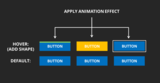
Hey Everyone, In this post I’ll share how you can add that little extra to your project by animating your buttons. In [...]
Serious Learning Blog
.
Blog
.
<span class='date ' tip=''><i class='icon-time'></i> Aug 20, 2015 07:14am</span>
|
|
Inspire and Motivate with Video
The two areas that most organizations use video in the talent management life cycle is to educate and teach. While these are great things to do and we fully support them, there’s a couple other areas I think organizations can use video to get more out of their people:
1. Inspiration
There’s a unbelievable example from Dove about "real dad moments" that has received over 11 million hits on YouTube the video says nothing about their products or services, they just inspire dads to be thankful for the gift that we’ve been given and it makes us want to be a better dads. If I am an employee that works for Dove, there is no question I am more inspired to work for the company that employs me. Check out the video below and feel free to share it within your organization.
2. Motivation
There’s Tony Robbins and a plethora of other motivational speakers out there who speak at conferences or sign books for employees. Of course these men and women can be a little corny at times but they are great at what they do and people need motivation. Even the best athletes in the world need jolts of motivation when they don’t feel like practicing. Employees need the same thing! Some days we need a bolt of energy and passion from someone other than our boss. (they might even have the opposite effect)
Get someone in your organization a curate motivational content from places like Youtube or Vimeo. Then share a daily, weekly or monthly motivational video across the organization. I promise it will help move the needle for a short period of time. Check out an example motivational video below you could share within your organization.
Keep the use of video in mind what you are looking to inspire and motivate your employees in the future.
WeSkill Blog
.
Blog
.
<span class='date ' tip=''><i class='icon-time'></i> Aug 20, 2015 07:14am</span>
|
|
The Changing Face of eLearning: Model Restaurants
There’s no doubt about it - corporate HR and Training managers are focused on training. According to Josh Bersin the training industry as a whole grew 15% this year and it will continue to grow even more in the coming years. With all the focus on training, the question we most often get is: "How do we make sure our eLearning initiatives are successful?"
I compare successful eLearning initiatives to restaurants. 9 out of 10 restaurants fail in their first year. We can model the behaviors of the 10 percent of successful restaurants when looking at ways to improve our eLearning initiatives. I’ve pinpointed these three areas:
Location, Location, Location. Location is vitally important. There isn’t a successful restaurant owner in the world who doesn’t scope out real estate locations. Many chain restaurants spend millions of dollars to find the right locations to increase the probably of success. eLearning is no different. You must have a GREAT location to house eLearning that invites the learner in, makes it easy to get to, and doesn’t recall bad eLearning experiences, because we have all had them. According to Bersin 61% of companies plan to replace their Learning Management System (LMS) in the next 18 months. Why? Because technology is a huge factor in the success or failure of corporate learning in the future.
Content- The quickest way to ensure people don’t come back to your restaurant is to serve bad food. The restaurants I frequent serve food that makes my mouth water just thinking about it. The same goes with creating eLearning. If content is created with the best tools (ingredients), by great chefs (content developers and contributors), the probability of engagement becomes exponentially higher. As a best practice, use video to align with todays trends and technology.
Service. In order for a restaurant to have long-term success, the staff is a critical component. Even the best meals in the world can be ruined by bad service. eLearning needs company executives, managers, and employees to engage and promote to ensure its success. This can come in the form of executive sponsorship, social interaction at the end of courses, video feedback, or user generated success examples.
Putting these Ideas to Work
Don’t let your next training initiative be like the 90 percent of restaurants that fail. Before you build or rebuild eLearning, consider your location, the quality of your content, and how you’re going to get support from your team members.
WeSkill Blog
.
Blog
.
<span class='date ' tip=''><i class='icon-time'></i> Aug 20, 2015 07:13am</span>
|
|
Make a HUGE Impact with Microlearning
Microlearning is quickly becoming a trend in the training industry. At WeSkill, we built our new Learning Engagement Platform around video-based microlearning. Microlearning videos and mobile learning go together like chocolate and peanut butter, peas and carrots, Hoda and Kathie Lee, Zach and Screech… you get the point.
By our definition, microlearning is bite-sized content a learner can consume in 5 minutes or less. Added video to the mix and you get learning that engages and can be taken at the pivotal moment when the learner actually needs it.
Here are 3 tips that will help you make a huge impact with microlearning videos:
1. Limit yourself to one learning objective per video. We like to focus on the WHY or the HOW or answering one specific question. Often times course creators want to add more and more content. People are smart and we need to start thinking of them that way. If they want more information, they will seek it out. Microlearning is about discovery and self-paced learning. It’s not a check-the-box type of solution.
2. Keep your scripts under 500 words. As a rule of thumb, every 120 words equals one minute of video. If you can achieve your learning objective in 300 words, even better. If you find yourself going over 500 words, go back to your learning objective and ask yourself if you could break the objective down even further. If it’s not the learning objective, get an editor to help you trim the fat.
3. Be Visual. No matter how engaging your content may be, if your video is just a talking head, you will loose your audience way before the one-minute mark. If you’re not demonstrating something in front of the camera, use cutaway shots or b-roll, build graphics, use still images, and add text to create visual interest and support learning. You don’t want to overly stimulate learners, so make sure your visuals are well thought out and enhance to the learning experience.
Microlearning may be new to your organization, but it certainly is the future of corporate training. Email me at christina@weskill.com if you have a question about creating microlearning videos or to request a free consultation.
WeSkill Blog
.
Blog
.
<span class='date ' tip=''><i class='icon-time'></i> Aug 20, 2015 07:13am</span>
|
|
Microlearning Experiences: The Future of Professional Education
The world of professional education is in the midst of the biggest transition in MY lifetime. We’re moving from a world of highly produced (costly), time-consuming, top-down, check the box training and towards Microlearning. We define Microlearning as quick, short educational experiences driven by the learner. What’s powering this movement? It’s a cheaper, faster, more effective way to produce the desired results.
The top three things that drive successful Microlearning experiences are:
1. Alignment. Today’s professional learner have an average attention span of approximately 10 minutes. With this knowledge, we can see what’s currently going on in most organizations isn’t going to stick. An average webinar is 6 times the average attention span. Not to mention, an eLearning course that clocks in at 24 times longer and then there’s the multi-day in-person courses. I’ll let you do the math on that one.
The point is, it’s critical to keep the length of content within a learner’s attention span. If you can get your content across in under half the time (5 minutes or less), you’ll have the highest potential for success.
2. Engagement. Engagement is a huge part of the learner experience. My favorite way to get learners engaged is through social learning. What’s interesting is you don’t have to recreate Facebook to be a part of social learning. It’s as simple as allowing learners to see who has taken a course and sharing how they’ve put ideas from the educational material into action in the real world. All of a sudden you have knowledge transfer taking place from the content and their peers!
3. Results. I know it’s all about the results so the question is "Did anyone really learn?" To answer this question, learners need to be able to do or apply what was taught. And they need to be able to show how they do it. Microlearning experiences are the future (or the now) of professional education because those great experiences allow for new ways to measure results. Think about a learner uploading a video of themselves (right from their mobile device) doing a task to prove they’re able to apply concepts. Certainly every piece of educational content won’t have this potential payoff at the end so it’s critical that the learner be able to get back to this content right when they need it. Going 10 clicks deep into an LMS or CRM just isn’t going to cut it.
When you bring alignment, engagement and results together with amazing Microlearning experiences, everyone wins.
Want to check out Microlearning experiences at no cost? Email us at social@weskill.com
WeSkill Blog
.
Blog
.
<span class='date ' tip=''><i class='icon-time'></i> Aug 20, 2015 07:13am</span>
|
|
Why Microlearning is "Hot" in Professional Education
I hate to admit it but I am one of the majority of Americans that now spend approximately 14 hours of their day consuming media. I check social media and catch up on email in the morning, read educational articles on LinkedIn, tweet and watch videos throughout the day at work, and catch a little TV at night. But I have noticed an emerging trend in my media consumption - I want my content in small, bite-sized pieces that get to the point quickly. This is exactly why "Microlearning" is hot in the professional education world.
Microlearning is all about aligning with today’s short attention span learner.
For those of you who aren’t familiar Microlearning is defined as "Small, specific bursts of content that ensure knowledge is transferred in a visible, tangible, and/or measurable way."
Since most scientist agree that 75% of learning happens visually here is an example of what effective Microlearning looks like:
If you want to make great Microlearning, ensure your initiative has:
A Hook. Creating a hook is an excellent way to position the learning objectives and drum up interest. For some subjects this can be done through something as simple as a catchy title and a description that sells the content. The most important part about a hook is your ability to understand your learners and their "why" for taking your training.
A Microlearning Asset that Accomplishes 3 Keys. Regardless of what your learning objective is, these components will ensure knowledge is transferred. (At WeSkill, our medium of choice is video.)
One learning objective per asset
Stories, mnemonic devices, and/or lists that make content relatable and memorable
A time limit of 5 minutes of less. If you’re writing a video script, use our baseline measure of 600 or less words. (The average person delivers 120 words per minute on video.)
The Ability to Measure Knowledge Transfer. Effective Microlearning ensures knowledge is transferred in a visible, tangible, or measurable way. You can use traditional ways of measuring knowledge transfer (multiple-choice questions) or more advanced methods, like requiring learners to respond with video, pictures, completed documents or engage with the content.
Try these 3 ideas out when making your own microlearning or reach out to us and we will see how we can help! You can see the steps we go though at WeSkill in this quick 1 minute video.
WeSkill Blog
.
Blog
.
<span class='date ' tip=''><i class='icon-time'></i> Aug 20, 2015 07:13am</span>
|