Blogs
|
Mobile Learning Week (MLW) is the flagship UNESCO conference on mobile technologies and education. Held annually, this event assembles a diverse group of stakeholders to share how affordable and widespread mobile technologies can advance Education for All goals. The theme of MLW 2014 is teachers Teachers are the pillars of education systems and their involvement... Read More ›
Classroom Aid
.
Blog
.
<span class='date ' tip=''><i class='icon-time'></i> Aug 20, 2015 07:33am</span>
|
|
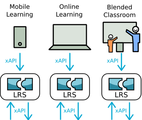
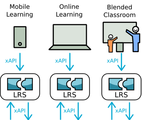
Ever since the beginning of the Internet age, all things and processes can be digitized and hence exchanged through the Internet are only getting more decentralized and democratized. This trend includes learner-centered learning, and that a learner can involve in plotting his/her own learning story, personalized his/her own learning journey. Can you tell the significance of... Read More ›
Classroom Aid
.
Blog
.
<span class='date ' tip=''><i class='icon-time'></i> Aug 20, 2015 07:33am</span>
|
|
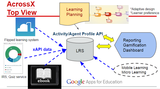
Before her school implemented the AcrossX solution, Ms. Lin used several software tools and content resources in her teaching practices, and it was a big pain to put together the workflow and data locked within different applications. AcrossX Solution Enabled by xAPI AcrossX solution solves this problem for her. Here is a top view of integrated... Read More ›
Classroom Aid
.
Blog
.
<span class='date ' tip=''><i class='icon-time'></i> Aug 20, 2015 07:33am</span>
|
|
Whenever a new communication medium arrives, people first tend to use it just like how they used existing media. For instance, many early television shows were simply radio broadcasts filmed on video, early digital textbooks were simply scanned versions of paper books, and the first online educational videos were videotaped in-person lectures. As time progresses,... Read More ›
Classroom Aid
.
Blog
.
<span class='date ' tip=''><i class='icon-time'></i> Aug 20, 2015 07:33am</span>
|
|
[Post by Greg Gammie, Implementations Manager at GeoMetrix Data Systems Inc.]
The Life Sciences Trainers & Educators Network is sharing solutions from its annual conference in a free webinar tomorrow: July 21 at 12:30 PM ET / 9:30 AM PT.
The 44th LTEN Annual Conference, held in June 2015 in Phoenix, was a successful gathering of life sciences training and education professionals, sharing, learning and networking together. Unfortunately, however, not every LTEN member was able to attend the annual event, and not every attendee was able to attend every session.
Join LTEN for this webinar to get a flavor of the 44th LTEN Annual Conference. A panel of presenters will share key takeaways from some of the most successful conference workshops and discussions.
Register today for this free, LTEN webinar. No need to be a member. Register now at LTEN webinar.
Justin Hearn
.
Blog
.
<span class='date ' tip=''><i class='icon-time'></i> Aug 20, 2015 07:33am</span>
|
|
[Post by Arden Rose, Account Manager at GeoMetrix Data Systems Inc.]
Since 1991, the Optimas Awards have been a source of ideas, direction and inspiration for human resources professionals. The Optimas Awards celebrate HR’s success at solving some of the biggest business challenges of our time. Each year, the Optimas Awards are given by Workforce magazine to recognize human resources and workforce management initiatives that achieve business results for the organization.
The Optimas Awards include more than 21 organization recognition awards across a range of categories, recognizing workforce management initiatives at organizations worldwide. They include the following.
General Excellence: Our top award, while not open to general nominations, will be selected by judges and given to the organization whose workforce management initiatives have met the standards established for at least six of the other nine categories.
Benefits: This award recognizes organizations that designed, developed or implemented innovative benefit programs that achieved organizational goals.
Business Impact: This award recognizes organizations that have developed a program to deliver significant financial impact or forge or maintain a winning edge over the organization’s competition.
Corporate Citizenship: This award recognizes organizations whose corporate citizenship programs are demonstrably and successfully linked to its employee recruiting, retention and engagement goals.
Global Outlook: This award recognizes organizations that have created a program or strategy to help the organization succeed in the world marketplace.
Innovation: This award recognizes organizations that have developed an innovative workforce management strategy that addresses a fundamental business issue.
Managing Change: This award recognizes organizations that have demonstrated adaptability and agility in successfully developing a program in response to the changing business environment.
Partnership: This award recognizes organizations that have developed or implemented a program in partnership with another constituency, either within the organization or outside of it.
Recruiting: This award recognizes organizations that developed and implemented an innovative and effective recruitment initiative that helped the organization source, attract and recruit job candidates.
Training: This award recognizes organizations that developed a targeted training program that addressed a significant corporate priority and delivered measurable results.
Vision: This award recognizes organizations that anticipated internal or external trends and responded creatively, effectively and proactively.
The 2015 nomination period is now open! Submit your nomination by 11:59 p.m CST on Monday, August 10.
For more information and to access the nomination form visit: Optimas Awards
Justin Hearn
.
Blog
.
<span class='date ' tip=''><i class='icon-time'></i> Aug 20, 2015 07:33am</span>
|
|
[Post by Greg Gammie, Implementations Manager at GeoMetrix Data Systems Inc.]
The eLearning Guild is all about sharing knowledge and decided that the learning in Austin at mLearnCon and Performance Support Symposium 2015 last month was too good not to share.
The organization has just added 22 videos of the most popular session presentations from mLearnCon Conference & Expo and the Performance Support Symposium to the Conference Archive.
To access the videos, simply create a complimentary eLearning Guild Associate account today and start your learning with concurrent session videos, including:
Designing eLearning User Interfaces for Mobile Delivery with Tim Slade
Using Workflow Performance Support to Replace or Enhance Traditional Training with Kristi Nokken
Comparing mLearning Development Tools with Joe Ganci
Getting the Most Out of User Experience in Mobile Learning with Scott McCormick
Performance Support in Action: Getting Past the Theory with Carol Leaman
Plus 17 more…
To watch now, get a complimentary membership at: eLearning Guild
If you are a full member, you have access to all keynote presentations in the conference archive.
For more information visit: eLearning Guild
Justin Hearn
.
Blog
.
<span class='date ' tip=''><i class='icon-time'></i> Aug 20, 2015 07:33am</span>
|
|
[Post by Greg Gammie, Implementation Services Manager at GeoMetrix Data Systems Inc.]
As with any project, success rests on the people involved. Team-building is one of the keys to managing any software implementation project, as are communications and coordination of resources to efficiently utilize time, skills and effort. A balanced and complementary skill mix in the project team with sensitivity and knowledge of the customer environment and processes will help ensure success. The project team must be responsive to the changing business requirements and have strong communication, analytical and problem-solving skills. The customer project manager must establish a project plan with input from the vendor, implementation specialists and the rest of the customer organization.
Following are the team members that we recommend for the implementation of our learning and talent management software. Of course, each project is different so your project may require more, fewer or different resources that those listed here, but this is a good starting point for understanding the roles and responsibilities involved in a successful implementation.
Customer Project Team
Project Sponsor
It is important to the success of a corporate software implementation to assign a "champion" or project sponsor. The project sponsor is the individual (or group representative) who has requested the project.
Responsibilities include:
Initiating and monitoring the project
Establishing project parameters
Committing resources including budget
Appointing the project manager
Developing or overseeing development of the project plan
Ensuring impediments are identified and resolved quickly
Controlling costs
Project Manager/Team Leader
The project manager will be responsible for day-to-day contact with members of both the GeoMetrix implementation team and the customer implementation team at each project stage.
Responsibilities include:
Communicating with GeoMetrix on the day-to-day activities of the project
Coordinating customer resources to the project
Building a project team and managing project personnel
Formulating actions for the project plan
Assigning tasks to customer project team members
System Administrator
The customer should identify a system administrator (SA) responsible for the overall set up and technical administration of the system. The SA role covers two distinct areas and may, on some projects, be split between two individuals. At an application level, the SA is responsible for controlling the configuration of the system and ensuring consistency of implementation across the modules. The second role of the SA covers the more technical aspects of setting up user profiles, data site management, network security, etc. In some circumstances, the IT department may carry out this role; however, all these activities are configured through the software and can be performed by a SA user.
Business Units/SMEs
At different stages of the project, it will be likely that Subject Matter Experts from different areas of the organization will need to participate in the project. These team members will provide information on business rules and standard operating procedures used within the organization that must be translated into the software system, either through configuration or custom development.
Information Technology
IT resources may be needed for various technical responsibilities that the customer must carry out. Suitable staff should be available to the project at various times during the implementation and afterwards to carry out periodic upgrades. For an installed solution, GeoMetrix can assist with installation and configuration and provide training. For a hosted solution, the host is responsible for installing and configuring the system, but the customer must consult throughout this process.
Vendor Project Team
Implementation Services Manager
The Implementation Services Manager’s principal role is to act as the project liaison and to understand and interpret the customer’s requirements and accommodate these by recommending a viable approach.
Responsibilities include:
Acting as initial post-sale contact
Working with customer to establish a project plan
Assigning and overseeing GeoMetrix implementation resources
Monitoring and overseeing all activities
Resolution of high-level issues
Implementation Coordinator
Implementation coordinators are specialists in the analysis, design and implementation of our software. They combine a solid understanding of learning/training environments with expertise in learning and performance management systems incorporating accounting, reporting, accessibility and adaptability.
Responsibilities include:
Communicating with the customer Project Manager/Team Leader
Coordinating the tasks to be completed by our implementation team
Developing Statements of Work for requested customization of reports or macros and add-ons as required
Scheduling work and ensuring completion of deliverables
Dealing with day-to-day issues as they come up
Trainer
GeoMetrix trainers offer comprehensive instructor-led training for both end-users and system administrators.
Responsibilities include:
Consulting with customer team members to determine training requirements
Developing a training scheduling
Arranging for necessary training materials
Delivering training
Development Resources/Specialists
Software development resources or specialist consultants can advise on the set up and development of procedures and the integration of business rules into the system. GeoMetrix specialists can also work with the customer organization to tailor the application to departmental workflows and business rules. This may include setting up automatic email notifications, designing specific user interfaces or integrating with ERP, financial, HR or other third party systems.
Technical Support
Technical Support personnel assist with ongoing operational issues. The technical support department handles the continuing needs of customers and deals with specific support incidents as they arise. Technical support personnel have expertise in all areas of hardware and software support related to your system.
Be aware that planning is an on-going process. Changing requirements must be effectively and efficiently managed. Effective communications are essential in the success of any project.
Justin Hearn
.
Blog
.
<span class='date ' tip=''><i class='icon-time'></i> Aug 20, 2015 07:33am</span>
|
|
In this series of articles, the Educational Technology team will be providing an insight into existing practice using technology for learning and teaching at Falmouth University and also at projects being undertaken within the wider HE sector. Our first looked at the process of Feedback and our second looks at Open Education.
The term ‘Open Education’ refers to the ethos and practices of removing barriers to, and providing and promoting new opportunities for learning. It is more about an approach and a mindset than a set of technologies or a way of teaching and is focussed around the learning community rather than the didactic teacher-student relationship. Catherine Cronin’s excellent presentation, Navigating The Marvellous which presents openness within the context of higher education and the social and technological practices of modern learners and educators.
The last few years have seen the rise of ‘Open’ on the educational agenda, in part due to the buzz around MOOCs being a disruptor to education. However, most mainstream MOOCs have been institutionalised and bent to fit existing educational practices, so we’re seeing the buzzword become less relevant. Open Education and Open Educational Resources in contrast are becoming more so, as the worldwide Open Education Week site conveys . The affordances that technology offer Open Learning have been seized around the fringes by Open Educators that seek to exploit technology and challenge educational paradigms.
Open Educational initiatives like #PHONAR, Creativity for Learning in Higher Education, #RHIZO15 and the ability to remix other open courses on P2PU are examples of community or learner centred curriculums. These approaches put the web to use as it was originally intended, for the sharing of information.
The conversation around Open Education is active in Scotland, with practitioners who have instigated Open Badges projects and in Wales where this years #OER15 conference is being hosted. The DigiLit Leicester project, who we talked about in our ET trends for 2015, also hosted the first OER Schools conference earlier this year, helping schools and colleges to further understand the use of Open Educational Resources (OER) and how to create and promote their own resources.Cable Green’s keynote from #OER15 addresses the current and future state of OER and the benefits to education and society.
Whilst researching this post, I came across a previous project that took place at Falmouth a few years back called Openspace, which promoted sharing of Open Educational Resources and corroborates existing research into the field. It states that OER use can aid recruitment, enhance institutional reputation and catalyse collaboration and uptake of new technologies. The Openspace website is no longer active, but if anyone at the institution is interested in how technology can support Open Educational practice, get in touch with the team.
TeamET Blog
.
Blog
.
<span class='date ' tip=''><i class='icon-time'></i> Aug 20, 2015 07:33am</span>
|
|
Increased connectivity both in the information and social domain, suggests Steve Wheeler leads to an online learning landscape where context and community are key. The social web has enabled us to share and gain knowledge with an immediacy and ease that challenges institutional educational models and will continue to present new opportunities for teaching and learning.We now have streams of information that we have compartmentalised into Twitter lists or Pinterest boards that are designed around our interests. Whilst this helps limit noise in terms of articles and resources that we don’t find useful, it can result in an information bubble where we aren’t being exposed to alternative arguments or opinion. Many web resources now facilitate forms of social curation, facilitating interaction around these resources. Here’s a few that I’ve found most useful:Does what it says on the tin. List.ly is a list creator with the added abilty to comment and vote up/down list items. It’s also great for curating web resources as it will pull in images and information about the links you paste in, which you can then edit. It’s a collaborative tool, so you can ask others to add to your list and in a similar way to pinterest or Tumblr, you can relist items on another list and you can embed your lists on other sites, like Learning Space for example. I recently created a list of Open Source Educational Tools and one on free Course Design Tools.Revue is a relatively new service that allows you to curate a weekly email digest that people can subscribe to or you can subscribe them to and can pull in a range of content from your existing social media tools (favourite Tweets or Facebook likes etc.). It also has a handy chrome extension that let’s you save content to your weekly/monthly digest as you browse the web. When you come to send out your news, Revue presents your curated items in an easily digestible format that you can edit and add to and then send out to readers. It also publishes these to the web under your revue user name. I had a go a few weeks back, just to test the service and I think this might be useful for professional services teams to update each other with current thinking/interesting reading in their fields.Gibbon facilitates the design of a personalised curriculum around your interests, you can curate your own learning playlists or subscribe to others and you can initiate or contribute to discussions around those resources. Gibbon also takes into account the time it takes to read/view resources so you can specify that you want a half hour digest around your interests so that you can learn in small chunks in a time/place convenient to you. This potentially has beneficial implications for CPD in that you could set aside time each week for staff to engage with their learning playlists. You can also curate playlists as a team around topics that you feel would be of benefit to your audience. I created a public playlist centred around Open and User Experience led Learning Design as these should be important considerations for academic staff and those working in technological disciplines.Personally, I’ve also started using the blog as a form of curation and where there are reference points, I’ve added links. There is such a huge amount of knowledge available via the web, we need curation tools and curators to funnel the information and we need social interaction to validate this and facilitate critical engagement.Much of this is borrowed from a previous post written for #BYOD4L
TeamET Blog
.
Blog
.
<span class='date ' tip=''><i class='icon-time'></i> Aug 20, 2015 07:32am</span>
|