Blogs
|
You’ve heard of gamification for delivering training, but what about gamification when developing training? Instructional designers like to play games too!
Introducing Learning Battle Cards. Due to be released around the end of September, these cards are going to make our job fun, collaborative, creative, and innovative.
You have years of experience. You have a proven, effective template. It’s made your job easy. All you have to do is plug in new content, slightly adjust the same old activities, and you are done. Sound familiar?
If you need help sparking those creative brainwaves back into action, the Learning Battle Cards may be your answer. No, I am not affiliated with Learning Battle Cards in any way, but when I read about them I got excited. I see a lot of potential for these cards at Radcom and for my clients. I think I will see more creative and innovative ideas coming from my instructional design consultants.
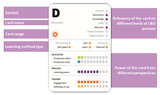
Learning Battle Cards are the size of regular playing cards with a description a type of learning. There is also a whiteboard and tokens to help visualize the course flow.
Use the deck to teach new design ideas in a workshop or for creative inspiration in a course you are developing. Use them in a brainstorming sessions with your development team and in client design sessions. Never have stale, uninspired training again!
You can read additional information about the uses of Learning Battle Cards in the following blog articles:
Learning Battle Cards: A New Tool for Instructional Designers
Gamification of Learning Design: How to Use Learning Battle Cards?
Jennifer Yaros
.
Blog
.
<span class='date ' tip=''><i class='icon-time'></i> Aug 26, 2015 07:04am</span>
|
|
In case you missed it, Blackboard for the first time is offering an opportunity to catch all the BbWorld keynotes, product roadmaps, and many of the other sessions by registering at bbworldlive.com
The schedule of live streamed sessions is available here.
Jason Rhode
.
Blog
.
<span class='date ' tip=''><i class='icon-time'></i> Aug 26, 2015 07:04am</span>
|
|
Just in time for BbWorld 2015, Blackboard has launched a beta phase of a new community platform at blackboard.jiveon.com. The Beta is rolling out with some great features, allowing users to locate information, submit community questions, share best practices and easily engage and collaborate with peers. Some valuable enhancements are coming in the next few months, like single sign-on, improvements in visual integration and cross-site search and navigation.
Blackboard is seeking feedback and suggestions from client users to shape the development of the community site for a Q3 full launch. By joining the beta you will be invited to participate in future usability tests that will be used to ensure the content published and created is in line with community needs and expectations. These requests for feedback will come in various formats: focus groups, discussions, polls, surveys and direct outreach. Any and all feedback is welcome!
I’ve signed-up for the community site beta and look forward in the coming days to becoming more familiar with the platform, you’ll find me here. Let’s connect!
Jason Rhode
.
Blog
.
<span class='date ' tip=''><i class='icon-time'></i> Aug 26, 2015 07:03am</span>
|
|
The Middle East has a long heritage of learning and intellectual achievement that has contributed greatly to the knowledge that we now have in many disciplines. The disciplines are not just the scientific disciplines but also include magnificent accomplishments in the literary arts as well as architecture. I have had the privilege of reading and marveling at the great wisdom and beauty of the accomplishments of the people of the Middle East and I have come to realize and believe that the power of education can re-shape the future and provide for the children of this generation and the ones that follow.Credit: www.professionsforpeace.comIn order to to completely understand E-Learning in the Middle East and to make our appeal to leaders there to share their knowledge concerning the state of E-Learning in the Middle East, we have to be clear on which countries we are seeking information from. For our purposes, the following map indicates who we are talking about:Credit: www.freerepublic.comThe Heritage: The Islamic Golden Age (750 - 950 AD)The history of the Middle East is one that has been noted for excellent advances in the pursuit of knowledge and education. This is the heritage of every child living in the Middle East today but it is one that does not often share the world spotlight with the world's thirst for continuing accounts of turmoil and tribalism. In order that hope may shine in the hearts of children in the Middle East, a renewed emphasis, a new education that not only places the spotlight on the magnificent accomplishments in the scientific disciplines and the arts of the Middle East's past but also one in which they can be the new architects of a future of hope is needed now.It is not my intention to spend endless pages detailing the great accomplishments of this particular age but I will highlight some of these accomplishments in order to pose a provocative question at the end.Credit: www.teachmiddleeast.lib.uchicago.eduThe Islamic Golden Age was a period in Islam's history in which the Middle East experienced a scientific, economic and cultural blossoming that was not only of great benefit to the Middle East but also to the remainder of the known Mediterranean world at the time.Scientific Method: Ibn Al-Haytham (Alhazen) was noted in history with regards to his approach to experimentation.Medicine: The physician, Rhazes, was an early supporter of experimental medicine. He introduced the idea of using a control group as a comparison group with the experimental group within an experimental study so that more accurate conclusions and predictions could be made.Mathematics: Muhammed ibn Musa al-khwarizmi played a significant role in the development of Algebra, Algorithms and Hindu-Arabic numerals.Astronomy: In about 964 AD, Persian Astronomer, Abd al-Rahma al-Sufi, writing in his Book of Fixed Stars described a "nebulous spot" in the Andromeda constellation which was the first known reference to the Andromeda galaxy.Credit: www.muslimheritage.comEducation: In education, the world's oldest degree granting university was the University of Al Karaovine founded in 859 AD. We also need to mention the famous Library of Alexandria and the House of Wisdom in Baghdad.The greatest threat to the Islamic Golden Age came from the Mongol invasion. In 1258 AD, Hulagu Khan destroyed Baghdad and the House of Wisdom. With the destruction of libraries and schools of thought came the "smothering" of "ijtihad" (independent reasoning) in the 12th century in favour of institutionalized thinking. Science and rationalism were discouraged and Greek thought was condemned. This leads us to an important question about the future of E-Learning and education in general in the Middle East: " Is a new Islamic Golden Age possible in the 21st century Middle East? Is E-Learning one potential path to this new horizon? Re-Awakening a Glorious Heritage: A New Phoenix Rising?Credit: www. continuing education.construction.com We recognize that in regards to E-Learning, there are leaders in the Middle East who are moving forward with great courage and boldness with the hope of providing a quality of life that will lead to a prosperous life for all people in the countries of the Middle East. What is required is a vision for education that will re-awaken a glorious heritage that children will embrace as life and hope for the future instead of a seemingly endless cycle of despair.Next.... The new visionaries of education in the Middle East and the appeal to share their thoughts as well as thoughts by other identified contributors...
Ken Turner
.
Blog
.
<span class='date ' tip=''><i class='icon-time'></i> Aug 26, 2015 07:03am</span>
|
|
As was mentioned in the previous post, there are leaders in the Middle East who have a vision for the future of innovation and E-Learning that if carried out, will lead to a better quality of life for the people of the region and will open up doors of opportunity for investors.One such leader is HH Sheikh Hamdan bin Mohammed Bin Rashid Al Maktoum, who is the Vice-President and Prime Minister of the UAE and Ruler of Dubai.Credit: www.ebinthemag.comIn an article published by HH, titled: "Innovate or Stagnate" His Highness was quoted as saying:"We are building a new reality for our people, a new future for our children and a new model of development" (Feb. 5,2015)A symbol of this new vision for the future of education is the Hamdan Bin Mohammed Smart University in Dubai whose mission statement states the following: "To provide high quality programs using virtual learning environment, supporting the pursuit of lifelong learning, addressing critical activities of economic development in the Arab World, pioneering in e-learning, providing unique learners experience and growing knowledge and its dissemination through excellence in research and knowledge transfer." We also have quotes from the E-Learning Association of the Middle East stating:Credit: www.titlestad@iede.orgWe can also point to the potential of MOOCS that are growing in use in the Middle East but we do need to hear from those who are working in the E-Learning area using the different variations of E-Learning . It would be a great disservice to those in other Middle Eastern countries to leave the impression that the only area involved in E-Learning is UAE. This leads me to my appeal.The Appeal for Thoughtful Collaboration and Exchange of IdeasThe purpose of this appeal is to open conversations that will allow all of us to truly understand the "mosaic of global E-Learning". I would like to entertain these conversations in the professional forums on E-Learning in LinkedIn.com. The conversations should elaborate on three main questions: What is the state of E-Learning in the education sector of your country?What are a few successes you can highlight that you have experienced in E-Learning in your country?What are a few serious challenges that you see now and in the future for E-Learning in your country?Who Should We Hear From? Naturally, we would like to hear from all those who are involved in E-Learning in some way. Government officials, higher education, instructional designers, educators, corporate trainers and even students taking E-Learning. Framing Your ResponsesIn order that conversations not be cumbersome, I would suggest the following:Identify the country you are fromIdentify your professional roleA brief response to the questionsCredit: www.teleportmyjob.comWhere Do We Start? These posts will be shared to the LinkedIn forums on E-Learning and innovation, specifically E-Learning Industry and Learnnovators where I hope that we can stimulate some helpful conversations on the state of E-Learning in a global context. Any comments you post to the blog, I can transfer to the LinkedIn forums which also include the Education in the Middle East forum. For example this came from Waleed in Jan 4, 2015:"E-learning is getting tremendous success in the region of United Arab Emirates because of the outclass technological facilities are provided to its residents and there a lot of locals as well expatriates already enrolled in online education in UAE because of its convenient learning." This is an invitation to share your story.................
Ken Turner
.
Blog
.
<span class='date ' tip=''><i class='icon-time'></i> Aug 26, 2015 07:03am</span>
|
|
I have had the pleasure and privilege of reading about the great things that instructors, instructional designers and corporate trainers are doing in the area of E-Learning in Australia and New Zealand. Their progressive thinking and innovative ideas are an inspiration to all who are committed to making E-Learning a viable path for life-long learning for all learners.Credit: www.nzedge.comI also know that as nations they are highly competitive, usually against each other, but also have a great sense of humour. I still remember a number of years ago when a group from New Zealand tried to put Australia up for sale on E-Bay.Credit: www.auspak.edu.pkBut this isn't about me telling you about their contributions to E-Learning. It is about a hope that I have that they will share their stories in the same pattern as the previous appeals. The Appeal for Thoughtful Collaboration and Exchange of Ideas The purpose of this appeal is to open conversations that will allow all of us to truly understand the "mosaic of global E-Learning". I would like to entertain these conversations in the professional forums on E-Learning in LinkedIn.com but you can also comment in the blog. I will transfer any comments into the appropriate forums. The conversations should elaborate on three main questions: What is the state of E-Learning in the education sector of your country?What are a few successes you can highlight that you have experienced in E-Learning in your country?What are a few serious challenges that you see now and in the future for E-Learning in your country?Who Should We Hear From? Naturally, we would like to hear from all those who are involved in E-Learning in some way. Government officials, higher education, instructional designers, educators, corporate trainers and even students taking E-Learning. Framing Your ResponsesIn order that conversations not be cumbersome, I would suggest the following:Identify the country you are fromIdentify your professional roleA brief response to the questionsIf you are reading this and know of an Australian or New Zealand colleague who might be interested in contributing to this discussion, then please share this via Facebook, Twitter or any other social media means. Conversations only work if there is more than one person involved.
Ken Turner
.
Blog
.
<span class='date ' tip=''><i class='icon-time'></i> Aug 26, 2015 07:03am</span>
|
|
The term "engagement" has become somewhat of a buzz word in the halls of the corporate and education world alike. However, underlying this term is a deep seated feeling of uneasiness in these same halls as a new realization is dawning on them. This very troubling realization is that without employees or learners who are engaged in pursuing skill sets necessary to deep seated learning and ultimately innovation within their organizations, they will forfeit their place in the global economy, develop a disconnect with new clients and past ones and become an anachronistic oddity in a digital age.Credit: www.onlinehumanresources.netHuman Nature and Engagement We know that in a fast paced world, becoming engaged in something is time consuming and is resource depleting. There are many distractions in the world both in the real world and online that promise escapes in the form of entertainment and leisure which in fact act as pressure release valves for humans. It is a natural drive that humans have that acts as a defense mechanism and it strives to achieve balance in life. It is however possible for this drive to go into overdrive where to be entertained has a much greater priority than to be productive. It is at this point that society employs social pressure to change the behaviour that results.In order to counter this natural inclination that humans have, we need to understand what human beings find engaging. The following are some observations that deal with the first of a number of essentials.Credit: www.georgecoursos.com Focus : "For the learner, the engagement must be on a personal level!" Our present status as a learner possessing knowledge and skill sets is a deeply personal element of our being. Based upon its present state, we are judged by others and more importantly, we measure ourselves against our own personal goals.This is an important understanding that all Instructional Designers, Corporate Trainers, Instructors, CEOs and COO's should fully grasp as we go about designing irresistibly engaging learning experiences. When we think about the needs of the learner, it is not just on one level and we make a fatal mistake if our learning experiences treat learners as machines who need to only point and click on a piece of technology.For the learner, a number of questions need answering if we expect solid engagement by the individual or individuals:Since this is personal, is this learning experience relevant to me as a person, employee or student? What is the "personal ROI" that I can expect by engaging in this?Will my engagement in these learning experiences contribute to the solution to real world problems relating to my role in a way that respects my contributions or are they simply mechanically contrived mind games that allow administration to check off one more box on a sheet of boxes?Will my engagement in these learning experiences strengthen and build new personal connections to networks in which I can collaborate and grow in?Will my engagement enhance my learning and will my organization mentor and encourage my learning growth in a positive, personal way instead of in an organizational mass action manner?Am I personally invested in the mission of this organization? Does its vision match my personal vision for growth? Engagement besides being very personal is also dependent upon the design and method of delivery. For the learner, the design thinking that goes into irresistibly engaging learning experiences is the "ground zero for engagement". This requires leadership that has passion and vision as drivers.Next....The Nature of Irresistible Engaging Learning Experiences---Ground Zero!
Ken Turner
.
Blog
.
<span class='date ' tip=''><i class='icon-time'></i> Aug 26, 2015 07:03am</span>
|
|
In the last post I suggested that engagement in learning experiences has to happen on a deeper personal level. If you observe a person who is strongly engaged in an event, the realization that you come to is that their response to the event is not just on an intellectual level but also includes a response on an emotional level. You can see in their faces a whole continuum of emotions that wash over them as they proceed through the event. This can be seen when people watch their favourite sporting event or play a competitive online game.Credit: www.o.canada.com They become a part of an unfolding story and take on the role of a collaborator with others in that story. This explains part of the addictiveness of role playing video games. The games take you from an intellectual participation and translates it into total participation where you receive immediate feedback from the decisions that YOU make and YOUR decisions and actions influence how the story unfolds.Credit: www.canadianonlinegamers.comWithout this level of engagement, learners or employees are just going through the motions and will not incorporate what they learn from training or education sessions into their mindset or repertoire of doing things. In the past, a "carrot or stick" approach was used in the corporate organization and also in the education sector. In this digital age, the use of negative motivators does not work with respect to learning and actually results in the learner covertly seeking ways to undermine the initiative out of a combination of frustration and fear while maintaining the illusion that they are on board with the knowledge and skill sets being presented. For a company hoping to engage its employees, such a toxic relationship will lead to disaster.In education in an E-Learning environment, it means that the learners will quickly disconnect from their learning and seek diversions.The point is:"Engagement will not happen unless the design has the necessary elements in it to engage employees. The design of the learning experiences and the nature of delivery is ground zero for engagement."Understandings About Multilevel EngagementIf we learn anything at all about engagement at a personal level is that it is important to know the learner. This is something that instructional designers, corporate trainers and instructors have known and it is a given for any training professional who is engaged to design learning experiences for a company.However, the mistake that some trainers and instructional designers make is the belief that knowing the learner is a single static event from which they may move on to starting the design."The simple truth is that the learners themselves are not completely aware of what engages them in learning. Surveys and one to one interviews are only snapshots in time and are not a dynamic picture of ongoing personal learning."Solution?One suggestion on how to arrive at a solution to this problem is to consider giving learners what may be called a "test drive" of a variety of interactive, collaborative activities in order to gauge their responses to different types of engaging activities. For the designer this will accomplish the following: It will highlight potential problems in the use of interactivityIt will give you a reading on the kinds of collaboration configurations that will produce the best resultsIt will give you a picture of performance benchmarks which you can realistically compare with other companies in your sectorIt will give the learner an opportunity to discover interactive activities that perhaps they had not experienced before and learn more about what they find engaging in an non-threatening environment. From this you and they can begin a learning profile for the learner and plot a path for growth to the benefit of the individual and the businessCredit: www.thinkshift.comNext----Specific Interactive Learning Activities, the Importance of Creating Flow and E-Learning
Ken Turner
.
Blog
.
<span class='date ' tip=''><i class='icon-time'></i> Aug 26, 2015 07:03am</span>
|
|
The countries of India and China are the rising stars in their area of the world in the development of self-guiding E-Learning for their populations now and in the future.The ancient country of India has a long tradition for the pursuit of learning, science and technology. One of the world's first universities, Nalanda University, was first established as a Buddhist institution of learning in the 5th century AD and lasted continuously for 800 years until the 12th century AD. Its architecture suggested a seamless co-existence between man and nature, between living and learning.Credit: www.the betterindia.comOn Sept. 1, 2014, the ancient university, Nalanda, was re-opened for classes. The following is an artist's rendition of what the new campus will look like:Credit: www.kedarsoman.wordpress.com Interest in the pursuit of Education, Science and Technology in India is still a high priority for its people. According to E-Learning statistics published in Jan. 2015 (E-Learning Industry, Christopher Pappas), the two countries with the highest growth rate in the adoption of self guiding E-Learning were India(55%) and China(52%) respectively. With respect to mobile learning products, it is worth noting from the article:"...While in 2012 the top buyers of mobile learning products and services were the US, Japan, South Korea, China , and India, it is expected that by 2017 the top buyers of mobile learning products and services will be China, US, Indonesia, India and Brazil..."With respect to China, it too has a long history of the pursuit of knowledge and education. Ancient Chinese academies set up to pass on wisdom to their populations. This was especially evident during the Tang Dynasty. Credit: www.absolutechina tours.com The curriculum was largely based on the learning principles of Confucius (551-479 BC).Credit: www.Jeanrick NunezCredit: www.Jeanrick NunezToday, China continues to pursue Science, Technology and Education as witnessed by some of its more modern universities such as Soochow University in Suztou.Credit: www.studyabroad.hbcompany.inSo, both countries, India and China are moving ahead in pursuit of the next frontier in learning, E-Learning. This brings me to my appeal to hear from these countries in regards to advances in E-Learning.The Appeal for Thoughtful Collaboration and Exchange of IdeasThe purpose of this appeal is to open conversations that will allow all of us to truly understand the "mosaic of global E-Learning". I would like to entertain these conversations in the professional forums on E-Learning in LinkedIn.com but you can also comment in the blog. I will transfer any comments into the appropriate forums. The conversations should elaborate on three main questions: What is the state of E-Learning in the education sector of your country?What are a few successes you can highlight that you have experienced in E-Learning in your country?What are a few serious challenges that you see now and in the future for E-Learning in your country?Who Should We Hear From? Naturally, we would like to hear from all those who are involved in E-Learning in some way. Government officials, higher education, instructional designers, educators, corporate trainers and even students taking E-Learning. Framing Your ResponsesIn order that conversations not be cumbersome, I would suggest the following:Identify the country you are fromIdentify your professional roleA brief response to the questionsIf you are reading this and know of an Indian or Chinese colleague who might be interested in contributing to this discussion, then please share this via Facebook, Twitter or any other social media means. Conversations only work if there is more than one person involved.I must say that so far, we are dealing with many countries who are a little shy about sharing their stories but I would like to assure them that we are not looking for you to share state secrets or proprietary methodologies;)
Ken Turner
.
Blog
.
<span class='date ' tip=''><i class='icon-time'></i> Aug 26, 2015 07:02am</span>
|
|
If our goal is to create irresistibly engaging learning experiences for both the education sector and the business community then we need to ask what we need to do differently? As mentioned in an earlier post, engagement of learners needs to occur on a personal level. It is not just an intellectual exercise but it must involve the emotional and creative side of people. We don't achieve this level of engagement through pretty visuals,even though they may help. We need to recognize that the learner is a breathing, thinking, creative and emotional being who possesses a natural curiosity about things perceived through the senses. They thrive on challenges that engage them on multiple levels without overwhelming them. It is what we do to reach these levels that is the focus of this post.Credit: www.freshifilms.blogspot.comProject Based Learning and Simulations: Engaging Hybrid Learning Experiences One of the key skill sets that we want learners to be able to acquire is to be able to work collaboratively to solve complex real world problems. Whether this occurs in the business organization or in education organizations, it is a necessary skill set for innovation in a digital world. One of the realizations that we have come to recognize as important in the online world is that learners demonstrate deeper sustained learning by doing so it makes sense to design learning experiences that engage them in challenging, thought engaging, creativity engaging experiences where in the end they create something out of their collaborations. When appropriately challenged in a collaborative group they are quite capable of pooling and directing their talents to solving real world problems.Stanford University in California, USA has established what is called a "Problem Based Learning Initiative" in which they seek to focus on the very qualities in learners that are necessary for engagement of learners on a personal level. According to their initiative:"Problem-Based Learning (PBL) is a curriculum development and delivery system that recognizes the need to develop problem solving skills as well as the necessity of helping students to acquire necessary knowledge and skills."Your first question will be:"What does Problem-Based Learning (PBL) have to do with Project-Based Learning?"At first glance you might assume that they are the same thing but they are not! Both these approaches have enough in common that a digital symbiotic relationship is forged. Project-Based Learning depends on the exercise of the principles of Problem-Based Learning and Problem-Based Learning receives direction and enhancement from Project-Based Learning.As stated by the Stanford University "Problem Based Learning Initiative", Problem-Based Learning may be defined as:" PBL is a curriculum development and delivery system that recognizes the need to develop problem solving skills as well as the necessity of helping students to acquire necessary knowledge and skills." If you take this hybrid of these two approaches and then design the learning experience in the context of a simulation, this adds another dimension to the online environment that is intriguing, challenging and intensely engaging for the learners. It is along the lines of serious game based learning. It also leads to the potential of unlocking innovative thinking in which the learners create or make something in order to solve a real world issue but done within an online environment and using online tools. This concept is what is at heart of the relatively new "Maker Movement".Credit: Brian Oatway In such an environment, learners immersed in the tasks will show not only intellectual engagement but also emotional, sensory, and moral engagement. A state of flow among collaborative workers will develop where intrinsic motivation is the raw driver of the learning taking place.I have already bridged this idea before in earlier posts:Smart Pedagogy III: Time Portal-Journey to the Other Side (The Manhattan Project)-May 31,2014Super Bug Pandemic Scenario--Aug. 2, 2014E-Learning of the Future--Ebola and North American Response scenario --Nov. 21, 2014Search for the Emerald Key---Dec 27, 2014-Jan, 2015 Next---- The use of simulations as a component of the hybrid learning experience titled: "Return to the Kobyashi Maru Scenario"
Ken Turner
.
Blog
.
<span class='date ' tip=''><i class='icon-time'></i> Aug 26, 2015 07:02am</span>
|