Blogs
|
By Shelly Blake-PlockPicked up my own iPad2 about three weeks ago and, as an experiment, I have set my laptop aside and have used nothing but the Apple in the classroom ever since.And I have found that there is nothing that I do in my normal activities as a teacher that I have done with a laptop or a tablet PC that I can not do with the iPad2.Blogging? No problem... BlogPress. Gmail and Google Apps? No problem... G-whizz. Editing pics? Photoshop Express and Filterstorm and 100Cameras. Grading? No problem... PowerTeacher has an app. Documents and presentations? No prob... Pages and Keynote. Handwriting? Penultimate. Note taking and note storage? Auditorium, Evernote, and Dropbox. Dictation? Dragon. Sharing student desktops? Lanschool. Video taking-making-and-editing? iMovie is ridiculously good on the iPad. Music? Let's just say that Korg and Moog have made synth apps that I would be willing to take on stage.In short, in my experience, all of the criticisms I have heard about the iPad not being 'classroom ready' are bogus. The Flash 'problem'? I have not noticed it so much. The two sites I have had problems with are wikispaces and weebly, but this just means that if they do not make themselves accessible for iPad, I will find an alternative -- i am not married to either of them. Other problems? For all I heard about how difficult typing would be, I have found it rather intuitive. Multitasking? Takes getting used to, but pretty simple and effective once you get the hang of it. Problems as a 'creation' tool? Absurd. Sure, if I am going to do high end design or audio, I am going to use pro gear... but how often do you actually find yourself needing pro gear in your regular duties? Publishing yearbook? Newspaper? Yeah, you should be on a quad core running Adobe. iPad is not a substitute for that type of machine. But it is questionable to hear some quarters chopping off their nose to spite their face by complaining that a $700 machine you can hold in the palm of your hand can't run InDesign.One of the things I never realized before was just how much even a tablet PC limits your mobility. With the iPad, I can roam the halls, lay on the couch, run out to the teacher parking lot... All while prepping digital lessons or watching student videos. The mobility factor is huge and will alter the way we think of 'space' in schools. My students joked that my being able to roam around while connected to PowerTeacher made it considerably more difficult for them to get away with sneaking a Skype session than it was while I was tied to the big laptop on my podium. They also like how easy it is to share the iPad. And it is not just a 'cool' thing... It is really a matter of being able to work --digitally and physically-- quick and share it on the fly.Last thing. There has been a lot of hand-wringing about the 'closed' nature of iBooks and iTunes. I say, if you think it's too closed, use a different app. I get the majority of my e-books via the Kindle app. If I don't like the way a particular newspaper's app works, I just go direct to the web. Like most things, the iPad is mostly limited only by the imagination of the user. In terms of teaching and learning, I just have not hit a major snag yet. That is not to say there isn't one... I just have not run into it.Is this device the be-all-and-end-all? To be honest, I really do not care. It works for me so far. Next step is to see how it works for the students. And on that front, our school is starting an iPad pilot program to complement the tablet PC program. Ultimately, I see all of these devices as relative within a BYOD environment.- Posted using BlogPress from my iPad
Shelly Blake-Plock
.
Blog
.
<span class='date ' tip=''><i class='icon-time'></i> Aug 26, 2015 12:06pm</span>
|
|
by John T. Spencer - A Living Facebook Reflection Warning: This might have nothing to do with teaching. This also might have everything to do with it. I can't decide, yet."Has this Living Facebook thing changed the way you view people?" Javi the Hippie asks. "I think it's pushing me to see the goodness of humanity in a way that I never saw before.""I think it's making you a better friend. You call on the phone. You send mail. It's the type of thing people used to do," he says."I can see that. It's forcing me out of my introverted bubble," I explain. Two days later, when arriving home from giving flair, I notice an e-mail from someone who was hurt by careless words written on my blog. I immediately edit it, but it's out there in the global sphere, open to anyone interested in reading it. She recognizes that my words weren't malicious, but it doesn't take the pain away. I apologize. We reach a point of reconciliation. However, it has me second-guessing how personal I choose to be online. To what extent am I breaking another's privacy when I choose to be transparent?It's easy to buy into the myth that Control, Alt and V will magically undo what is done. It's the digital dream of deleting the broken language of a broken man who gets careless and thoughtless. Social media is just that: social. Real people. Real conflict. Real relationships. Real hurt. Real reconciliation. It's beautiful and it's broken.My friend Jabiz says that social media is simply a mirror of us. I'm thinking of myself in the mirror and the notion that what is backwards feels entirely normal to me. I'm wondering if maybe it's backwards to be more intimate online than I am with my acquaintances. I'm wondering if it's backwards to wish happy birthday to twenty people I've lost touch with and somehow miss a close friend's birthday. Then again, maybe it's not the medium that's backwards. Maybe it's my mentality.I think again to the medium. If Facebook is a mirror, it's a carnival mirror, offering a distorted view of myself. Online I'm smarter, faster to speak, slower to listen. Online I don't stutter and sputter and laugh too loud. Or maybe it is an authentic mirror and maybe I'm seeing the distortion first-hand and coming to terms with what I see.And yet . . . Maybe it is a mirror and maybe it gets out of whack when it's bent by careless words or unresolved conflict. And maybe the beauty of social media is that it becomes a chance to realign the mirror so that we move closer to the authentic, to the real, to the undistorted picture of self that we only hope to see.Or maybe social media isn't the mirror. Maybe social media is that place where people around you pull you away from the mirror, reminding you that you are not the illusion that you see before your eyes. Maybe social media is the chance to call me away from the backward lies that have defined my identity for too long."I'm thinking of ditching this project. I tried so hard not to be cynical. I tried not to hurt people in the process," I tell Javi. "If avoiding hurt is your goal then you've got your priorities all wrong," he warns me. "Don't you see it? You're growing closer to people. You're running into conflict. You see a sad story of someone you hurt. I see a story of redemption." I step away from the mirror. John T. Spencer is a teacher in Phoenix, AZ who blogs at Education Rethink. He recently finished two books, Pencil Me In, an allegory for educational technology and Drawn Into Danger, a fictional memoir of a superhero. You can connect with him on Twitter @johntspencer
Shelly Blake-Plock
.
Blog
.
<span class='date ' tip=''><i class='icon-time'></i> Aug 26, 2015 12:05pm</span>
|
|
By Shelly Blake-PlockEarlier today in #edchat someone mentioned PLNs for elementary schoolers. My thoughts: You can not create a PLN for someone. Therefore, there is a practical matter involved with setting up that kind of complex network for a second grader. Furthermore, few elementary schoolers have the experience let alone the conceptual understanding of what a network really is and how best to navigate through one; fact is relatively few teachers do. But, the question gets to a bigger issue that I think is extremely relevant.And that is the issue of collaboration.I teach high schoolers. And one of the most difficult and frustrating things of all is to see how poorly most 9th graders are prepared to actually do collaborative work. Particularly among our most academically inclined students, we have set up a context of education that is so focused on the grade and personal excellence, that it makes the idea of collaborating somewhat alien.Sure, we do group work and we have teams. But rarely in the traditional curriculum do we actually assess the value of collaboration to the degree we assess individuated patterns of recognition and response in summative assessments. Why aren't all of our final exams collaborative? Why don't we give an award at graduation to the best student collaboration or the strongest and most vital learning network?My AP Euro kids spent much of their time this semester studying, sharing, and letting steam off via a class Facebook group they made. And yet so many of them were slaves-to-the-grade when it came down to the nitty-gritty of classroom life. Students in my West Civ class displayed an uncanny ability to collaborate on ideas when in a class setting and yet by-and-large reverted to the self when completing the final exam (even, strangely, on the parts of the exam that called for collaboration). In a way, we have told students: the things that really matter will be discovered in this one way. But that one way tends to be the precise way of thinking that rewards memorized facts and canned essays and penalizes (even disciplinarily) any hint of sharing, collaboration, and out-of-compartment innovation. We bring them up with this attitude from the very beginning, so it is no wonder that they are confused by the time we get them into a high school classroom and ask them to work together in a new way.And I am just as much at fault, often second guessing my instincts and trying to figure out how to fit in yet one more page of the AP curriculum. It is a constant battle, in many respects: no one should think that this 21st century teaching thing is easy. But, time and again I am surprised by how much my network has to offer my students -- from validating research to collaborating on crowdsourced projects; and I feel that if only the kids came up in a connected culture, they would so easily latch on to it. Because the fact of the matter is that all year, the best work and best learning produced in my classroom happened when we opened the floodgates to shared learning and collaborative connected investigation.So do we need our second graders joining PLNs? Well, maybe not at least in the way we understand huge networks like #edchat. But we do need them to learn in an environment that promotes and encourages collaboration. Those kids who grow within communities supportive and nurturing of collaboration will be the students who design the networks of tomorrow. And those schools which nurture networked learning will be the successful schools of tomorrow.How do we get there?I propose a relatively simple five-part plan.1. End summative assessment. All assessment should be formative, developmental, and 'graded' by self-analysis and conversation. Project based learning works best given the actualization of the idea and learning in the world. In our school, I have had the privilege of sitting on a scholarship board for the senior project and I have seen this kind of learning and self-reflection literally change kids' attitudes and self-perceptions about learning and living. It is a powerful thing.2. Involve the community. Starting in elementary school, student learning should be intertwined with community involvement. We are losing so many good kids just because those kids can't stand sitting in a classroom. Let the community itself be the classroom. Inside your building. Outside your building. Let students earn credit for participation, learning, creativity, and problem solving in the arts, sports, student government, service. Stop trying to teach students what they should know and start letting them discover what is out there.3. Hire connected educators and help current staff connect. PLN connection can't be 'taught', but it can be modeled. If we expect students to thrive in a connected world, first we have to thrive in a connected world. It is not an option. It is a professional responsibility.4. Allow student groups to run the show. Do not pay the branding firm to design the logo and slogan for your new campaign. Let students do it. Do not let your tech committee decide what kind of devices your students are going to use. Let students tell you what they are going to use. Involve students in the day-to-day operations of the school. Don't just 'allow' a token student or two to sit on your board; require your board to sit in with the students. How soon we forget that students are the reason the community exists in the first place. Empower them. And then let them empower you.5. Reward collaboration. Innovative collaborations at your school should get at least as much public recognition as successful sports programs. Connected teachers should activate the power of their own PLNs to open up opportunities for student collaborations and the development of meaning interdisciplinary community and professional engagement. Bring architects, theater designers, computer scientists and video game builders, political campaign managers, and filmmakers into your classrooms: demonstrate to your students just how collaborative all of this work is and let them connect via all the tools at their disposal. Don't let your district's filtering software limit your students' potential. Advocate for openness, collaboration, and active learning.Okay, that's a lot to think about. I admit that part of the impetus for writing this post is because I do not feel like I have always done a great job promoting collaboration. I have let things slip through the cracks and I have let opportunities pass by in the name of expediency. My goal going forward is to work on behalf of helping students and teachers craft their own collaborative networks. In their own way. Not dictated by a particular theory, but rather created -- made -- by the needs at hand, the motivations under the surface, and the idea that things can be different.- Posted using BlogPress from my iPadLocation:Thinking about Collaboration
Shelly Blake-Plock
.
Blog
.
<span class='date ' tip=''><i class='icon-time'></i> Aug 26, 2015 12:05pm</span>
|
|
By John T. SpencerWhen I was in the fifth grade, I realized that my classmates were outsourcing their science fair projects to their parents (think child labor in reverse) while others were making up their amazing experiments altogether (think Three Cups of Tea). So, I went entirely fictitious with my poster board. I asked the question, "How does music affect plant growth?" My results were astounding. The country music group became depressed. The gangsta rap group shot each other in a turf war (I thought I would win points for the pun at least). The classical music group became pretentious and refused to interact with the country western group. Eventually the Norteno music group started doing all the work for the classical music group. I used it as a chance to explore stereotypes, music and cultural norms. More importantly, though, I was writing a hell of a plant-based story through the scientific method. The final conclusion ended with questions such as: what makes us different than plants? Is it wrong to kill plants for food? Do plants actually experience music outside of our human lens? I failed the project altogether. I was told it wasn't real. I didn't believe that reality was the same non-fiction or that fiction couldn't lead us toward scientific truth. I walked around the cafeteria and noticed the ribbons and judges comments on each science fair board. I couldn't find mine anywhere in the collection. I figured that even if the science was a failure, maybe they'd keep it around for aesthetic reasons. And thus I learned that I suck at science. I didn't shake that thought until last year. * * *So it has me considering ways to rethink science fair projects. Here are a few ideas:Quit giving awards: Instead of simply celebrating the individual achievements, highlight the collective research that the entire group accomplished. Broaden the definition of science: My project was fictitious. I get it. However, I had a love of social science and sociology that a teacher could have tapped into for a more alternative, human-oriented project. Allow fiction: I'm not suggesting that we abandon scientific inquiry. Yet, I can see a place for students proposing theories through allegorical science fiction. Let a kid write a scientific dystopia where he or she examines some of the values inherent in science.Encourage collaboration: Rather than sharing experiments after the fact, let students collaborate in multiple projects throughout the process. A student who becomes an expert in data analysis, for example, could lend his or her expertise in other projects. Similarly, students could modify experiments based upon the observations of others.Modify the presentation component: instead of simply boards or papers, allow for podcasts, websites, blogs, videos and social media reflection. Create discussion groups where they share their data verbally in a group. Make it a real fair: In other words, instead of simply walking around and checking the grades of each project, create a festival. Make it a carnival of inquiry. Bust out the pond water. Take out the magnifying glasses. Let children experience the joy of scientific discovery. Go global: Let students compare similar experiments across the world. Have students develop a shared experiment using Skype, social media, blogging, shared documents and video and then encourage hard dialogue about the cultural conflicts they experience. Science can become the common ground for crossing the boundaries of presuppositions.John T. Spencer is a teacher in Phoenix, AZ who blogs at Education Rethink. He recently finished two books, Pencil Me In, an allegory for educational technology and Drawn Into Danger, a fictional memoir of a superhero. You can connect with him on Twitter @johntspencer
Shelly Blake-Plock
.
Blog
.
<span class='date ' tip=''><i class='icon-time'></i> Aug 26, 2015 12:04pm</span>
|
|
by John T. Spencer - Final Reflection on the Living Facebook Experiment (final posts will be up later this week)It's a warm and windy afternoon, the perfect Father's Day gift for a desert dweller. I inhale the waves of mint and basil and fresh-cut grass in an aromatic ebb and flow. We play barefoot baseball and then imaginary ninja fights. Interspersed through these games are are garden expeditions, where we touch and smell and carefully examine the tomatoes that will soon become marinara sauce. After a few hours, we move inside and play this amazing new app called "puzzle." It's interactive, 3-D and developmentally appropriate. It's a Luddite afternoon until Micah asks if we can have quiet time and watch Stuart Little. We follow this with silly faces on Photo Booth, a photograph scavenger hunt and a recording session of Brenna's Amazing Animal Sounds. I take breaks to post updates on Twitter and Facebook while the boys play a few games of Angry Birds. We're now immersed in a multifaceted, multimedia, technophiliac reality.As the boys move back into Luddite mode (doing science experiments in the backyard) and I begin the very earthy task of cooking up a stir fry, I begin a Educational Luddite chat on Twitter (#edlud), posing the question, "What are the inherent dangers in catering education to an image-based culture?"It might seem like a trendy hipster ploy at deliberate irony (blessed are the hipsters, for they shall inherit the irony), but it's entirely earnest. I want to step out of the ed-tech echo chamber and ask my Twitter friends a deeply philosophical, but also deeply personal, question about the nature of education in our current context. To my surprise, people join the discussion. True, the topic doesn't fit the medium. It's a bit like creating a Facebook Event for an Amish Barn-raising, but in the moment it feels like a vital conversation to have through social media. * * *When I began Living Facebook, I assumed that I would prefer the real-life version to the online version. I would write a quasi-Wendell-Barry piece and come to the conclusion that I needed to destroy my online mask and engage in the physical world around me. Like the lovers of slow food and vinyl records, I saw this project as a chance to recover what we lost. Instead, I found that social media often mirrors life and that the challenges I faced in doing Facebook in-person or online were the inherent challenges of any medium. Misunderstandings, pride, jealousy, fear - those things are amplified in each medium. This isn't to suggest that social media can be neutral. The linear, organized, shiny methodology of Facebook and Twitter fail to capture some of the messy beauty of in-person interaction. We have no art on Facebook. We cannot truly share music on Twitter. Social media cannot provide a venue for sharing a pint, breaking bread or cuddling up to a loved one. And yet . . . social media can be powerful and profound and intimate in ways that are often too guarded in real-life. My friend Quinn the Business Bohemian listens to his favorite records on vinyl and then makes his music portable with an iPod Touch. My friend Rich takes amazing old-school style pictures and then modifies them digitally. My friend Jabiz plays the acoustic guitar and meanders around a garden and dances with his daughters and then blogs and tweets and records podcasts for the world to hear.So, as I finish my fortieth day of the Living Facebook experiment, my goal is to continue to do Facebook in-person and online. I want to congratulate people on the monumental task of remaining alive for another year by posting to their wall and bringing them cupcakes. I want to share videos in person and online. I want to bust out the Poloroid and tag people in photos and share the old-school photo albums with my children and then I want to comment on my Facebook friends' photo albums as well. * * *Some would claim that I'm hypocritical for being part Technophile and part Luddite. Perhaps I am hypocritical. After all, I have an iPad, but I refuse to own a cell phone (smart or otherwise). I listen to low-fi, earthy Iron and Wine and follow that with The Postal Service. I spend an hour in the garden and then blog about it while sitting in my air-conditioned techno-fied barricade. However, I see it as a paradox to be approached with humility and nuance. Every medium is powerful and it's a myth to assume we can approach tech as a neutral tool to that we can wield for good rather than evil. The reality is that the tools we use will shape us as much as we shape them. Perhaps I'm being animistic here, but I see tools as relational rather than artificial. We get to know a medium and it changes us.So the paradox is this: I need to criticize the media I use and use the media I criticize. It is deeply human to abandon tools and live in the terrestrial now. Yet, it is also deeply human to use all media available to make sense out of our terrestrial reality. * * * So, how does this connect to the classroom?I want my students to be geeks and gurus.The geek is knowledgeable about technology. This person loves it, embraces it and knows how to use it in creative ways. One the best days, the geek thinks of the future and how technology can be used to solve social, economic and perhaps even personal problems. (Think Dr. Salk or Batman.) On the worst days, the geek becomes intoxicated by the novelty and applies futuristic solutions that lack foresight. (Think Dr. Oppenheimer in his early days or The Terminator.) On the other hand, the guru is wise about technology. This person sees it as a force that is sometimes negative in its dehumanizing aspects. On the best days, a guru will remind us that the physical is as important as the mechanical and that some things in life should not be chopped into pieces and processed, compressed and then industrialized. A guru knows that, even when we try and predict it, technology takes on a life of its own. (Think Marshall McLuhan or Dr. Oppenheimer in his latter days.) However, on the worst days, a guru will grow cynical and angry and shake an elitist fist at every innovation while missing out on the ways technology improves society. (Think the Unibomber.) I want my students to be a bit of both. Call it a paradox or a mystery. I don't want them to abandon technology in a doom-and-gloom fear. However, I also don't want them to get into the mentality that a robotic world will fix everything.John T. Spencer is a teacher in Phoenix, AZ who blogs at Education Rethink. He recently finished two books, Pencil Me In, an allegory for educational technology and Drawn Into Danger, a fictional memoir of a superhero. You can connect with him on Twitter @johntspencer
Shelly Blake-Plock
.
Blog
.
<span class='date ' tip=''><i class='icon-time'></i> Aug 26, 2015 12:04pm</span>
|
|
by Shelly Blake-PlockSo, in July, I'll be giving a keynote at Lenovo's ThinkTank 2011 event in DC. And I'm thinking about what to say. And I'd like your help. So let me give you some details...My talk is ideally going to be split up into a piece where I open my mouth and things come out and a piece where we get to hear from you to get some conversation going. Intentionally, I'm leaving lots of room for improvisation; that's where things get interesting.Also on the bill that day will be Michelle Rhee. Which is fun given that I think both she and myself would be considered to represent different segments of the education reform thing. Unfortunately, one of the problems, (and I myself am guilty of this), is that the folks camped out in the polar regions of the ed reform debate tend to do little more than actively ignore one another whilst in the doldrums between the predictable lobs of grenades. I'd like to go somewhere different in my talk and conversation.As an independent school teacher with public school teaching experience; a city kid who has taught kids who live on farms; a f2f advocate who currently is planning a year of virtual teaching; a Catholic school graduate who is a father of three public school kids; a former post-secondary student with tours-of-duty in public, private, and Catholic universities; and as a teacher of Baltimore City Public School teachers in a private university, I see myself both as having a variety of experiences and understandings about how American education works as well as a bit of a twisted up and multiple-personality take on what it all means. Public / Private. Affluent / Not-affluent. Sectarian / Non-sectarian. Urban / Suburban / Rural.So I'm looking for some clarity.Shoot over ideas, thoughts, criticisms, hollers, and taunts. I wanna hear the good, the bad, the true. What should I be thinking about going into this thing? Is it just a work of extended ego, or can I make something useful out of this talk? Should I forgo the talk altogether and lead the audience in guided meditation?Hit me with ideas. I want to help express your thoughts out there.
Shelly Blake-Plock
.
Blog
.
<span class='date ' tip=''><i class='icon-time'></i> Aug 26, 2015 12:04pm</span>
|
|
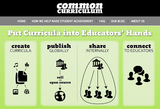
by Andrew CoyIt is summer time! Officially and completely.For us teachers this means family travel, road trips, camping, or maybe just a second job (especially if you don't budget during the year for 2.5 months without a paycheck). As the school year ends, talk to any teacher and you are bound to hear lofty plans for lesson planning too. We all know how that goes sometimes though. =)But this brings me to my question for the blogosphere: How do you lesson plan?I have used sticky notes, the back of envelopes, word documents (with and without templates), and a wiki... but i always felt there should be a better way to do it. With all that web tools can do, it seems lesson planning and organization has been overlooked. Or maybe it is just me that has overlooked them. Please respond to this with comments telling me all about the ways you paperlessly plan your lessons. I'll start with one I think is a game-changer for the curriculum publishing but which is just getting going. It is being developed by a former teacher from Baltimore named Scott Messinger and takes a lot of tools from the web and applies them to solving the problems of collaborative lesson planning. It is still in beta but if you are interested in getting an account, I can send you an invite. The site is called Common Curriculum and is quickly becoming my favorite way to organize my semester's plans. Below is a screen shot of a page from the 1st Grade Math curriculum (not what I teach, but an example of it in action already as being used by the Baltimore City Public School System).
Shelly Blake-Plock
.
Blog
.
<span class='date ' tip=''><i class='icon-time'></i> Aug 26, 2015 12:04pm</span>
|
|
by Shelly Blake-PlockSo, in the category of "as if there weren't enough going on"... the arrival of the Google+ beta.I have basically holed up in a small room for the last 48 hours attempting to figure out what this thing can do and what it can't do. First thoughts: it is not Facebook and it is not trying to be. Second: it is not Twitter and it is not trying to be. Third: it is not Wave, but it suggests that Google learned a ton from the relatively esoteric things people who gave it a chance were actually doing with Wave.In short: this really is something different. What does it do? I don't know. What does it mean? Too early to say. Is it going to fail as hard as Wave? Dunno.In the early estimate, what I can say is that the 'circles' feature around which + is based around offers new options in the ongoing conversation about public and private in social networks. The outcome of this chapter in the evolution of that conversation might be the most important thing to watch -- and the most important thing in terms of thinking what social tech integration means to the structure of classes, courses, schools, and classrooms.More later, I'm headed back to my hole.- Posted using BlogPress from my iPadLocation:Baltimore, United States
Shelly Blake-Plock
.
Blog
.
<span class='date ' tip=''><i class='icon-time'></i> Aug 26, 2015 12:04pm</span>
|
|
by John T. SpencerAn operating system used to be device-specific. However, as we move further toward a completely cloud-based, mobile experience, the definition of an operating system becomes somewhat elusive. Windows lost in its failure to capture the smart phone, tablet and netbook market. Now the war shifts toward a Google versus Apple dual. Case in point: Apple recently created iCloud and enabled cloud-based iTunes while Google introduced Google Music (which I'm loving, by the way) and the Chrome netbook-laptop-or-whatever-you-want-to-call-it. Meanwhile the smart phone market has shifted almost entirely toward Android versus the iPhone, with endless apps offering device synchronization. (Note: this is not meant to be a product-by-product comparison, but simply a short description of the cloud-based trend)While it might seem like a simple rivalry between two software giants, both companies offer a very different vision for our online multimedia experience. Apple sells content while Google sells advertising. Apple is betting on a model akin to a movie theater experience where consumers will pay more for quality and convenience. Google is betting on a model akin to cable television where consumers will prefer freedom and value. Apple wants to customize the hardware and software to be as user-friendly and aesthetically pleasing as possible. It's why an iPhone on AT&T and Verizon look nearly identical and why that same operating system runs seamlessly with an iPod and an iPad. Apple needs people to buy multimedia products - whether this is a two dollar app, a dollar song, a three dollar ebook or an annual service that allows consumers to house what they buy on multiple devices.Google wants to offer a customized service that runs quickly and allows for more user freedom. It's why Android looks different on various phones and why the Chrome OS is entirely different than the Android. Whether it's a piece of software, an operating system or even the laptop itself, Google needs access to consumer data so that advertisers have access to one's multimedia experience. This is why ultimately Google might want to buy Pandora as an end-route into getting Google music on all the iCandy. The point is that regardless of the product (a textbook, an iPod touch, a Chrome laptop), there is a power structure and an economic incentive driving the sale and implementation. As long as we treat these items as a simple list of supplies, we deny the political, economic and social nature of each device. If we, as educators, support a bring-your-own-device approach, to what extent are we allowing these two very distinct business models to shape how out students learn? Are we okay allowing iEducation to monopolize our purchases and limit our flexibility in learning tools? Are we okay allowing Google to stream endless advertising into our classrooms?John T. Spencer is a teacher in Phoenix, AZ who blogs at Education Rethink. He recently finished two books, Pencil Me In, an allegory for educational technology and Drawn Into Danger, a fictional memoir of a superhero. You can connect with him on Twitter @johntspencer
Shelly Blake-Plock
.
Blog
.
<span class='date ' tip=''><i class='icon-time'></i> Aug 26, 2015 12:03pm</span>
|
|
by Noah GeiselThanks in part to the democratization of communication that Twitter sometimes enables, I had a chance this week to interview Colorado Congressman Jared Polis. Readers of TeachPaperless may already know about Rep. Polis and certainly have reason to be interested in what he has to say about education issues: Prior to being elected to Congress in 2008, the millionaire dot com entrepreneur served on the Colorado State Board of Education, founded two charter schools and served as superintendent of the New America School, a network of four charter schools in Colorado and New Mexico that helps new immigrant students learn English. I asked Rep. Polis about 21st Century Skills, closing the achievement gap, the role of community involvement and education leadership. What career and life skills do you believe are essential to success after high school? Rep. Polis: Preparing students to compete and win in the global economy is essential for America’s future. That means building on the basics that our parents understood as a part of school curriculum—literacy, math, and civics—and fostering technological literacy, creativity, critical analysis, problem solving and teamwork. These skills will serve every child well in school, work and life.What do our schools need to do to prepare students for life in 2020? 2050? Rep. Polis: We cannot abide schools that fail to ready students to achieve in life and succeed in an increasingly competitive global market. The single best guarantee of our children’s success in school is an excellent teacher in every classroom. It’s also critical to have an effective principal in every school building. Peer learning, mentoring and continuous, high quality professional development have all been found to improve instruction. We must also increase our investments in reading, writing, math, science, social studies and technology instruction, as well as ensure that students have a well-rounded education, including social studies, arts, and physical and health education. We also need to recognize that our constantly changing economy requires lifetime learning, from quality early childhood education, to improved K-12, through college and beyond.How can we create more high quality learning environments to close the achievement gap? Rep. Polis: Robustly funded public schools remain the best way to close the achievement gap. When a school is failing, there must be accountability for administrators and teachers as well as funding available to new leadership to reform a school using evidence-based turnaround models that improve student performance. America’s children must never be trapped in schools that fail to prepare them to compete and win in the global economy. Reform must always be tied to resources that help districts, administrators and teachers promote excellent schools. Across the board, we must invest more in quality pre-schools, quality teacher professional development, including a focus on disadvantaged students, data-driven individualized instruction, including access to public school choice such as quality charter schools and online programs, dropout prevention and recovery, and access to higher education.What role do business and community leaders need to play and how easy is it for those who want to contribute to get involved in these learning environments? Rep. Polis: Business and community leaders can become involved in improving public education in a variety of ways. They can contribute funds to school and school district foundations; serve on those foundations; participate in school and school district accountability committees by offering assistance and advice on instruction and other supports to students; provide leadership in public school communities by convincing other business and community leaders to be involved in school activities; support schools by volunteering their time at events and activities; and offer service learning internships for students. If entrepreneurs want to grow their businesses they have a vested interest in ensuring that their public schools are producing a well-prepared workforce.Regarding school leadership, what needs to be done at the district, university and state department of education levels to prepare and develop school leaders? Rep. Polis: It simply makes sense to align higher education admissions and K-12 standards. If we’re not preparing our children to enter college then we’re not supporting the kind of workforce we’ll need for the future. We should also hold teacher preparation programs accountable by linking their teachers’ students’ test scores back to each higher education institution. Higher education institutions should coordinate with K-12 to prioritize the development of effective school leaders, including principals. Higher education departments, state education departments, and school districts should facilitate concurrent enrollment programs for all students. K-12 and higher education officials should also be in regular communication regarding issues related to college remediation, graduation requirements, college access, standards and assessments.
Shelly Blake-Plock
.
Blog
.
<span class='date ' tip=''><i class='icon-time'></i> Aug 26, 2015 12:03pm</span>
|