Blogs
|
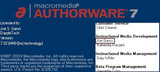
"Authorware is Dead"...I have heard these words ever since I started using the product, back when it was sold by Authorware, Inc., in May 1990. I fell in love with this product, its flow line approach, its inclusion of a scripting language...albeit a very limited one in that first version on the Mac. With time, the scripting language got more powerful and JavaScript was added as an alternative, and a few icons were added, including the Framework and Navigate icons.Eventually Macromedia asked me to help with the product and as you can see above, my name appeared in the credits.Articles and BooksThe product for me was simple but challenging and I liked it enough to start writing books about it, books that sold relatively well in such a small niche market. I wrote articles about it for Brandon Hall and for the eLearning Guild, among others. Writing my first book instantly made me recognized by many who previously didn't know me.ConferencesI am the only person alive who has attended every single Authorware conference. Not only that, but I have also spoke and taught at every one of them. Let's start with The Alternative Authorware Conference (TAAC), started by my good friend Tom Adams. Did TAAC really mean Tom Adams Authorware Conference? It was continued later by Mark Henry. A couple of times Mark held TAAC in the Adams Mark hotel - really? Adams Mark? Tom Adams Mark Henry? Strange. I keynoted at several TAACs and was presented with a lifetime achievement award, seen here. The very first year of TAAC I was asked to be keynote speaker by Tom. I arrived in Snowbird, Utah, with bronchitis. The thinner air didn't help. I gave my keynote and then was brought to Urgent Care where they gave me antibiotics and promised me I wouldn't die (ever). Ah, memories of imminent death!Then there was EuroTAAC, which was held in The Netherlands, England, Scotland, and Germany over the years. This year my friend Ole Kristensen held it in Randers, Denmark. I keynoted at several of these and taught precon at most of these as well. This year I even appeared on the Danish TV news. You can see the clip here. It's in Danish, but you can make out the words "guru Joe Ganci", "e-learning" and something about "what a sexy guy."Tom Adams later created another conference called TAW - the Texas Authorware Workshop. Once again, though, we wondered if it didn't stand for the Tom Adams Workshop! Kidding, kidding. This was held in Dallas two years in a row. Very enjoyable, very informative.Finally, there was AMGAC (Aviation, Military and Government Authorware Conference) founded by AMy Blankenship. It was small but wonderful, held in Biloxi, Mississippi. Amy and I became better friends. I was already friends with Steve Howard, who is originally from Scotland, lived in England, and helped take over EuroTAAC after the Dutchies sold it off. Steve and Amy eventually married in Biloxi. I went to their wedding. Never had I heard a stranger mix of accents - Scottish and Mississipian! They are good friends to me and always will be. They were in the path of Hurricane Katrina later, but survived and are doing well today.You can see lots of conference photos here on our Authorware site.TrainingOver the years, I trained Authorware all over the United States, Canada and Europe. I love teaching and it gave me the opportunity to meet a lot of great people, many of whom I count among my friends.LoyaltyAuthorware developers tend to be fierce defenders of the product. The battles between religious sects are nothing when compared with the battles between Authorware adherents and those who liked opposing tools!Recent HistoryWhen I started my own company, the esteemed DazzleTech, I was well-known as an Authorware guru, so naturally most of the work we got were from clients using Authorware. It wasn't long, though, before we realized we had to diversify to be able to reach the largest number of clients. I was an old-time programmer and became conversant with Flash. I had already used Director and other tools and then started looking for contractors and employees to hire that knew more than I did. I hit pay dirt when I brought on Chris Swenson and eventually made him a partner in the company. He not only sponges up new technologies easily, he is innovative and comes up with great solutions all the time. He is the author behind our own authoring system, Substance.The Death of AuthorwareAuthorware's demise has been predicted from the start. Every few months, rumors of Authorware's death were circulated, usually by those who used other authoring tools. Sometimes the rumors came from Adobe employees, but it was hard to know what to believe because the rumors were so frequent and then another version of Authorware would be released. I always said that like any software, Authorware would eventually reach the end of its life cycle. I'm happy to say it has lasted twenty years in the marketplace! That's quite an achievement and a tribute to Michael Allen, who created the product, and to Jamil Zainasheff, among many others, who continued to engineer and defend the product at Macromedia.But now we've reached the end, for all practical purposes. Yes, for the time being version 7.02 will continue to be sold, but it's time to move on. Good luck to us all.Read Adobe's announcement here.Subscribe to my blog.
Joe Ganci
.
Blog
.
<span class='date ' tip=''><i class='icon-time'></i> Sep 05, 2015 05:14am</span>
|
|
My friend Susan McDonald-Osborne just started a new m-Learning forum on Facebook.If you have a Facebook account or are ready to start one, click here. Subscribe to my blog.
Joe Ganci
.
Blog
.
<span class='date ' tip=''><i class='icon-time'></i> Sep 05, 2015 05:14am</span>
|
|
Even if you're not in the Denver area, you may want to consider joining this Yahoo group. It is very active:Denver Metro E-Learning Developers Grouphttp://groups.yahoo.com/group/dmeldMeets about four times a yearNext meeting date: see linkTime: 7:00 - 9:00 pmLocation: FX One Seven Zero, Technical Marketing Group, 424 East Simpson Street, LafayetteContact: Phil Tobias philtobias@aol.comSubscribe to my blog.
Joe Ganci
.
Blog
.
<span class='date ' tip=''><i class='icon-time'></i> Sep 05, 2015 05:14am</span>
|
|
It has been my pleasure to be associated with The eLearning Guild (www.elearningguild.com) since near its start in 2002. I have taught preconference classes and sessions at most of the Guild conferences and at each conference I have also enjoyed myself immensely and have learned tremendous amounts from others.The folks running the Guild are topnotch professionals and awfully nice to boot.David Holcombe and Heidi Fisk have run the Guild from the start, helping it grow from a few hundred members to several tens of thousands! David is the executive leader of the Guild while Heidi wears several hats, including the all-important organizer of all the Guild events.Steve Wexler is the Guild's Director of Research and Emerging Technologies. The Research site is the best around; in fact, it's downright fantastic. Besides several valuable reports that have been published, the site has live, up-to-the minute reports based on surveys being filled out around the clock on various subjects by Guild members. Remember there are tens of thousands of them and they represent a cross-section of e-learning professionals and learners. It's very interactive, allowing you to drill down and find the exact answers you need. WELL WORTH IT!Bill Brandon is the nicest editor with whom I have ever worked and that is saying something considering how much work it is for him to put together each issue of the Guild's Learning Solutions e-Magazine! As of this writing, there are 230 issues of of this great publication and each issue is chock full of practical advice, strategies, discussions and more. We're talking good stuff here, folks. I've had the pleasure to have had a few articles published in the Magazine, though I'm sorry to say it's been a while since I've written an article for Bill. He's a very patient man. Soon, Bill, as soon as I can!Karen Hyder runs all of the on-line forums and conferences. Officially she's the Online Events Moderator and Speaker coach. I can't think of anything to say about Karen that doesn't sound as if she's paying me. I hold her in high esteem, very friendly and a real pro, she makes both teaching and learning online very easy. She also is at all the conferences and is always running around helping out. What a great asset she is to the Guild.Tim Martin arranges for the conference expositions and advertising. He also is a great guy with whom to work, friendly, knowledgeable and always ready to help. Luis Malbas is the tech guy, and he knows what he's doing. The site is powerful and runs really well!The Guild has an Advisory Board that has some of the biggest names in eLearning on it (no, I'm not on it yet haha). They help guide the Guild in various ways - I guess you can call them Guild Guides!I know I'm leaving out some folks but these guys and gals are the heart and brains of the Guild. They have made the Guild what it is - a fantastic resource for all e-learning professionals and those who are interested in e-learning.DazzleTech has helped the Guild whenever possible and we're happy that in our own small ways we have been privileged to be associated with this great organization! There are several levels of membership, including a free level - why not take advantage of the Guild's offerings? I am very proud of my eLearning Guild membership! Join and you will be too!Subscribe to my blog.
Joe Ganci
.
Blog
.
<span class='date ' tip=''><i class='icon-time'></i> Sep 05, 2015 05:13am</span>
|
|
I had the pleasure of delivering an on-line presentation this week for the eLearning Guild called Choosing the Right Tools for your e-Learning Project. You can see the description by clicking here.I guess it went well! Here is the feedback I got from the Guild today:Thank you for another great session. The eLearning Guild and I appreciate your commitment and willingness to share your perspective and extensive knowledge with Online Forum participants. My survey numbers:Number of respondents to survey: 15 1. The presenter was knowledgeable about the topic strongly agree 12 agree 2 disagree 0 strongly disagree 0 2. The presentation content matched the session description on the website. strongly agree 14 agree 1 disagree 0 strongly disagree 0 3. I will be able to apply the information I learned in this session. In the next 3 months 13 In the next 6 months 1 In the next 9 months 0 In the next 12 months 0 Never 0 4. The speaker effectively used Polls 10 Open- ended questions/ Chat 11 Demonstrations 11 Slides 11 Sample file 2 5. Materials were appropriate to the session strongly agree 12 agree 3 disagree 0 strongly disagree 0 6. I would attend another session by this speaker strongly agree 15 agree 1 disagree 0 strongly disagree 0 Feedback: - Entertaining and engaging delivery style - Used polls very effectively to get and give information - Joe's depth of knowledge on the subject was greatly appreciated by the attendees (see Chat Pod contents) - His comparison and demonstration of the major content-creating tools was extremely well-done - Very attentive to both the regular Chat Pod and the Presenter Chat Pod It’s always a pleasure to work with you. See you in San Jose!Subscribe to my blog.
Joe Ganci
.
Blog
.
<span class='date ' tip=''><i class='icon-time'></i> Sep 05, 2015 05:13am</span>
|
|
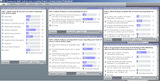
You may find these results interesting! These are the participant polls I conducted during my forum session. Click the image below to see it full size.Subscribe to my blog.
Joe Ganci
.
Blog
.
<span class='date ' tip=''><i class='icon-time'></i> Sep 05, 2015 05:12am</span>
|
|
I was recently asked by one of our strategic partners to offer my "Top Ten List" of the most significant events (e.g., new stories, technical advances, market trends) that shaped the "mlearning marketplace" in 2009. It was actually a great question and I enjoyed pondering and preparing my responses to that question (as offered below). Given the constant and oftentimes harsh distractions 2009 dealt us all in terms of budget cuts, canceled/postponed projects, long decision cycles, there was actually a lot of positive news and both technical and market innovations to make 2009 an outstanding year in the maturity of mobile learning. IMO, many things happened in '09 that position us all to start benefiting more from the promise and potential of mobile learning as a way to really drive organizational performance, improve operational readiness, and simply make anytime/anywhere learning more interesting, practical and affordable too.So, in no particular order of importance, here's my "Top Ten List" of mlearning highlights and milestones and look forward to seeing other lists and sharing comments. 1. Market Activity/Consolidations. RIM bought Chalk for their mobile Chalkboard offering. This certainly helped establish a strong market value for platform-based mobile learning solutions and generated market interest/demand for all mlearning vendors. In my opinion, this was the biggest news of 2009 for everyone involved in the enterprise mlearning space. In addition, longtime mobile learning tool provider Hot Lava Software was purchased by LCMS platform provider Outstart and interest in their combined offerings was well received. As they say, the rising tide lifts all ships. 2. Market Activity/Consolidations #2. Blackboard enters mlearning market by purchasing Terriblyclever Design, LLC, makers of MobilEdu(TM), for around $4M. The 2-year old company had modest sales but a growing collection of interesting higher-ed customers (including Stanford U, Texas A&M and Duke) and since the acquisition 6 months ago, has come to market with a new consolidated offering (called Blackboard Mobile) which is now one of centerpieces of Blackboard’s overall solution offering (and currently occupying the main screen on Blackboard’s corporate web site). Blackboard also just introduced a BlackBerry application to work alongside their current Apple iPhone offerings. IMO, the price and focus paid by an established LMS platform vendor are significant. 3. Cheap but Capable Devices. An Apple iPhone 3G can now be purchased new for US$99 (plus data plan of course) - this sets the price bar at an approachable level for virtually anyone who wants a smartphone and other vendors must cover Apple's bet here too. Virtually all of top-shelf models from Apple, RIM, Motorola, HTC, Palm and others (save Nokia here in the USA) are available (subsidized via a 2-year plan) for around US$200. While market research may indicate otherwise (see #4 below), I believe the rate of smartphone adoption for enterprise mobile learners is growing much faster than the smartphone market in general. 4. Compelling Market Research. A recent Gartner Group report highlighted mobile device trends and included some compelling news on Android’s 3-year growth projections wherein Android will start to gain on Apple while also taking market share away from current leaders Nokia and RIM. These trends will help ensure a very complex and hybrid device ecosystem will emerge within the enterprise mlearning market that will have an effect on mlearning content creation and delivery. In short, the landscape is getting more complex, not less complex and true mobile learning solutions will need to help mitigate all these factors. Add in the recent Morgan Stanley analysis on the growth of the mobile Internet and all the right trends seem to be lining up!In a related matter, the release of some many different Android-based phones this quarter will change the device landscape starting in 1H 2010; the early indicator is the fact that Motorola has now sold 1M Droid devices in less than 6 weeks into the USA market where iPhones and BBs and WinMos already abound. To throw some perspective in, analysts estimate that Apple will sell around 10M new iPhones this quarter (after delivering 7M in Q3); both are significant in their own right.5. Flash Support Arrives for Mobile. The announcement of the coming availability of Adobe's Flash Player v10.1 supporting all most major device platforms (save Apple iPhone) will provide improved ways to create and deliver mlearning content to advanced smartphones. That said, I still don’t believe this is the panacea many others think it is as Flash content will only work WELL on a select number of higher end phones and offers limited support for interactivity on most devices (e.g., all BlackBerrys except the Storm/Storm2 series devices probably can’t use their pointing devices to accomplish complex interactions).6. Pricing for Smartphone Data Plans Decrease . The monthly price people need to pay for their data plans and messaging plans here in the USA and Canada is failing and "all you can eat" plans are becoming more popular (how truly American - we're gluttons at both the buffet and while communicating aren't we!). More people with data-enabled devices will drive demand.7. Mobile Meets Social & They Fall In Love. The marriage of social tools and mobile devices is getting better and better; this trend is accelerating and will drive demand for a new class of mobile learning tools and applications/platform extensions. Our company sees user-generated content as a true business driver beginning in Q1 2010 and this will make the mobile learning application suite "sticky" and help drive mobile learners to use their devices more and more resulting in a situation where they’ll be more inclined to consume content they’ve been assigned by their managers or generate by their peers (or customers or partners).8. Mobile Starts to Make (Mean) Money. Technologies like Twitter, Facebook and LinkedIn (and the companies behind them) are starting to really explode and make $$$ for the first time. And a key trend for 2010 seems to be enterprise-aware social networking tools. SMS in general is still gaining tremendous traction; as an example, I’ve recently started hearing and seeing adds on TV or the radio where the "call to action" isn’t "go to www.acme.com to learn more" but is now presented as "Text ‘tellmemore’ to 77777 to sign up for more information about XXX!".More to the point here, our company finally started bidding, winning and delivering projects in the mobile learning space that generated the same or higher contributions (revenues/profits) as similarly sized online/desktop elearning engagements. Real customers prove there's finally a market for mlearning platforms and tools, custom content development and related value added services. This fact will drive other previously passive/sidelined vendors into the "mobile pool" as they look for ways to stem the tide and stop losing deals to next generation competitors who can already deliver on mobile learning's promise. 9. Increased Levels of Interest from Learning Industry Colleagues. Judy Brown’s (mlearnopedia.com) first 7:15 AM "Mobile Learning Breakfast Byte" session at last year's DevLearn Conference in San Jose, CA was attended by 60+ people this year - that’s up 52 people from 3 years ago the first time I went to DevLearn. The 2009 DevLearn event also had a widest variety of mobile learning sessions and speakers of any general audience learning conference to date indicating the trends towards not only understanding but adoption are accelerating.10. More mLearning Books are Being Published. Several books on or covering Mobile Learning are all due out in Spring 2010 including commissioned efforts from Gary Woodill (Brandon Hall), Clark Quinn (Quinnovation) and Jeanne Meister (New Learning Playbook) and we're hoping to contribute something to all of these (e.g., case studies, insights). OnPoint also co-wrote a chapter for the upcoming ASTD book on new technologies on the ROI of mobile learning solutions. If the publishers are preparing now for the next year, the trend is growing for sure.Looking forward to comments and reading other Top Ten lists too!
Robert Gadd
.
Blog
.
<span class='date ' tip=''><i class='icon-time'></i> Sep 05, 2015 05:09am</span>
|
|
My friend and colleague Brent Schlenker posted a Tweet yesterday that both caught my attention and also quickly made the rounds through the SoMe ecosystem which read:Making Video Encoding Easy and Affordable with Encoding.com http://bit.ly/4TmAWU) This is VERY cool! #mlearning #elearning The offering cited in the post is for a new cloud-based application/service called Encoding.com from a company of the same name. Their mission, as stated on their corporate web site, is as follows:"Until we launched Encoding.com in the summer of 2008, video platform operators had two choices: inflexible encoding software or expensive hardware encoding appliances. Now, there's a third and better option — encoding in "the cloud" wrapped within an "on demand, pay as you go" delivery model... Site operators can now focus on content and the user experience while allowing us to ensure that content is available to all users on the most popular Internet and mobile devices." As a techie actively involved in mlearning content production every day - much of that media-based - I can fully appreciate the benefit this sort of service can offer mlearning content producers and practitioners. In fact, we've spent over 2 years working to develop an efficient way to streamline all of the necessary media conversion processes and business work flows our mobile customers/partners face prepping and deploying content both to the web and out to mobile devices. As anyone who works in an environment where "device diversity" is a challenge (where you've got RIM BlackBerrys, Apple iPhones, Android phones, Windows Mobile, Symbian-based smartphones, netbooks, whatever!), a video format that's ideal for one device is likely not ideal for others in your population, and even older devices from the same company (e.g., RIM) may not play (or prefer) the same encoded media files as their newer siblings.Brent's post piqued my interest and so I decided to do more than just RT the same news to the same people and see what this new service had to offer. Here's my quick take. The Pros: This software-as-a-service application is well conceived and polished. It uses an installed "desktop client" (though PC only) to help you organize your files for conversion and nicely packages, delivers and manages secure file uploads and downloads for your media.Customers can select/utilize a set of predefined conversion templates that make it easy to "transcode" a master/source file from one format into a variety of different output formats. Or they can change/edit these core templates to meet their own specifications.Uploaded files are processed and returned back to the producer's desktop computer where they can then be prepared for deployment out to the web or destination mobile devices.Pricing for the service can be handled via a monthly plan or can also be usage-based. The Cons:This sort of cloud-based offering is ideal for single authors but not necessarily great for content creation teams. The predefined encoding templates don't offer as many options as some of the other higher end offerings. And actions like automatic insertion of DRM information isn't possible and will need to be added manually after the fact if required. While the output files are nicely delivered back to your computer, most of them will need to be uploaded back into the cloud for distribution to your web site, LMS or mobile devices. Given decent looking videos for mobile devices can run from 1-2MB/minute, producing long form videos in multiple formats will result in lots of content shuttling. In comparison, an enterprise transcoding process (like the one we have integrated into our CellCast Solution platform) will automatically post the output files onto the destination servers and can even streamline your efforts to package your new media files for automatic distribution to all your target mobile devices. While the pricing options are generally fairly reasonable, the cost of a mid-level to professional media encoding software suite -- which you can also configure to run in your own cloud -- is probably cheaper and can serve a bigger production team. Bottom line: As an enterprise mlearning platform provider, our requirements differ from those of most T&D teams just starting to get their feet wet in the mobile space. However, I do think this is an innovative and novel approach for encoding media files. And as mobile devices get more capable, the appetite of your mobile learners for compelling content that's professionally encoded for their devices will surely increase. And thanks to Brent for bringing it to my attention too!
Robert Gadd
.
Blog
.
<span class='date ' tip=''><i class='icon-time'></i> Sep 05, 2015 05:08am</span>
|
|
As active practitioners and consultants for enterprise mobile learning initiatives, a frequent question we get asked is "What kinds of tools can you recommend to help us test our mLearning content before we release it to our mobile workers?" It is a great high level question and the answer is both complicated and multifaceted as each deployment environment comes with its own unique requirements that inject their own set of delivery complexities. If you’re fortunate enough to have a highly structured and standardized delivery environment where everyone has the same BlackBerry Bold/9000 wireless handheld or your users have two or three different brands of Windows Mobile devices, your testing efforts can prove to be straight forward. But the bigger your audience is, the greater your challenge can become. And this may mean that full and comprehensive testing can take you as long as the content authoring effort itself - at least for simple content!Building & Testing for a Broad AudienceDepending on the "device diversity" of your environment, you may need to create mLearning content for a wide audience who carry an even broader range of mobile devices ranging from basic feature phones to a selection of today’s hottest smartphone devices; in order to do so, you’re going to need to get your hands dirty too. More to the point, you’ll need to test and verify the functionality, effectiveness and overall user experience of mobile learning content by trying it yourself on real devices under real world conditions whenever possible. And if you want to ensure the best possible experience for every class of mobile learner, you’ll need to build a collection of working mobile devices, simulators/emulators and testing tools to span the potential reach of your target audience. Leave "no stone unturned" by testing the full end-to-end experience from distribution/delivery to installation/loading to access/playback to reporting/analysis. We commonly see teams making assumptions that because something worked fine on one device - even one from the same device OEM - it should work on others and that’s not always the case. These variations are often the result of myriad factors like different processor speeds, available device memory, device OS versions, encryption settings, etc.From our experience, there’s no 100% substitute for actually using a physical, operational handset to perform all your testing but this method may not be practical and/or affordable for some teams/content developers. On the good news front, the longer you’ve been in the mobile learning field, the more likely you are to have an expanding office drawer full of recently retired but still functional mobile devices; all they generally lack is a SIM card module to activate them on a particular carrier network and anyone with a little skill and patience can quickly get comfortable "swapping cards" from one device to another to perform their structured testing protocol (it’s always a good idea to develop one) for any new mobile learning course they plan to deploy. Those teams that don’t have full device drawers or enough representative physical devices can also try using available device simulators and emulators which can generally be downloaded (for free!) from the device manufacturer’s support site or other common web locations. The price is right but, remember, the experience will not the exactly the same as the real thing especially where possible concerns about access security, content encryption and download speeds are concerned given simulated phones attached to broadband Internet connections are not a perfect equivalent. After many years of using available simulators and emulators, we’re now comfortable and quite familiar with where they work and where they don’t too; they can certainly be used for most of your initial testing and content verification exercises. Finally, the best simulators/emulators are from the device OEMs themselves including RIM/BlackBerry, Google/Android, Nokia/Symbian and Microsoft/WinMo. If your team is developing native Apple iPhone and iPod touch applications, a fully functional simulator can also be accessed using Apple’s Xcode IDE too. Don’t forget your testing environment may also need to be expanded to include appropriate devices for testing 1-way and 2-way SMS messaging across multiple carriers as well as voice/IVR-delivered services on entry level phones. Finally, it may also be practical to have a few other non-phone mobile devices on hand like a Netbook computer or an Ultra-Mobile Personal Computer ("UMPC") to test content delivery to alternative mobile devices wherever appropriate.The image below is of my office desk and it presents several of the devices and tools we keep on-hand to ensure that all mobile content prepared for wide distribution works as intended across the broadest array of smartphones (old and new), basic feature phones, netbook computers, specialized ultra-mobile personal computers ("UMPCs") and even spanning carriers and wireless delivery methods (GSM vs. CDMA). This picture demonstrates how we use a combination of both virtual and physical devices and we’ve certainly learned from experience that there are minor yet myriad differences between a real and simulated playback experience - in short, the only 100% verification test must be performed under the same target delivery conditions using a physical device across an actual wireless network. So, what’s in your drawer? My physical mobile devices and virtual tools for testing include:a. Windows-based RIM BlackBerry Simulators (for all devices & carrier-specific) - we have about 10 of these we use regularly.b. Mac-based Apple Xcode-based Simulator (for all iPhone & iPod touch device for testing apps)c. Android G1 and G2 Emulators (for all 1.x, 2.x devices) d. Windows Mobile Emulator (for WinMo 5, 6 and 7 using VMware Windows partition)e. Nokia Symbian/S60 Sims (using VMware Windows partition)f. Windows -based Netbook (for Netbook applet testing); we also have an Android Netbookg. Sony basic feature phone (for voice and SMS testing on T-Mobile)h. RIM BlackBerry 9000 smartphone (media support and encryption on ATT)i. RIM BlackBerry 8703 smartphone (limited media support)j. Vulcan Flipstart Windows-based UMPC device (1024 x 768 display)k. RIM BlackBerry Storm2 (full media support and encryption on Verizon)l. Nokia 5800 smartphone (Symbian 60/v5 testing on ATT)m. Android G1 smartphone (on T-Mobile) n. Jitterbug basic feature phone (voice/IVR and SMS testing on MNVO)o. OQO Windows-based UMPC device (800 x 480 display)p. Apple iPhone 3G (on ATT)q. RIM BlackBerry 8310 Curve (no Wi-Fi, no encryption on ATT)r. RIM BlackBerry 8330 Curve (with Wi-Fi, unlocked for GSM carriers)s. RIM BlackBerry 7210 phone (very limited media support)t. RIM BlackBerry 8800 World smartphone (on ATT) Next time I’ll explore some of the fee-based mobile testing solutions and alternative platforms you can consider instead of investing in all the physical devices and long-term carrier contracts required to replicate our current methods.
Robert Gadd
.
Blog
.
<span class='date ' tip=''><i class='icon-time'></i> Sep 05, 2015 05:06am</span>
|
|
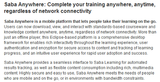
I happened upon a tweet last week while trolling my Twitter in-box that heralded a product announcement from Saba for their new "Saba Anywhere" offering which they described as follows: "Saba Anywhere is a mobile platform that lets people take their learning on the go." The press release continues with details on how flexible, capable and secure the new offering is so I read on with great interest. Instinctively, I reasoned another one of the "Big 10" LMS/Talent Management platform players was finally joining the mLearning party introducing their own well conceived and highly polished solution for the creation, packaging, delivery and tracking on mobile-friendly content to on-the-go workers via their omnipresent smartphone devices. If you're thinking this announcement/product branding meant the same thing, a little further investigation would prove you wrong too! The marketing post outlines the following:At first blush, this all sounds great! But peeling back the onion a bit reveals the plain fact the supported mobile device all this "mobile-accessible" content is delivered to and consumed on is a standard Windows-based laptop or desktop computer. Thump!Okay, that's interesting news on a few levels but the likelihood today's typical enterprise mobile employee/executive traveling around for business doesn't have an enterprise smartphone in their pocket/purse in addition to their enterprise laptop computer taking up space and adding heft in their briefcase is increasingly slim-to-none. Furthermore, a recent Mobile Workforce Report conducted by iPass on "Employee Device Preference" revealed that 63% of respondents preferred to whip out their smartphone for work-related tasks versus cranking up their laptop computer to conduct those same biz chores. If booting my laptop takes me 2+ minutes and acquiring a suitable wireless signal takes another 1-2 minutes in some appropriate hot spot, by the time I'm finally ready to get down to learning something I may have already missed the window of opportunity. Contrast that experience/hardship to using your at-the-ready smartphone that enables true "Anywhere" and anytime learning and we begin to question the potential of this strategy. Not to mention that smartphone-based learning can happen whether I'm seated patiently in a lobby waiting to see a customer/prospect, or standing in a queue ordering lunch or smashed into a commuter train heading home after a long day -- try opening your laptop and taking your course in those environments! Agreed, the desktop/laptop course experience is richer (more Flashy) today versus the mobile experience and considered by many to be easier to view and consume compared to some mobile content, but true engagement and learning are not only possible but highly achievable on the current crop of next generation mobile devices like the BlackBerry, Apple iPhone/iPod touch and iPad, Google Android and Windows Mobile smartphones that now proliferate across the enterprise. Yesterday's desktop/laptop-optimized content may need to be rethought and re-factored as well but the set of available tools and methods to accomplish these tasks improves daily...the rate of change is accelerating like nothing I've witnessed before and the mobile device (READ: smartphone) will soon be the dominate platform for content delivery (and training delivery) globally. Much of what the Saba team gleaned in designing and bringing their new Anywhere offer to market can likely serve as foundational knowledge for the next anticipated step in their evolution towards true mobile learning. They can even re-purpose their adopted product tag line too when that time comes ("...Complete your training anywhere, anytime, regardless of network connectivity.").
Robert Gadd
.
Blog
.
<span class='date ' tip=''><i class='icon-time'></i> Sep 05, 2015 05:04am</span>
|