Blogs
|
Sales Transformation - No Guts, No Glory
I read somewhere recently that organizations should consider very carefully whether to undertake a full-blown sales transformation initiative, because of the time, effort and cost involved.
Really? Whatev! (Sorry, I live with teenagers.)
Yes, perhaps if your basic strategy or business model is flawed, your product has serious quality or value-delivery issues, your service delivery destroys customer loyalty, or your costs or pricing/profitability are grossly out of line, you might plug another hole first, while bailing water.
But before long, you need to address revenue, profit and growth. No organization has ever cut their way to the top. Sales remains the lifeblood of organizational success. As the old adage goes, "Nothing happens until someone sells something." I simply have a hard time imagining a more worthy corporate endeavor than transforming your sales force into a more effective, well-oiled machine.
And I’m not talking about 3 or 5 percent incremental improvements, either.
Aim Low, Hit Low
You’ve probably heard the quote that we use only a small portion of our brain’s potential capability, right? I’d argue that generally-speaking, we’re in the same boat with our sales effectiveness.
Perhaps you’re thinking that so many organizations are already doing extraordinarily well at growing sales year-over-year, that sales transformations aren’t necessary? I do know this is true in some specific cases. Some organizations are doing quite well; have already taken a logical, organized, piece-by-piece, evidence-based approach toward sales transformation , have addressed multiple parts of the sales performance ecosystem, and are steadily progressing toward system and organization alignment.
I tip my hat to these company leaders, but I don’t see enough of them.
Frankly, I haven’t walked into an organization as an employee, where I didn’t believe that we could double sales, with the right people, focus, attention and effort.
Yes, I said double. But if my zeal makes you uncomfortable, pretend I said 25 percent improvement. Anything but 3 to 5 percent.
Look, I want to be more positive about our current state of affairs, but when we look at the big picture, let’s be real. Week in and week out, I continue to come across these and similar data points:
See this news from SAVO and notice the stats listed under the five critical failure points.
Over the past four years, various sources, including CSO Insights, have reported that 36 to 46 percent of sales reps do not achieve quota.
According to Xactly Corporation, 40 percent of sales teams make less than 80 percent of quota.
The average tenure of senior sales leaders is 18 to 24 months.
ES Research Group, Inc. estimates that 20 to 33 percent of salespeople do not have the capabilities to be successful at their jobs.
ESR also estimates that 80 to 85 percent of sales training produces no long-term impact (after 90 days).
Sixty-five percent of top sales leaders surveyed by CSO Insights said their top objective for the year was capturing new accounts - yet 67 percent of those same leaders said that their team "needs improvement" in generating leads.
In ASTD’s report The State of Sales Training, 2012, half the respondents felt that 50 percent or less of the training they received was relevant to their job.
Seems to me that there are a few more opportunities for sales transformation initiatives.
Sales Performance Ecosystem
In a post for ASTD’s Sales Enablement community recently, I talked about the Sales Performance Ecosystem, as I see it
I suggested that we’re not doing more because it’s daunting and complex, and so many sales leaders are under short-term pressure to make their numbers. I believe that’s true. Our short-term, stock-price driven economy sometimes pulls us toward the urgent and away from the important. Fact of life, though, and it is not changing. Note that panic is not a business strategy.
Over the years, I’ve seen some recurring themes that hold companies and leaders back.
No clear ownership: Look at the various functions that are involved in managing different aspects of the ecosystem. Coordinating sales, marketing, IT, HR, and others is like herding cats.
Sales transformation, like any major organizational change effort, rarely is (fully) successful without top-down involvement, support and accountability. Whether or not an "owner" is clear or assigned, or whether it’s a coordinated team effort, top leaders need to be involved and coordinated project management is required.
70 percent of change efforts fail: So why try?
If that’s true, as we’ve heard from John Kotter for a while now, 30 percent of initiatives succeed. Change leadership and management is not a mystery, with arcane secrets locked in a vault somewhere. It’s just not typically done well. Do it right, or work with experts who can guide you. There is a difference, by the way, between change leadership and change management, just as there is between leadership and management. To maximize your chance of success, you need both.
Boiling the ocean: Whether they try to do too much at once, or hold back because they fear it requires doing that to transform a sales force, I’d like to have a nickel for every time I heard "let’s not boil the ocean," in a meeting room.
Sales transformation usually requires an overhaul of many areas. They don’t need to all be done at once. Prioritize initiatives based on potential impact, and do a few at a time. Do, however, have a master plan to get everyone and everything in alignment eventually, and continue to execute over time. Continuous improvement is also not a mystery. Just be clear that expecting it to happen without a purposeful, evidence-based, well prioritized and orchestrated plan, is like wishing on a star.
Not knowing where to start: Like "paralysis from analysis," this is "paralysis from overwhelm." The ecosystem is big, spread out across the organization, and has a lot of moving parts.
Using analysis, problem-solving methods, decision-making tools, and some plain old logical thinking can help you cut through the clutter. Sometimes, a tool like Kurt Lewin’s force field analysis can help. It’s public domain, free, simple (not necessarily easy - the thinking needs to be valid), and has helped many. Check it out.
Not sure how to do it: There are so many moving parts these days, who can possibly be an expert at everything?
In this case, the previously-perceived downside of ecosystem functions being spread throughout the organization is a benefit. Capitalize on the distributed nature of talent in your organization and involve people who are experts in areas where you are not. And if you don’t have experts in a particular area, charge someone with becoming one, hire the expertise, or outsource. Then, if you’re a senior leader; listen. Over the years, I’ve seen a lot of real expertise squashed at a conference table, in favor of an idea, which had little validity in comparison. I hesitate to say this, but very often, training leaders know how to maximize the impact from training, but can’t get buy-in to execute on what will really work, because it involves more than just putting people in classrooms or taking courses
This isn’t an exhaustive list, but it does cover themes I’ve seen frequently. If you’re struggling with any of these issues and unclear about whether you should tackle a sales transformation, or how to best proceed, feel free to contact us to explore your situation and possible options. We’ll do our best to guide you. And as always, I’d enjoy hearing your thoughts in the comments.
Additional reading:
Selling Power recording of SunGard sales transformation webinar:
http://bit.ly/SunGardSalesTransformationWebinar
Previous posts on change management, change leadership and sales transformation:
http://blogs.richardson.com/tag/change-leadership/
http://blogs.richardson.com/tag/change-management/
http://blogs.richardson.com/tag/sales-transformation/
———————————————————————————————————
Download a complimentary copy of our ebook - The Roadmap to Scalable and Sustainable Sales Transformation
The post Sales Transformation - No Guts, No Glory appeared first on The Richardson Sales Excellence Review™.
Richardson Sales Enablement
.
Blog
.
<span class='date ' tip=''><i class='icon-time'></i> Sep 18, 2015 07:29pm</span>
|
|
Success Story: Making Sales Training Stick and Extending Knowledge Retention through Mobile Gamification
"How do we make sales training stick?" That question keeps many learning and development leaders (as well as senior executives) up at night. You want your efforts to train your employees to take hold and be leveraged in their work, not wasted as a moment-in-time intervention. Here is an example of what one company did to help its leaders sleep more soundly while improving their sales reps’ performance.
The Challenge: Making Sales Training Stick
You know the story: Your sales reps spend a day (more likely several) out of the trenches in a conference room being trained. You don’t want to pull them offline, but you want the reps to be taught new knowledge, learn new skills, close performance gaps, and adopt new behaviors in order to maximize their effectiveness in selling your products and services.
But as soon as they leave the building, they begin to forget what they have learned. Research shows that regardless of quality or delivery method, salespeople will forget 79% of their training within 90 days. Yes, they might refer to some of the handouts from the training once or twice, but materials get lost or shelved and then forgotten. Another risk is that they simply revert to their pre-training habits and abandon what they learned during their training experience.
One of our clients, a large manufacturer in the life sciences industry with sales in more than 100 countries shared the concerns listed above along with their solution to making learning stick after training.
The Solution: QuickCheckTM
After the training, our client used our QuickCheckTM tool to keep their sales reps engaged and thinking about what they learned. The QuickCheck tool is a software application that:
Reinforces learning and other selling initiatives
Asks relevant questions circulated over several weeks post-training (e.g., 2 questions asked 3 times per week over 6 weeks)
Can be accessed on any device (e.g., laptops, smartphones, or tablets) for convenience and maximum participation
Has a low impact on time (about 5 minutes per day)
Experts work with your learning and development team to devise a series of multiple choice questions to be sent to users several times per week. It’s not just a matter of selecting the answer and moving on, but choosing the best answer from among several close possibilities. When incorrect answers are chosen, users will see an explanation as to why one answer was better than the other options. Users must answer each question correctly twice for it to be retired from the program.
The Results
Our client used QuickCheck™ with very positive results after two rounds of training. Here are the highlights:
1. Actively Engaged Sales Reps
Through the repetition of receiving two questions per day three times per week over a period of six weeks reps were engaged well after the training. The questions asked weren’t generic, but customized to reflect the training and keep reps thinking about what they learned and were expected to do differently.
During their first round of using QuickCheck, 80% of trained reps were actively using the tool and thus stayed focused on the training. Over 95% of reps kept up on a weekly basis in the second round. That level of engagement - and therefore continued learning - might not be achieved if not for the ease and relevance of the tool.
2. Scoreboard Encouraged Healthy Competition and Visibility
Reps don’t use QuickCheck in a vacuum. Yes, they receive their own emails each morning and respond to their own questions, but so do their peers. Another important aspect of the tool is that it allows users to benchmark themselves against their competitors (i.e., their colleagues). Over the 4-6 weeks it takes to cycle through 20 questions, users (and just as importantly, their managers) can see scoreboards on a weekly basis to gauge the progress of individuals and peer groups.
Are you tracking on time or falling behind? Are you getting the answers right or stumbling more often than not? Are you keeping up with others?
The leaderboard creates visibility and healthy competition among users to spur them along, while also arming sales managers and training and development leaders to see the extended impact of the training (see #3 below). Not wanting to be the one not participating or scoring well, most sales reps will use that incentive to take it seriously giving it the time and thought it deserves.
3. Created Opportunity for Sales Managers to Coach
Learners are practicing the skillset you are trying to teach them; taking advantage of technology to reinforce the desired behaviors. In order to really move the needle on your efforts to transform your business, you need your front-line supervisors to coach their employees, not just babysit them and take attendance, or just look at reports. They must take a genuine interest in helping employees and sales reps improve themselves and advance their skills, which will of course also improve the department and company.
QuickCheck’s scoreboard provides managers with just such an opportunity, specifically to see what to coach to whom. For example, if users aren’t getting a series of questions right, then perhaps more training or communication is required to help. It is not intended to be punitive in nature, but a way to see what’s working and where to place more emphasis. If you don’t have a coaching culture, this presents a good reason and context to start.
Sustain the Conversation and Learning through Social Media
All of that’s great, but what happens after the QuickCheck period has ended?
Hopefully your reps took advantage of the post-training Q&A and reinforcement, and that some of the questions and situations sparked dialogue and debate among the reps. We suggest that you leverage your internal social networks as a way for reps to continue the discussion. Of course there should come a time when your target behavior has become the norm and you can set your sites on the next phase of development, but until then conversation and communication can help you to maintain the momentum and give your change the best chance to succeed.
Companies realize the value of maximizing their training efforts (and dollars) by extending knowledge and fostering a culture of continuous learning beyond the event. Next time you schedule a training program, look beyond the days spent in the classroom to have a greater impact on your trainees and ultimately your business.
————————————————————————-
Click the following to learn more about making your sales training stick, Richardson QuickSkills
The post Success Story: Making Sales Training Stick and Extending Knowledge Retention through Mobile Gamification appeared first on The Richardson Sales Excellence Review™.
Richardson Sales Enablement
.
Blog
.
<span class='date ' tip=''><i class='icon-time'></i> Sep 18, 2015 07:27pm</span>
|
|
Insights on How Marketing Contribute to SunGard’s Successful Sales Transformation Initiative
Sales and marketing alignment is vital when establishing a solid content marketing strategy. Content is not there for only marketing to use and publish, but also exists to enable a sales team to go out in the field and speak to their customers in a meaningful way. Many companies are trying to train their sales organizations to provide insights in order to add value to the customer conversation.
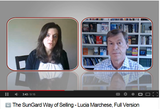
Over the past year, Richardson has worked very closely with SunGard to help implement an Insights-based sales training program. In the video below, Lucia Marchese, Head of Marketing at SunGard Financial Systems, sits down with Gerhard Gschwandtner, Founder and CEO of Selling Power, discuss their successful sales transformation at SunGard and the benefits of a newly aligned marketing group and sales team gained through content sharing and thought leadership practices.
Watch the video below to learn how SunGard implemented a content marketing strategy as a part of their Successful sales transformation.
———————————————————————————————————————————-
Download a Complimentary eBook, The Roadmap to Sustainable Sales Transformation
The post Video Blog: Insights on How Marketing Contribute to SunGard’s Successful Sales Transformation Initiative appeared first on The Richardson Sales Excellence Review™.
Richardson Sales Enablement
.
Blog
.
<span class='date ' tip=''><i class='icon-time'></i> Sep 18, 2015 07:27pm</span>
|
|
The Richys, Recognizing Excellence in Salesforce Enablement
We get to see and test-drive a lot of sales support and enablement tools at Richardson. And, as a leader in sales training and performance improvement, we know a winner when we see one.
We created the Richys in response to the great feedback from our post on Top 10 Disruptive Sales Technologies and as a way to recognize cool, innovative, and standout products that make an impact on improving sales effectiveness and efficiency. The Richys - the latest addition to our blog, Richardson Sales Excellence Review - will offer unbiased reviews of some of the great products and services in the sales ecosystem.
Each month, we will recognize a company or product for the excellence and innovation it brings to sales. This is strictly our own opinion based on our observance and interaction with the product or service as used by our clients, Richardson internally, or from our personal use.
Let’s get started with the first-ever Richy.
And the Richy goes to…
Our first Richy goes to Salesforce.com’s Chatter.
Chatter can best be described as a one-to-many collaboration platform that connects your teams with critical business information. It sits within Salesforce.com, but is also available in a desktop version.
Richardson recently implemented Chatter within our own sales team, and we saw immediate improvement in communications and information sharing.
At first I was apprehensive about the product, thinking it would be one more tool to manage. I quickly saw its’ power and the benefits in posting information, accessing internal teams, and providing data to the sales team.
Here is why our team thinks Chatter should receive the inaugural Richy:
Social selling research - allows the quick sharing of information between reps that could benefit a current prospect or account, including research on prospects, clients, companies, or former projects.
Social learning or reinforcement - allows the sharing of knowledge, support tools, competitive info, and the like to targeted team members in specialized groups…or to the entire team.
Mobile convenience - the team can access Chatter anyplace, anytime using desktops, smartphones, or other mobile devices.
Adoption - it’s easy, because it’s intuitive and sticky, like Twitter or Facebook
Enterprise collaboration - it supports our ability to not only align Sales and Marketing, but to collaborate more effectively across the enterprise to support sales and, in doing so, to support our clients.
Client engagement - allows you to create controlled-access groups and drive improved collaboration and communication with clients. The value of this feature can’t be underestimated.
System integration -it’s integrated into Salesforce.com, so it’s easy to get up and running.
Removes silos - as a truly open social collaboration tool that you can use internally, Chatter removes barriers to collaboration. Whether there’s a discussion around opportunities and implementation or simply knowledge to share, Chatter gives people the ability to automatically become involved.
Improves data cleanliness and accountability - by being linked to Salesforce.com, Chatter forces sales reps to continuously update data, which then becomes the new reference point for the entire company. The ability to passively follow deals or join groups allows users to be updated in real-time of any changes or posts; there’s no need to chase answers or be officially "in the loop."
Low adoption costs and ease - Baseline Chatter (ChatterFree) is free and allows you to include the entire company. The cost comes from the level of Salesforce.com access you want Chatter users to have. As for ease of use, Chatter mimics other social media platforms, which has the additional benefit of forcing employees to be more social media savvy.
Congratulations to Salesforce.com’s Chatter on being named the first Richy. You can learn more about the product here.
If you want to suggest a great product for our review, email me at jim.brodo@richardson.com.
—————————————————————————
Sales Organization Change Checklist
Click here or on the image below to learn more about how ready you are to effectively implement change within your sales organization with Richardson’s Sales Organization Change Checklist
The post The Richys, Recognizing Excellence in Salesforce Enablement appeared first on The Richardson Sales Excellence Review™.
Richardson Sales Enablement
.
Blog
.
<span class='date ' tip=''><i class='icon-time'></i> Sep 18, 2015 07:26pm</span>
|
|
Four Essential Factors for Building Trust with Sophisticated Buyers, Part 1 of 2
This is the first of a two-part guest post written by Andrea Howe, co-author of "The Trusted Advisor Field Book" and creator of The Get Real Project.
Here’s something I’ve learned about sales professionals in the years I’ve been leading training programs: they’re avid learners in hot pursuit of excellence. And for the best of the best, "excellence" is determined not by numbers, but by the difference they make. Use this four-part checklist to gain insight into ways to raise your game.
Do the Math
In this day and age, there are very, very few who dispute the importance of building trust in the sales process.
While trust-based selling is far from formulaic, it helps to approach it with a formula in your back pocket. That’s where the trust equation comes in.
David Maister, Charlie Green, and Rob Galford first wrote about the trust equation in The Trusted Advisor in 2000. Eleven years later, Charlie and I reprised it in The Trusted Advisor Fieldbook. It’s proven to be a perennial favorite.
One reason for the trust equation’s popularity is that it has many uses. As a conceptual framework, it demystifies what it really takes to be trustworthy. It can also be used in a more specific way to "score" a particular person (you) or a particular relationship (yours with a client). The key to getting the best use out of it is to understand the distinctions between each of its four variables, along with the direct impact of each on your sales success.
I’ve described each of the four variables below from most to least provocative. Here’s the critical question: How do you fare on each one?
Get Off Your "S"
We know him from a mile away: the stereotypical used car salesman who’s all about him. I doubt there’s a single person reading this blog who falls into that category because you wouldn’t be interested in the kind of content that’s posted here. That said, I bet there are a lot of readers who succumb to the self-orientation trap, as the trust equation defines it. I say that because we all do at one time or another, and more often than we realize.
Self-orientation is essentially about your focus—is it directed at you or your clients? It lives in the denominator of the trust equation; therefore it’s the only one we want to be small, as it is naturally when you’re focused on others.
For most of us, self-orientation expands in subtle and sneaky ways, such as when the high achievers among us succumb to "premature solutions," or when those who prefer to be in control begin to steer a conversation towards our own agenda, or when our desire to be liked interferes with our willingness to have tough conversations. Generally speaking, as our discomfort and anxiety increases, our "S" gets bigger and bigger.
And if these shoes don’t fit you, take this litmus test: are you willing to refer your client to a competitor when you know the competitor will do a better job? If the answer is "no," or "it depends," that’s high self-orientation in the works. It’s also a failure to embrace a critical paradox of sales, by the way, which is this: the best way to close more deals is to stop trying to close more deals and instead get relentlessly focused helping your client make the best decision for her right now.
(And now you see why I said self-orientation is the most provocative variable for salespeople.)
If you’re looking to transform your relationships with your clients, and your sales results in the process, then get off your "S."
Go Soft
I work with a lot of professional services people who don’t see themselves as salespeople and they almost universally assume the following about those who are: "They’re great at the ‘soft stuff.’ They have to be."
Sadly, I’m not at all sure that’s true.
If my direct experience is any indication, salespeople don’t score any higher on the next most provocative variable of the trust equation, which is intimacy. And that’s not because I’m leading remedial programs for the mediocre (in fact, it’s usually the opposite). I believe it’s because so many of us in business are taught, either directly or indirectly, to eschew anything that seems touchy-feely.
Intimacy is about safety and your ability to form and maintain relationships that are comfortable and secure for others. A trusted advisor (and an exceptional salesperson, which I’d argue are one in the same) is a safe haven for tough issues. So then intimacy is yeast to leavened bread: a have-to-have, not a nice-to-have.
There are many pathways to intimacy. Time on the golf course with a client is only one of dozens of options, and not necessarily your best one. Other possibilities include listening deeply and with a real demonstration of empathy, sharing something personal about yourself, asking questions others would be afraid to ask (in a respectful and appropriate way, of course), and telling your client something you really appreciate about her—just to name a few.
If you’re not getting called in by your clients as early or as often as you’d like, do the work that’s required to go soft.
Stay tuned for the second of this two-part post where we will cover the remaining two variables, each with its own twist: "C" (credibility) and "R" (reliability).
About Andrea P. Howe
Andrea P. Howe is the co-author, with Charles H. Green, of The Trusted Advisor Fieldbook: A Comprehensive Toolkit for Leading with Trust. She is the creator of The Get Real Project and also a lead consultant for Trusted Advisor Associates.
A veteran consultant, seminar leader and speaker, Howe specializes in serving global professional services firms. She addresses strategic topics such as customer intimacy, client loyalty, the dynamics of influence, dealing with conflict, and developing business with trust.
Described by her clients as pragmatic and engaging, Howe shares with her audiences a rich and diverse toolkit to increase trustworthiness in any stakeholder relationship.
——————————————————————————-
Click the following to learn more about Richardson’s Trusted Advisor training solutions!
The post Four Essential Factors for Building Trust with Sophisticated Buyers, Part 1 of 2 appeared first on The Richardson Sales Excellence Review™.
Richardson Sales Enablement
.
Blog
.
<span class='date ' tip=''><i class='icon-time'></i> Sep 18, 2015 07:24pm</span>
|
|
The Trust Equation - Four Essential Factors for Building Trust with Sophisticated Buyers Part 2
This is the second of a two-part guest post written by Andrea Howe, co-author of "The Trusted Advisor Field Book" and creator of The Get Real Project.
In Part 1 of Four Essential Factors for Building Trust with Sophisticated Buyers, I suggested that even though trust-based selling is far from formulaic, it helps to approach it with a formula in your back pocket: the trust equation.
So far we’ve covered two of the four variables of the trust equation: "S" (self-orientation) and "I" (intimacy). My advice in a nutshell: "Get off your ‘S’" and "Go soft."
Part 2 reveals some unexpected aspects of "C" (credibility) and "R" (reliability).
Tell the Truth, Especially When It Makes You Look Bad
People don’t want to buy from people who know everything; people want to buy from people who know enough to meet their needs and who have a track record of dealing with others directly and honestly. In other words, they need to be confident in both the message and the messenger. That’s because credibility, as the trust equation defines it, is as much about truthfulness as it is about knowledge and experience.
Building others’ confidence in you as the messenger is harder than it sounds in a profession where the very dictionary definition of "sell" references synonyms like "betray" and "cheat." As a salesperson, you’re doomed to some extent before you even walk in the proverbial door because the prevailing mindsets about the profession.
It is for this very reason that there is a silver lining: truth-telling in sales becomes a critical differentiator, especially when that truth is personally risky. Saying "I don’t know" when you don’t, and when you’re a tinge (or a lot) embarrassed about that, is paradoxically one of the best ways to increase your credibility. Admitting you screwed something up when you did is another one—times 10 if you’re afraid it might cost you the sale. The key, of course, is to be genuine about it all.
Do you have a client relationship where things have stalled in spite of your certainty that the message is clear and compelling? The problem might be the messenger. Ask yourself just how honest you’ve been willing to be.
Remember Follow-Through = Table Stakes
There’s a telling activity that I run in my training programs. It goes like this:
Close your eyes and bring to mind your own trusted advisor—someone you can talk to about a wide range of issues, professional as well as personal, including those sensitive in nature. Then jot down the first words that come to mind to describe that person.
When I chart everyone’s words on the board for all to see, one trend is always true: instances of words like "dependable," "consistent," and "predictable" are noticeably lower than instances of words like, "caring," "good listener," "objective," "has my best interests at heart," and "willing to say what I don’t want to hear."
This is partly due to the way the question is asked, true, since the question ties directly to the definition I use of a trusted advisor (safe haven for tough issues). That said, I’ll assert that it’s mostly due to the fact that traits like dependability, consistency, and predictability are assumed. They’re table stakes.
The variable that’s getting short-shrift here, according to the trust equation, is reliability. Reliability refers mostly to the extent to which others can count on you to do what you say you will do, as well as the extent to which they can count on you to get in communication about it when you don’t or won’t.
Reliability is essential for trustworthiness—in fact, all four variables are equally important. The best salespeople take their promises very seriously, including the littlest promises, because they know that trustworthy people can be counted on for tasks of all sizes. That said, reliability isn’t the be-all-end-all when it comes to building trust. And because it seems relatively easy to fix or address (compared to finding the courage to deliver a controversial message), it often gets undeserved attention.
Does it seem like you have a good thing going with a client, only she never puts herself at risk of having to rely on you for much? Get your reliability house in order. Then train your sites on the other three variables.
Don’t Trust Me; Take It for a Test Drive
Don’t take my word for the value of the trust equation; try it out. One way to do that is to take a good, hard look at a relationship that isn’t as prosperous as you’d like it to be. Reflect on how your own scores on credibility, reliability, intimacy, and (low) self-orientation might inform your next move on the path to sales excellence.
I’ll bet you your next commission check that if you put the four variables to good use they’ll give you an edge you can count on for the duration of your career.
About Andrea P. Howe
Andrea P. Howe is the co-author, with Charles H. Green, of The Trusted Advisor Fieldbook: A Comprehensive Toolkit for Leading with Trust. She is the creator of The Get Real Project and also a lead consultant for Trusted Advisor Associates.
A veteran consultant, seminar leader and speaker, Howe specializes in serving global professional services firms. She addresses strategic topics such as customer intimacy, client loyalty, the dynamics of influence, dealing with conflict, and developing business with trust.
Described by her clients as pragmatic and engaging, Howe shares with her audiences a rich and diverse toolkit to increase trustworthiness in any stakeholder relationship.
——————————-
Sales Organization Change Checklist
Click here or on the image below to learn more about how ready you are to effectively implement change within your sales organization with Richardson’s Sales Organization Change Checklist
The post The Trust Equation - Four Essential Factors for Building Trust with Sophisticated Buyers Part 2 appeared first on The Richardson Sales Excellence Review™.
Richardson Sales Enablement
.
Blog
.
<span class='date ' tip=''><i class='icon-time'></i> Sep 18, 2015 07:23pm</span>
|
|
September Richy - Can a Sales Gamification Tool Drive Sales Team Engagement and Better Sales Results from Sales Contests?
It’s the start of a new football season and for millions of people there is a huge focus on Fantasy Football. For Adam Hollander, CEO of a new company, FantasySalesTeam, he is not only managing his Fantasy Football team, but helping clients manage their Fantasy Sales Team through his new sales gamification and sales enablement tool, FantasySalesTeam (FST), the winner of my September Richy.
FST is a software platform and sales gamification tool that allows you to run incentive contests based on the principles of fantasy sports games. Developed by Adam and his team of experienced sales professionals, FST mimics that of your very own Fantasy Football Leagues, but instead of tracking touchdowns, you can track performance, productivity, and sales team engagement.
As a sales manager, with a SPIFF program, FST enables you to track sales metrics like calls, revenue booked, number of opportunities, and percentage of quota achieved. Additionally, FST gives you the ability to focus on the behaviors and results most important to the success of your sales force. Currently, FST has full integration with Salesforce.com, and is working on integrations into other CRM platforms. Though integrating FST with a CRM is completely optional; FST now allows Excel uploads for scoring data, giving any customer, on any CRM, measuring any metric imaginable, the ability to easily run games. Two newly- added features are interactive discussion boards, where the incentivizing and motivating exchanges occur (or more plainly, where the beloved smack talk happens) and new game formats.
The fact that FST is flexible and customizable to fit any sales environment, can monitor dozens of performance metrics without operational hassle, and rewards competitive as well as team based selling appears to be a game changer.
We had the chance to sit down with FST’s Founder & CEO, Adam Hollander:
Where did the FST concept come from?
"When we were developing FST, we interviewed dozens of sales managers and reps. Most shared with us that their sales contests weren’t performing up to expectations. We identified that in most cases this was because (a) they were rewarding the same top performers every time, (b) most of their reps were losing interest once they fell too far behind the leaders/goal and (c) they were basing prizes solely on results, ignoring sales behaviors and activity. We didn’t create FST to jump on the sales gamification bandwagon. We developed it because we’ve designed a more engaging and higher- performing model for sales contests. With overwhelmingly positive feedback from our customers, I feel highly confident in making that statement."
What success have you had to date with FST?
"Since our official launch in June 2013, we’ve brought on dozens of customers including Cisco, LinkedIn, Harte-Hanks, TechTarget and others. We have customers of all company sizes; ranging from as few as 4 sales reps in a single location to as many as 400+ across 5 countries. Our clients are also from all types of industries: software sales, marketing services sales, medical device sales, transportation sales, financial sales, home improvement sales and more."
What’s up next for FST?
"As mentioned, we have full integration with Salesforce.com and are working on integrations into other CRM platforms. We are also in the process of adding new sport templates to our existing options of Football, Baseball and Soccer, such as Basketball, Hockey, and F1 Racing. Beyond this, there are a number of other really fun things in the works; but I don’t want to spoil the surprise! You’ll hear about them very soon."
Take a look for yourself at this month Richy winner and learn more about how this sales gamification tool leverages sales contests to drive sales team engagement - click here to watch FST’s video introduction.
—————————————————————————————————————
COMPLIMENTARY RESEARCH REPORT
Download a copy of our newest research report, Content Marketing and Sales Effectiveness
The post Can a Sales Gamification Tool Drive Sales Team Engagement and Better Sales Results from Sales Contests? appeared first on The Richardson Sales Excellence Review™.
Richardson Sales Enablement
.
Blog
.
<span class='date ' tip=''><i class='icon-time'></i> Sep 18, 2015 07:19pm</span>
|
|
Richardson and its Clients Honored with Eight Brandon Hall Group Excellence Award
We are very excited to announce that Richardson and some of our clients were recently recognized with eight Brandon Hall Group Excellence Awards. The Brandon Hall Group Excellence Awards recognize excellence in learning, talent management, and marketing and sales training programs. The Brandon Hall Group Excellence Awards were announced on September 26, 2013, and included the following for Richardson:
Gold — Best Use of Performance Support — Richardson QuickCheck™
Silver — Best in Competencies and Skill Development — United Airlines
Silver — Best Onboarding Program — James Hardie
Silver — Best Program for Sales Training and Performance — SunGard
Silver — Best Sales Leadership Development Program — Chubb
Bronze — Best Learning Measurement Approach — SunTrust
Bronze — Best Results of a Learning Program — Chubb
Bronze — Best Integration of Learning and Talent Management — SunTrust
The entries were evaluated by a panel of veteran, independent senior industry experts, Brandon Hall Group Sr. Analysts, and Executive Leadership based upon the following criteria: fit the need, design of the program, functionality, innovation, and overall measurable benefits. All winners are listed at http://go.brandonhall.com/Excellence_Awards_Home.
"We are very grateful to Brandon Hall for its recognition of the work we do in partnership with our clients. On behalf of the entire Richardson team, we would like to thank our clients for their continued innovation and dedication to sales training excellence," says Richardson CEO David DiStefano. "Our clients are our motivation; they are what drive us every day to stay fresh and find the best sales training solutions to help them achieve their business results. Never in my more than 20 years in this industry have I been prouder of our team and the value they provide to clients around the world."
"We are extremely proud to honor our 2013 award-winning organizations for their remarkable achievements," said Mike Cooke, Chief Executive Officer of Brandon Hall Group, Inc. "This elite group of organizations excelled in developing measurable, sustainable programs that produced outstanding business results."
To learn more about Richardson’s Awards and Honors, please contact Jim Brodo at jim.brodo@richardson.com.
About Richardson
Richardson helps leaders prepare their organizations to execute sales strategies and achieve business objectives. Richardson has the expertise and resources to help clients scale their initiatives quickly and confidently across their entire sales force and supporting functions. Working together, Richardson identifies sales best practices, evaluates talent, builds capability and consistency through world-class sales training, and sustains necessary change. Through a proprietary customization process, Richardson ensures that each solution reflects the unique culture and values of its client, driving rapid adoption and lasting results. (www.richardson.com)
About Brandon Hall Group
Having worked with more than 10,000 clients globally, and after 20 years of delivering world-class solutions, Brandon Hall Group is the preeminent research and analyst organization focused on developing research-driven solutions to drive organizational performance for emerging and large organizations. Brandon Hall Group has an extensive repository of thought leadership, research, data, and expertise in Learning and Development, Talent Management, Sales Effectiveness, Marketing Impact, and Executive Management. (www.brandonhall.com)
Best Results of a Learning Program
The post Richardson and its Clients Honored with Eight Brandon Hall Group Excellence Awards appeared first on The Richardson Sales Excellence Review™.
Richardson Sales Enablement
.
Blog
.
<span class='date ' tip=''><i class='icon-time'></i> Sep 18, 2015 07:18pm</span>
|
|
Sales Transformation: Can you take Control of a Customer Conversation?
Engaging in meaningful dialogue with a prospect or existing client is one of the best ways to assess how your organization can help them achieve goals, address challenges, and discover new opportunities. Sales reps need to be listening as much as they are presenting in order to gain perspective from a customer. Please join David DiStefano, President and CEO of Richardson, in this video blog as he discusses the benefits of a two way dialogue and not to control the customer conversation, but to gather relevance and information from the customer.
Please click here if you are having difficulties viewing this video.
The post Sales Transformation: Can you take Control of a Customer Conversation? appeared first on The Richardson Sales Excellence Review™.
Richardson Sales Enablement
.
Blog
.
<span class='date ' tip=''><i class='icon-time'></i> Sep 18, 2015 07:17pm</span>
|
|
Lessons from the Super Bowl — Improve Sales Training ROI through Gamification
Super Bowls Can Produce Super Memories — But How Many Do You Remember?
Super Bowls are quite the spectacle of glitz and glitter, pre-game and halftime shows, over-the-top commercials, and of course the actual football game. It’s a nonstop distraction for anyone interested. Social media will be buzzing with chatter about the funniest commercials and maybe even some spectacular plays. But by the time you get to the office the next day, the details will have already begun to fade. You’ll often hear, "I liked the commercial with the baby and the horse, but I can’t remember what the product was," or, "That touchdown pass was awesome" without being able to recount the details of the drive that made it possible.
Next-day recall is tough enough, but now, fast-forward a month when Super Bowl memories have faded and March Madness is coming into focus. How many of those Super Bowl commercials or play-by-play details can be accurately recalled, or are even top of mind? There’s that rare person with a steel-trap memory, but most of us lack that ability (or inclination). So for all the super hype and build up, as soon as the trophy is hoisted, the event itself quickly gets relegated to the cluttered shelf of experiences and memories.
What does that have to do with sales training? One can draw a compelling analogy between our differing abilities to recall anecdotes about a football game and your efforts to train your sales reps to learn new information, techniques, and behaviors. Bear with me …
Information and Skills Taught ≠ Remembered and Put into Practice
You’ve spent considerable expense, effort, and time (including lost opportunities) to train your sales reps, presumably with goals of developing your sales team and increasing sales. You have specific desired outcomes that sales reps should take away and apply to their selling.
But we don’t retain what we learn for very long after it is taught. In fact, studies have shown that within 90 days after a training event, 79% of what people have been taught is forgotten. (Read an earlier post on "The Forgetting Curve.") That’s a sobering thought as you consider what goes into training and what’s at stake if it’s not effective.
Now, put that 79% recall rate in context. Think back to the Super Bowl story above.
Four out of five of your sales reps are like me and my limited memory of the details of the game. ("Yeah, I remember going to that training, but I don’t really remember what they taught us. The dinners were fun, though!")
Only one out of five of your sales reps have that steel-trap memory, who can recall what they experienced in your training and have a higher likelihood of applying it in practice. Small victory, but is it enough?
How much of what you teach is remembered and applied? And more importantly, how can you reinforce these key messages and behaviors in order to increase your training ROI and move the needle as desired?
Improve Recall and Mastery through Gamification
The answer isn’t to scrap training — well, perhaps not in the traditional sense. The world changes, and so too do your product or service lines; the needs and desires of your customers; and the strategies, skills, and tactics your sales reps use to go after them. But you do need to be able to justify your expense and hold your sales reps accountable for applying what they’ve learned in place of old tricks and habits.
The first step is to start to think of training not as an event, but as a series of related activities and initiatives to help you move the needle and grow your business. There are pre-training assessments, measurements, and planning followed by the training itself. This is where sales leaders and training managers typically fall down on the job and don’t follow through to ensure the "stickiness" of the training.
One solution is to apply gamification to your post-training efforts. No, I’m not advocating Madden Football for sales reps, but a tool such as Richardson’s QuickCheckTM can be used conveniently to greatly extend the effectiveness of the learning for months beyond the close of the event.
Here’s a brief overview of how the QuickCheck works: Designers of the sales training take important points and learnings from the course and create a series of questions to be asked — each with several possible answers but only one best answer. Then, a response is given and an explanation for the choice of answer. Sales reps are forced to cycle though each set of questions until they’ve completed all successfully before moving on to the next level. It serves to jog their memory and help them to recall and apply what they’ve learned in short bursts. Here are the driving principles that make it effective:
Convenient — Above all else, if it’s not convenient, it will likely fall by the wayside and be ignored. Make it available through smart phones, tablets, or laptops so that your sales reps can access it when they want in their preferred method.
Relevant — Keep the questions relevant to the training and how it should be leveraged in sales reps’ jobs. Don’t dig up minutia that they’ll never use. Keep it on target and they’ll appreciate it.
Fast — The name is "QuickCheck" for a reason. The idea is that while you’re commuting to the office on the train or standing in line at Starbucks, a sales rep can launch the app, answer the questions, and get on with their day.
Frequency — It’s not daily, but it’s also not once a month or quarter. The right "spacing" is two to three times per week in order to stay top of mind without being a nag.
Incentive — If you give sales reps a choice, some might use the app while others will ignore it. Sales managers can access leaderboards to see the level of use and success rates. Some of these leaderboard stats can be shared within the team to create friendly competition and peer pressure to keep up with the rest.
If you choose the right questions and answers, you’ll be able to significantly increase your sales reps’ abilities to recall and apply the training when they’re with clients. You’ll have successfully increased your sales training ROI and hopefully have achieved your goals from the outset.
Not every company will make the effort to gamify their learning and post-training reinforcement, but those that do will certainly have a leg up on the competition.
How have you helped your sales reps to recall and apply what you’ve taught them? Have you used gamification? Tell us about your experience in the comments below.
The post Lessons from the Super Bowl — Improve Sales Training ROI through Gamification appeared first on The Richardson Sales Excellence Review™.
Richardson Sales Enablement
.
Blog
.
<span class='date ' tip=''><i class='icon-time'></i> Sep 18, 2015 07:16pm</span>
|