Blogs
|
There has never been a better time to become an instructional designer.
eLearning has gone from a niche market to a multi-billion dollar industry, and modern LMS platforms give you expressive capabilities beyond anything available (at any price level).
Those two factors combined however, just mean that it’s easier than ever to become an instructional designer ― not that it’s equally easy to become a **good** one. That still takes passion, study, and practice. If you’re up to the challenge, in this post we’ll tell you a few more things to push you in the right direction.
1. Find the right balance
To build a successful online course (or anything else for that matter) you need to make the right compromises and use your resources appropriately.
Regardless of who makes budgetary or management decisions in your enterprise or educational organization, part of your job as an instructional designer is to know how to balance scope (how many things you can include in your course), cost (your budget), and time (your deadline).
2. Know thy audience
Instructional design is not about showing off how much you know (that’s what has made many a professor fail). It’s about catering to your target audience and their needs, skills and sensibilities.
A busy enterprise employee will probably want you to cut to the chase and just give him what’s relevant for his work. Small kids will probably need things explained in the simplest possible way (and with pretty pictures and nice interactions). People registered for advanced fast-track courses, on the other hand, will want you to cram as much detail as possible.
3. Content is king
When you’re thinking of your course design, you might be dreaming of artful templates, elegant typography, fancy interaction models, cool multimedia and innovative UIs.
All of these things are good (when not overdone). But they shouldn’t be your priority.
When it comes to eLearning, content is king.
And when we say content, we mean textual content, the good old dependable stalwarts of nouns, verbs, adjectives and the rest.
The "design" in "instructional designer" is not about adding graphic elements, decorations and ornaments. It’s about designing a course to be effective.
In other words about writing and/or organizing your content, knowing what to cut and what to emphasize, and generally knowing how to shape the material you have available into a coherent whole.
That’s your job as an instructional designer. Even if you’re working in a small shop that also makes you assume the role of graphic designer, you should keep in mind that these are two separate roles, and that instructional design takes priority.
4. Know thy job
As an instructional designer, even if you don’t come directly in contact with students, you’re still essentially an educator.
If you want to be a great one, you don’t just have to know your field (e.g. physics, programming, math, etc.). You also need to know how to break it down and present it to the students, that is, you need to think like a teacher.
If you have a degree in teaching or some related experience, this might come easy for you. If you don’t, try to watch great teachers on the job to learn from their delivery and from the way that they approach their material.
There are also tons of books on teaching, instructional design, and pedagogical best practices and techniques that you should be aware of and take into account when designing your courses.
5. Learn your tools
While content is king, delivery matters too. It’s what accounts for the difference between a dead-tree training course (aka, a book) and an eLearning course.
So get to know your eLearning platform and its capabilities. Don’t be afraid to experiment with your LMS. Try different techniques and approaches by building smaller test courses and lessons. With an LMS, even if you mess up something you can always change it later, or even delete it and start anew.
Stay on top of web (and mobile) technologies too, as you can leverage those in your course designs and LMS templates to present your information in more innovative and engaging ways.
6. Learn to listen
An instructional designer’s work can never be judged in isolation, e.g. by some panel of critics agreeing that your course is great.
This might work for modern fine art, but it doesn’t matter at all in any field where you’re offering a service to a paying audience. What matters is how your learners receive your course, and whether it works for them.
To perfect your courses you need to listen to your users, watch them as they study your training material, and take into account any complaints and suggestions they might have to improve on your original design.
7. Don’t fall in love with your material
Instructional designers often get too emotional about their work, ignoring obvious flaws or user complaints (e.g. about it being unclear or too advanced for the target audience).
Don’t be afraid to scrap or redo some course element you were fond of, if it proves problematic for your audience, or if some new approach is required.
Just because you’ve toiled hard to produce a course or lesson, it doesn’t mean that it’s perfect in its delivered form. Nothing is that good that cannot be improved further. Besides, as we hinted at before, you’re not the best judge of your creative output: your students are.
Conclusion
Being a successful instruction designer is not an exact science.
Similar to being a successful teacher or a great writer, it’s more of an art.
In this post we’ve tried to give you a few rules to start you on the right track regarding the mastery of that art. The rest is up to you.
Go create great stuff.
The post 7 things you need to be a successful instructional designer appeared first on TalentLMS Blog.
John Laskaris
.
Blog
.
<span class='date ' tip=''><i class='icon-time'></i> Sep 28, 2015 09:37am</span>
|
|
As companies strive to move from good to great, they can’t neglect the start of their leadership pipeline - frontline leaders.
Janice Burns
.
Blog
.
<span class='date ' tip=''><i class='icon-time'></i> Sep 28, 2015 09:07am</span>
|
|
This week’s Fierce resource was originally published on The Huffington Post and outlines four ways to revamp your work culture to help retain and attract new talent.A 2015 study by Deloitte found that more than 50% of millennials say they would take a pay cut to find work that matches their values, while 90% want to use their skills for good. This shift has made company culture one of the most important factors in attracting top talent to a business. The challenge is how you maintain a balance between satisfying new talent and keeping your current employees happy.4 Ways Smart Leaders Are Shaking up Their Culture recommends creating a collaborative learning environment where employees can engage with leaders at all levels of the company, at their own pace. This will ensure organizations’ talent delivers on business outcomes today and in the future, while also creating a more inclusive environment for all employees.How are you developing your next set of corporate leaders?"The old view was that managers deliver on work outcomes and their employees attend training classes to pick up new skills. That idea must be flipped. Yes, attend the training classes, but the manager has an essential role of developing talent, increasing the capability of her team, and teaching. Many organizations would say they have this expectation today, yet this intent must be reflected in how managers are selected, promoted, measured, and rewarded and how their time is spent."Read the article.The post Fierce Resource: 4 Ways Smart Leaders Are Shaking up Their Culture appeared first on Fierce, Inc..
Cam Tripp
.
Blog
.
<span class='date ' tip=''><i class='icon-time'></i> Sep 28, 2015 05:39am</span>
|
|
This week marks the start of the last quarter of 2015. Yes, that means you have three more months to achieve what you set out to do this year. Does that make you feel excited…or overwhelmed?Many leaders I am talking with are overwhelmed with planning for 2016, while working to simultaneously close out this year strong. It is a constant juggling act at this time of year. Throw in the holidays and family obligations, and it is surprising that many of us can achieve what we do!When you are feeling overwhelmed, the biggest Fierce guidance is to lean on our principle: Tackle your toughest challenge today. And yes, that means this moment do what you need to do - not tomorrow, or the next day. It is about having the conversations you need to have right when you know you need to have them. It seems difficult, yet it is very simple. And when you get in the discipline of approaching your greatest issues this way, it is game changing.This week’s tip is to set aside time and write your top three goals to achieve by year end. Whose help do you need to achieve them? What do you need to keep doing? Stop doing? What conversations do you need to have?As Eckhart Tolle in The Power of Now: A Guide to Spiritual Enlightenment said, "Any action is often better than no action, especially if you have been stuck in an unhappy situation for a long time. If it is a mistake, at least you learn something, in which case it’s no longer a mistake. If you remain stuck, you learn nothing."So come on. It is time to act, my friends…no procrastinating.The post Fierce Tip of the Week: Write Your Q4 Goals, Now. appeared first on Fierce, Inc..
Cam Tripp
.
Blog
.
<span class='date ' tip=''><i class='icon-time'></i> Sep 28, 2015 05:38am</span>
|
|
Employees who report feeling valued by their employer are 60% more likely to report they are motivated to do their very best for their employer. (source)
Advice from Joseph Quitoni, Corporate Director, Culture Transformation at The Ritz-Carlton Leadership Center:
When organizations have a culture of service excellence, they can provide employees with a greater purpose well beyond the basic functions of a job. The Ritz-Carlton Hotel Company’s culture of service excellence rests on its Gold Standards. The 12 Service Values—that are an integral part of the Gold Standards—drive employees to think about their greater purpose rather than their day-to-day tasks. Many of the Service Values create an environment that emotionally engages employees. For example, Service Value 9 states: "I am involved in the planning of the work that affects me." This principle invites our employees—known as our Ladies and Gentlemen—to volunteer ideas, approaches and solutions in those areas where a meaningful contribution can be made. When leaders involve their employees in the planning of the work that affects them, it shows that leaders respect the opinions and contributions of their employees. This in turn contributes to a sense of "pride and joy" in the workplace resulting in organizational success. ∞
Join us for a one-day symposium on November 12th. The day includes a Ritz-Carlton executive panel with Herve Humler, president & chief operations officer of The Ritz-Carlton Hotel Company, L.L.C.
The Blog Post Significant Stat: Feeling Valued appeared first on The Ritz-Carlton Leadership Center.
Diana Oreck
.
Blog
.
<span class='date ' tip=''><i class='icon-time'></i> Sep 28, 2015 04:38am</span>
|
|
I guess like everyone else I have been following the GOP candidates show closely. Because of my interest in leadership, I am less focused on the ideological issues than of which of the candidates are most likely to be successful in the top leadership position of the US Presidency.
The age-old issue is this; if you have been successful in one leadership position, will you be as successful if you move to a leadership position in a totally different area?
Nope, I’m not talking about, moving from one company to another or from one industry to another. What I am talking about is moving from one sector to another; private to public sector; military to political; nonprofit to private and so on. In this context an ‘insider’ is one who has stayed inside a sector and an "outsider" is one who has moved from one sector and wants to move to another.
Before I go there, just a quick summary on what little we do know. In the private sector we know that company insiders usually do far better than outsider. The only time outsiders do better is when the culture is so inbred that it needs someone who shakes things up completely. Sergio Marchionne in Fiat/Chrysler is such an example, but he’s definitely one of a kind.
We also know that when leaders move from the private to the public sector, it’s usually unsuccessful. Ross Perot is a good example but there are many others. The objectives and styles are so different that it’s a rare person who has the mental agility to be able to make the change. The reverse, moving from the public to the private sector is always almost a bust for all the obvious reasons.
Moving from the private sector to nonprofits is similar. Usually people fail. Bill Gates is an exception. But then he runs his own nonprofit organization instead of being an employee so probably here the exception proves the rule. Just look at how unsuccessful Mark Zuckerberg has been with his donation to the school system in Newark. Again moving from nonprofit to private sector is almost always a bust too.
Moving between nonprofit and public sectors seems to be different since neither operates according to the rules of efficiency and profit so the change is relatively easy. But to the extent that a nonprofit does try to run efficiently or at a profit, the transition is going to be that much more difficult. So you have to look at the characteristics of the organizations involved.
There’s another transition that most people are not aware of that’s equally problematic. That is the transition between large and small organizations, such as a large private sector company and a startup. These moves usually fail although there are honorable exceptions. Moving from a large organization of any type to a startup almost always ends in failure and even moving the other way isn’t much better.
So with all this in mind, how would the main GOP candidates stack up if they actually were elected to the august office of the US presidency?
Trump: A true outsider. Only ever been in the private sector; no public sector experience whatsoever; always owned his own company; never had to submit to a board or real corporate governance. Almost certainly a massive bust if he ever got to POTUS, which in any case I seriously doubt.
Fiorina: she is apparently a private sector type, then on the surface she wouldn’t fit either. But that’s a serious misreading of her true background. Almost her entire professional career was in Lucent, part of the old AT&T and a regulated industry, essentially run like a government department. That’s why she failed in HP - no true private sector background; actually she was a private sector outsider. So she’s really an insider. She would fit pretty well in my opinion.
Carson: Seen as an outsider. That is totally mistaken. Entire career in government aka hospitals. An insider. He would do fine as POTUS.
Rubio: Entire career as politician, definitely an insider. Known to be profligate and careless with money. So he would be totally in his element as POTUS.
Kasich: almost entire career as politician; fits in perfectly as insider.
Bush: with some short exceptions, always a politician so consummate insider; no problems fitting in as POTUS.
Christie: One of the rare cross-overs. Started off as lawyer in private practice then moved into government as prosecutor and then into politics. An outsider who has made good as an insider. Probably the highest level of mental agility of all the GOP candidates. Of course that has no bearing on whether or not he’ll be selected as the GOP nominee.
So there you have it. The only true outsider is Trump and he would fail miserably. The rest are insiders and would fit in well. Christie is the only one to make a successful transition from outsider to insider.
Of course that doesn’t mean any of the above would be a great or even a good President.
Just another perspective.
Read More
E Ted Prince
.
Blog
.
<span class='date ' tip=''><i class='icon-time'></i> Sep 26, 2015 09:08am</span>
|
|
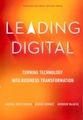
Digital Masters are the organizations that use digital technologies to work differently. They employ strong digital and leadership capabilities to get closer to their customers, empower their employees, and improve their business processes. When organizations attain digital mastery, they show a clear performance advantage. Digital Masters are significantly more profitable than their competitors and have greater achievement, more money for investment, and more engaged employees. The benefits to digital mastery are great, but many organizations struggle to adopt and use digital technology. By following the step-by-step guide detailed by George Westerman, Didier Bonnet, and Andrew McAfee in Leading Digital, executives can successfully transform their organizations into Digital Masters.
In today’s rapidly changing business environment, organizations that know how to successfully utilize digital technologies show greater profit, performance, and productivity. The roadmap to digital mastery includes the following components:
Create a compelling customer experience. The most visible aspect of digital capability is how an organization engages with its customers. Organizations must go beyond their traditional websites and mobile apps to change their customers’ experiences. To do this, they must follow the four levels of digital mastery, transitioning from Beginners, Fashionistas, and Conservatives to Digital Masters.
Reinvent business models. Digital Masters have an advantage over their competitors because they rely on new business models, such as reconfiguring delivery methods, creating new products, and reinventing entire industries.
Craft a digital vision. Vision is what sets an organization’s aspirations, and Digital Masters create visions that focus on customer experiences and operational processes.
Engage the organization. A vision cannot become a reality without energized employees. Digital Masters use distinctive engagement strategies to get employees excited about digital transformation.
Govern the transformation. Once vision and engagement are in place, organizations need governance to keep transformation on the right track. Digital Masters use committees, leadership roles, and shared digital units to provide strong governance.
Build technology leadership capabilities. Keeping a transformation moving forward requires a strong relationship between an organization’s business and information technology leaders. By fostering these relationships, Digital Masters encourage cultures that continually create valuable digital transformation opportunities.
Frame and fund the digital challenge. Creating a digital advantage takes effort. Digital Masters put in the effort by building awareness, understanding the starting point, and crafting a vision — then aligning the senior executive team around it and funding the transformation.
Sustain the digital transformation. It can be difficult for an organization to keep its transformation going. Digital Masters sustain transformation by building foundation skills, aligning incentive and reward structures, and continually monitoring progress.
To learn more, please visit http://www.bizsum.com
Jerry Eonta
.
Blog
.
<span class='date ' tip=''><i class='icon-time'></i> Sep 25, 2015 01:08pm</span>
|
|
Imagine if every person acted like a lady or gentleman…..
Etiquette Tip: Ladies and gentlemen are are caring when in leadership roles.
The moment you become a leader, you not only have to manage processes and projects—you have to manage relationships. While it’s easy to lose sight of your employees in the midst of day-to-day operations, you should take time to connect with your team. Your relationship with your personnel can greatly impact productivity and employee engagement. Learning about employees, letting them know that they are important and that their contributions are valuable will help motivate and inspire your team. At The Ritz-Carlton, our Employee Promise recognizes that our employees—referred to as our Ladies and Gentlemen—are our greatest resource in our commitment to service excellence. When leaders at The Ritz-Carlton show genuine care, they are modeling the genuine care expected of all of our Ladies and Gentlemen. In addition, by caring and engaging with staff they can better fulfill the Employee Promise of "[nurturing] and [maximizing] talent to the benefit of each individual and the company." ∞
The motto of The Ritz-Carlton is "We are Ladies and Gentlemen serving Ladies and Gentlemen." This motto sets a tone of goodwill and grace for all.
The Blog Post Etiquette & Engagement: Caring appeared first on The Ritz-Carlton Leadership Center.
Diana Oreck
.
Blog
.
<span class='date ' tip=''><i class='icon-time'></i> Sep 25, 2015 02:07am</span>
|
|
ELearning course development requires you to borrow artifacts and intellectual material from the Internet all the time. This includes linking to external resources. But, can you use them without attributing the original author or the materials you have borrowed?
Definitely not! In this article we demonstrate three scenarios of fair use of copyright materials.
As subject matter experts in our departments or as training managers, we have a substantial amount of knowledge to share. With the passage of time we accumulate a lot of working knowledge as well as passive knowledge that needs to be shared within the organization.
Before you think of the topic of your next course, know that your knowledge can only be credible if you offer verifiable sources that agree with your statements in the course.
A course is a series of statements that need to be valid, accurate and current. Simply developing a course using content from different resources is not enough. And if you do use multiple resources, you need to practice legal citing and attributing practices for all copyrighted works.
This includes images, graphics, content, audio and every imaginable multimedia that supports your course. As an eLearning developer, you need to know about the various copyright and public domain intellectual works available for your use in your courses.
Needless to say, these resources will not only save your time and money (you won’t need to hire graphic artists to create images and photographs to support your eLearning content) you will also be able to earn trust and credibility as an eLearning developer. The key is to be able to integrate the relevant intellectual property in your eLearning course using appropriate citation and attribution methods.
According to Burgunder (2011), "Intellectual Property can be defined as something owned by a person or an entity. There is both tangible (physical) and intangible (intellectual) property and both are just as important and legally binding."
Most of the time we get images from Google, with a sinking feeling that we might be stealing someone else’s work. Watch the video Copyright and Fair Use: Education, Digital Media, and Beyond - Live Workshop, and you will know that this feeling is not wrong!
There are several intellectual property resources available in the Creative Commons websites that enable the usage of intellectual multimedia with recommended methods of attribution:
1. Attribution
2. Attribution - Share alike
3. Attribution-NoDerivs
4. Attribution-NonCommercial-ShareAlike
5. Attribution-NonCommercial
6. Attribution-NonCommercial-NoDerivs
When using artifacts from these resources, be sure to attribute them in your eLearning courses according to the instructions provided in the logo. Sometimes you may come across material that says it is free of copyright, but that is very rare.
Copyright free implies that the multimedia artifacts have been made available for public use in any way (commercial or educational) without any restrictions. These resources typically fall in the Public Domain.
Sometimes the author still wants you to attribute them when using their copyright free works. Go through the above mentioned six methods of attribution in the Creative Commons website to learn more.
When creating eLearning courses for your organization or training institute, you are, without any doubt, using artifacts for both educational and commercial purposes. This means that you hope to make a profit off of your educational materials.
Using intellectual property without the correct permissions and attributions will get you and your organization into a lot of legal trouble. Copyright holders reserve the right to sue you with hefty penalties for using their intellectual property without their permission.
Most organizations do not have memberships with stock-free image websites so that multimedia avid eLearning developers like you can integrate elements in your lessons and assignments without worries. For these reasons, you need to educate yourself and your learners about copyright restrictions and rules when using them within your eLearning environment.
Many educators and eLearning developers naively think that as long as they are not "selling" any intellectual property, they are not infringing any intellectual property boundaries. The use of an online element is truly a situational decision. It has a lot of variables that need to be figured out before using the artifact appropriately.
Let us look at some examples of how you can use online resources to create compelling eLearning courses. The following are the three examples of resources to be used in an eLearning environment and to be attributed as per licensing requirements of Creative Commons (if available). Notice our rationale behind the fair use implementation in each scenario.
1. Introduction to Databases
Source: MERLOT
Copyright: Yes
Creative Commons: Unsure
Fair use method: This is a Stanford University MOOC that is freely available. I plan to register in this course to access notes for teaching my own database class at Higher Colleges of Technology. I plan to use this course for educational purposes only. When developing power point notes or eLearning modules I will attribute this resource in the references section the following way: Wisdom, Jennifer. Introduction to Databases [PDF]. Retrieved from Stanford Web site: https://lagunita.stanford.edu/courses/Engineering/db/2014_1/about
2. Leadership image for the course Fundamentals of Leadership.
Source: Flickr
Copyright: No
Creative Commons: Some rights reserved: share
Fair use method: Attribute the author of the image with link to the webpage containing this image.
3.Marketing image for the course Technology Based Marketing.
Source: Flickr
Copyright: No
Creative Commons: Some rights reserved: share and adapt.
Fair use method: Attribute the author of the image with link to the webpage containing this image.
The post 3 Examples that explain Copyright Policies for eLearning Developers appeared first on TalentLMS Blog.
John Laskaris
.
Blog
.
<span class='date ' tip=''><i class='icon-time'></i> Sep 24, 2015 08:36am</span>
|
|
You’d be hard-pressed to swing a piece of milk chocolate bacon on a stick or fling a handful of pulled pork mash (?) at the State Fair of Texas without knocking down another fair-goer a few bites into eater’s remorse. The Texas Department of Agriculture wants to highlight the state’s produce bounty at 2015 State Fair of Texas, but also encourage healthy eating when rumbling tummies return home. Houndstooth and Enspire deployed interaction design chops to help friends Blue Genie Art Industries build the TDA booth. Take a peek, and join us at the Fair to give the Seasonality Wheel a spin!
The post Interaction Design @StateFairOfTX appeared first on Enspire.
Bjorn Billhardt
.
Blog
.
<span class='date ' tip=''><i class='icon-time'></i> Sep 23, 2015 12:37pm</span>
|