Blogs
|
If you have worked with people for any amount of time, you’ve probably figured out by now that every person [...]
The post Is Your Communication Style at Work Effective? appeared first on .
ej4 Blog
.
Blog
.
<span class='date ' tip=''><i class='icon-time'></i> Oct 13, 2015 07:32am</span>
|
|
Imagine it's the end of a long, important sales process. Your buyer has given you the verbal 'yes' to buy, but he has to deliver a summary of the value proposition case—why he's made the decision to move forward with you—to his peers and the board of directors. And no, you can't attend the meeting and speak alongside him. He must make the argument himself, and it has to be good.
If you want buyers to be armed with the best material to make this case, first you must be able to make it to yourself.
The most successful sellers make the value case to themselves as powerfully as possible—before getting buyers to believe in it just as strongly. Making the value proposition case is straightforward if you ask the following questions.
Related StoriesThe 4 Buyer Mindsets: Who Will Buy and Who Won'tWant to Win Your Next Big Sale? Win Lab It4 Examples of Big Plays to Help You Win Major Sales and Grow Accounts
Rain Selling
.
Blog
.
<span class='date ' tip=''><i class='icon-time'></i> Oct 13, 2015 07:30am</span>
|
|
I’ve just returned from four days at Helitech 2015 - Europe’s largest exhibition for all things rotary. The GP Strategies’ EMEA Professional and Technical Solutions (PTS) team demonstrated virtual and augmented reality technologies. We showcased both our Technical Publications and Digital Learning Solutions capabilities. So what was the common thread linking these two disciplines? We have been able to bring the technical reference manual to life by incorporating interactive 3D models through augmented reality (AR) and providing real added value both as a training aid and as a maintenance asset.
Helitech 2015 demonstrated that the ability to overlay digital information onto a live video source is increasingly impacting a range of sectors. A significant number of show exhibitors were from the surveillance space. Attendees saw everything from gimballed camera turrets that can be mounted on any airborne platform and a micro UAV (Unmanned Aerial Vehicle or drone) to search and rescue helicopters. Augmented reality allows the superimposition of real time data, either from on-board instruments or GPS mapping, providing the operator with enhanced information.
Outside of the aerospace sector, augmented reality is becoming an increasingly important technology associated with the proliferation of video sources, from the smartphone to wearable technology. Increasingly, video recording devices are being incorporated into the workplace - as part of the police uniform, on borescope inspection appliances, or as part of the surgeon’s head wear. I’m convinced that with this growing access to video imagery in the workplace, opportunities to enhance learning experiences, provide mentor support and assess on-the-job performance are significantly improved.
Where it is impractical to gain access to the live environment for cost or safety reasons, the ability to create virtual worlds provides an effective supplement to on-the-job training. Increasingly, manufacturers are able to source 3D/CAD models of their product ranges. These provide the learning designer with a rich asset around which to build simulations, interactive tasks and even games. When these virtual environments are combined with the physical control devices operators routinely use, learning outcomes increase significantly.
We all recognise the importance of bridging the gap between classroom training and workplace learning. These emerging immersive technologies are now reaching a maturity that enables them to be considered a realistic and cost effective addition to learning organisations’ toolsets.
GP Strategies
.
Blog
.
<span class='date ' tip=''><i class='icon-time'></i> Oct 13, 2015 07:29am</span>
|
|
Often the people who need to use government services the most are those who find it the hardest to do so. They don’t want to interact with us - they have to.
Joanne Schofield - content designer, DWP
I’m a Content Designer with the team building the digital Personal Independence Payment (PIP) claim, a benefit for those who have difficulties as the result of a health condition or disability.
We want to make the digital PIP claim as effective as possible and I make sure what we write meets the needs of the users clearly, simply and quickly. If you’ve seen the existing paper application form for claiming PIP, you’ll appreciate this is no mean feat.
I recently joined our user researcher, Simon Hurst, at Sense, a national charity that supports people who are deafblind. Deaf-blindness is a combination of sight and hearing loss that can affect a person’s ability to communicate, access information and get around. There are about 250,000 people who are deafblind in the UK, many with varying degrees of vision or hearing.
We met with five deafblind users to get their views on how we could improve our latest version of the digital PIP claim.
The importance of assistive technology
This was my first user research session with people with sensory impairments and it was clear that assistive technology can massively affect the quality of life and independence of its users.
There are a range of innovations - that magnify the screen, change the screen colour, read the page content aloud - to make it easier. These technologies are going a long way to minimise the frustrations of using a computer and going online for many people.
We asked our users to look at the latest version of the digital PIP claim using laptops that were available in the Sense office.
A screen from the prototype digital PIP claim tested with users at Sense
Although assistive technology was available on each machine, it became clear that the unfamiliarity of the browser, the size of the screen and the layout of the keys all had a significant impact on the usability of the laptop for our users. At our next session at Sense we will encourage users to bring their own, familiar devices.
Using assistive technology
The way the users interacted with our digital service varied. Marcus and Atif had helpers who would read the content of a page out or type for them; Steven and Margaret relied on screen readers; Norman, Marcus and Atif used screen magnifiers; Atif had a hands-on sign language interpreter (he would touch the interpreters hand to understand what was being signed); and Marcus would print a page out, memorise the order of the questions, hand-write the answers, before then completing it online.
Whichever approach they relied on, it was apparent that completing a transaction online can be a long process and exhausting for both the user and the helper or interpreter. Regular breaks need to be taken. We’re developing a ‘save and continue later’ function for the digital claim which we hope will make this easier.
Joanne Schofield and Simon Hurst from the Digital PIP Claim team
The session also highlighted that not all assistive technology interacts the same way with our webpages. The pages worked well with one screenreader but less so with another, so we’ll be making sure we work closely with experts in assisted technology to understand the differences better. And, we’ll be testing the online journey with as many different types of assisted technology as possible.
The impact of second or third languages
The session was my first experience of seeing hands-on signing. There are roughly 150,000 people in Britain who use British Sign Language and it’s the preferred language of 50,000 to 70,000.
English was the third language of Atif, after sign language (his first) and Urdu. So he had to translate everything through two other languages before being able to gain any understanding of what the digital claim was asking of him. When trying to explain something as important as his quality of life, it became apparent how draining and frustrating this would be.
Making services clear, simple and accessible
So, we’re going to go back on a regular basis and work more closely with Sense (and other organisations that support people with health conditions and disabilities).
We need to make the digital PIP claim - and all government services - clear, simple and accessible to all, especially for those who find our services the hardest to use. This won’t just make our services quicker and easier for all our users, but for many, it’s essential.
DWP Digital
.
Blog
.
<span class='date ' tip=''><i class='icon-time'></i> Oct 13, 2015 07:27am</span>
|
|
Hi, my name is Hayley Goldthorpe and I've just joined DWP as a Business Analyst (BA). During my first week at DWP I had the opportunity to attend the BA Academy in Leeds. This gave me the perfect opportunity to find out a bit more about how DWP approaches business analysis and meet some of the other BAs across government services. People came from the DVLA, HM Treasury, and the Health and Social Care Information Centre.
The role of a Business Analyst
The Academy kicked off with an overview of business analysis and working on digital projects. We discussed our own experiences within the role and what we thought were some of the key elements of being a BA.
Richard Knight, Head of Role for Business Analysts
This was followed by a presentation from Richard Knight, the head of role for BAs. It was interesting to learn more about the direction Richard wants to take the profession within DWP, with an aim to create a community across the Department sharing knowledge, experiences and learning. This is great news for me being new to the team - I think it will make it so much easier to connect with others.
During the three-day Academy we had the chance to hear from a user researcher, technical architect, quality assurer and developer. They spoke about their roles within a project team and how they would interact with a BA. I learnt about the ‘three amigos’ process, which is a discussion between the BA, developer and quality assurer to ensure the user stories are well formed, provide context and also give the opportunity to clarify any points ready for sprint planning.
Learning by doing
Throughout the presentations we took part in activities, putting what we had learnt into practice. We were provided with some user research, based on a real-life project, which we discussed in groups to get a feel for the business and user needs. We then had a go at creating some user stories based on this information - our work has also been given back to the project team which I felt made the exercises more valuable.
After working on the user stories we identified our acceptance criteria using "Given, When, Then." We also had a go at writing some code and test scripts, resulting in a web page.
Get involved
The BA Academy was great and I would definitely recommend it to other BAs or even those people that want to find out more about business analysis and a career as a BA.
We would like to hear from BAs in other government departments or agencies. Get in touch with Jon Osborn or Rob Banathy and register your interest for a future BA Academy event.
DWP Digital
.
Blog
.
<span class='date ' tip=''><i class='icon-time'></i> Oct 13, 2015 07:24am</span>
|
|
Introduction:
Lookup columns are a quick and easy way to reference data residing at a single point from multiple locations in the same site, without having to recreate the source.
One such case is a scenario of a custom list with list items primarily enticing with images. It becomes just so irresistible to be able to use images from this list into another. Another example could be referring to Wiki pages from the Wiki Page library. While in the former case the OOTB reference however fails to render the graphic, in the latter, if you ever had to do it, you’d know what it means - the default reference is nothing more than a seemingly encrypted text termed as Doc ID not even remotely indicating the page name. These are not the only scenarios, but I believe most of the situations one might come across can still be related to either of the two.
Scenarios:
The situation is not so heart breaking though. While, the OOTB capability limits the extensibility of its application, a little coupling with SharePoint Designer has been verified to have significant impact on the magnitude of its reference.
Starting from the basics of using lookup columns, this series of articles will highlight workarounds using the SPD with minor tweaks in the structure of reference lists and dependent lists that lookup. Here we deal with two scenarios - first referencing images, and the second referencing wiki pages. The approach to both of the discussed cases can be termed generic and attempted to be applied to a myriad of situations.
The following articles sequentially deal with both of the scenarios discussed above. In the given scope, our environment is limited to SP 2013 or Online, however not ruling out the possibility of such extensions in lower grades of SharePoint. In both my solutions, a terminology that I’d be frequently using is calling the source list which is looked up as Reference List and the other list which looks upto the former list will be called Dependent List.
Look for my subsequent posts on:
How to display images in dependent lists
How to make Wiki Page references to dependent lists
Netwoven
.
Blog
.
<span class='date ' tip=''><i class='icon-time'></i> Oct 13, 2015 07:21am</span>
|
|
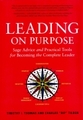
Many businesspeople today grasp the intricacies of their industries, but they fall short in knowing how to lead their people to get their jobs done effectively. In Leading on Purpose, Timothy I. Thomas and Charles "Rip" Tilden focus on helping leaders and managers develop the sophisticated people skills they need to supplement their technical and organizational skills. Drawing on authoritative research, the authors cover topics ranging from different leadership styles to conflict resolution to change management.
According to the authors:
Leaders have two types of power: Positional power, which stems from their positions within their organizations, and personal power, which flows from their qualities as individuals.
There are five basic leadership styles: bureaucratic, supportive, directive, traditional, and collaborative. Leaders should generally strive to use the collaborative style, which shows high levels of concern for both people and production and strives to foster employee satisfaction rather than basic employee happiness.
Leaders must have effective business strategies, or basic statements of the value their organizations intend to create. Business strategies should be SMART: specific, measurable, achievable, relevant, and timely.
A leader’s most important skill is to be able to communicate effectively. This includes articulating a vision, connecting with people to promote understanding, and listening to really hear what people have to say.
Employee disengagement is a major problem in the United States. Disengaged employees show little commitment to their companies’ futures and complain often. Motivating people depends on understanding the hierarchy of human needs, which includes basic needs, security needs, belonging needs, ego-status needs, and self-actualization needs.
Feedback is a powerful tool for improving employee engagement and performance. The most critical element of the feedback process is the opening statement, which should be descriptive and not judgmental.
Workplace conflict is unhealthy if it involves strong emotions and is disruptive to productivity and morale. In resolving conflicts, thoughts must be distinguished from feelings, and wants must be distinguished from needs.
To learn more, please visit http://www.bizsum.com
Jerry Eonta
.
Blog
.
<span class='date ' tip=''><i class='icon-time'></i> Oct 13, 2015 06:37am</span>
|
|
One might think that in this era of Emotional Intelligence and sensitivity training, we’d have somehow learned to be nicer to one another on the job, but that doesn’t seem to be the case. Incivility and all-around rudeness are on the rise and they’re affecting our health, wellbeing, and even our job performance. So claims a recent article in the New York Times by Christine Porath, "No Time to Be Nice at Work."
What behaviors are we talking about?
In particular, it’s the behaviors of bosses that cause the most harm. This is hardly surprising, since bosses generally wield unequal power to behave abusively toward others, while underlings often lack the status to complain or "fire back." And bosses’ incivility can pollute the workplace environment in ways that peers’ behaviors can’t.
Some common uncivil boss behaviors Porath cites are walking away in the middle of a conversation, taking phone calls during meetings, berating others by pointing out their flaws in front of others (both in person and via email), taking credit for "wins" while blaming others for "losses," and generally behaving abrasively as a way of demonstrating power or forcing compliance.
What’s the harm?
Clearly, no one likes to be treated rudely, but does incivility cause any real and lasting harm in the workplace? According to Porath’s research, yes.
First, there are the health effects. Intermittent stress—such as being yelled at randomly and sporadically—raises our glucocorticoids, which can lead to a wide range of health issues. In one ten-year study, stressful jobs were found to increase the likelihood of a cardiovascular "event" by 38 percent.
Belittling also leads to worsened job performance, presumably not the effect intended by those who do the belittling. In one study, subjects who were belittled before testing performed 33 percent more poorly on anagram puzzles and 39 percent more poorly on creative brainstorming tasks than peers who were not. Even those who merely witnessed incivility had a marked drop-off in performance.
Rudeness affects businesses in other ways, too. Customers are less likely to patronize a business where an employee is perceived as being rude—regardless of whom the rudeness is aimed at.
In medical settings, incivility can have even direr consequences. In one survey of over 4,500 medical personnel, 71 percent stated that they believed rude, condescending, and/or insulting behavior led to medical errors; 27 percent reported it sometimes led to deaths.
So why do we do it? Why are we so [bleeping] rude?
When Porath asked hundreds of employees across seventeen industries why they were rude, two of the most common responses were that people felt "overloaded" or didn’t believe they had the time to be nice. (But does it really take more time to be nice than to be rude?)
Probably the greatest reason many of us are reluctant to be nice is that we fear our niceness will cost us. Perhaps others will perceive us as less leader-like. Perhaps we’ll be taken advantage of or will fail to rise in the organization.
Civility, not abrasiveness, is the mark of leaders
But those fears seem to be way off base. Bottom line: civility rules. A cornerstone of the PRES model is empathy, one’s ability to reach out and build authentic relationships. Studies show that politeness and regard for others leads to a greater, not a lesser, likelihood of being viewed as a leader. Civil behavior leads to perceptions of warmth and competence, two traits that account for more than 90 percent of our impressions—positive vs. negative—of others. Those impressions, in turn, determine whether people trust us, like us, and are willing to follow us as leaders.
Turn it around in big and small ways
So give up the rudeness rationalizations. You do have time to be nice. Turn the dial up on the small things, like smiling and thanking others.
Work on your listening skills. This means ignoring the text conversation and giving your full attention to a live human being.
If you’re a manager, stop looking for reasons to bark at people. Look, instead, for opportunities to "catch people in the act of doing right." Build your people up, don’t tear them down.
Perhaps you’ve heard this Hollywood admonition: be kind to the people you meet on the way up; you’ll meet the same people on the way down. If you’ve been rude or belittling to others, there will eventually be payback. Why? Because people tend to harbor deep memories of humiliation. On the other hand, if you’re thoughtful and civil toward everyone, people will look for opportunities to return the favor.
The post Be Nice! It Pays appeared first on Ariel Group.
Related StoriesClaim It until You Make ItHow to Influence Without AuthorityExpress Yourself!
Sean Kavanagh
.
Blog
.
<span class='date ' tip=''><i class='icon-time'></i> Oct 13, 2015 06:37am</span>
|
|
The conference room is jammed with a hundred new volunteers. It’s 2004, and I’m a program director for one of the largest nonprofits in Los Angeles. As I deliver the final words of my orientation talk, my voice pops with emotion. The volunteers cheer wildly. That’s when I notice the CEO at the back of the room. He is a reserved type of leader, and I can tell he has something to say. I’m worried he might have perceived my presentation as over the top. I feel a slight tightness in my throat as the volunteers file out of the room, gabbing excitedly.
"The buzz around the office is that your presentations always leave volunteers enthusiastic to get involved," says the CEO. "I came to see for myself. Now I know why. Good job, Brian."
How did I get volunteers so excited? Simple: I openly expressed my passion for the organization’s work. In the business world, many of us believe that being expressive—allowing our faces, our voices, and our body language to convey authentic emotion—will be viewed as unprofessional. In fact, expressiveness can be one of your biggest business assets. Here are four reasons expressiveness works:
Engages your audience
You’re probably familiar with the actor Ben Stein. Whether droning the tagline, "Clear Eyes. Wow," or portraying the sleep-inducing economics teacher in Ferris Bueller’s Day Off, he has made a career out of speaking in a lifeless monotone. For most of us, though, dull and boring is not the ticket to getting noticed.
The truth is that an audience is only as engaged as the speaker. If you are not moved or excited by the material you are presenting, your audience won’t be either. That’s why it’s crucial to look for opportunities to be more expressive, not less so. Change up your vocal variety—make your voice softer to draw your audience closer or louder to shake them up a bit. Inject passion into important points. Use pauses to build tension. Get your body involved. In short, don’t be the Clear Eyes guy.
Expressiveness grabs an audience’s attention and holds it—which means they’re absorbing your message, not thinking about that email they need to send.
Helps to create clarity
Have you ever been misunderstood? It’s likely because your body language or tone didn’t match your words. Dr. Albert Mehrabian, author of Silent Messages, concluded in his research that only 7% of the meaning of any message is conveyed through the words. Vocal elements, such as pitch and tone, shape 33% of the perceived meaning, while about 55% is conveyed through nonverbal elements, such as facial expressions and gestures.
People want to understand what you are saying. So they look for nonverbal cues. A frowning doctor communicates a different message from a smiling one, no matter what words he chooses. By expressing emotion to clarify your meaning, you help listeners better understand what you’re saying.
Imagine your boss telling you in a flat, emotionless tone, "This quarter’s results are really interesting." You’re left wondering, Interesting/bad or interesting/good? But if that same leader delivers those words with a lilt in her voice and a playful smile on her lips, you breathe a sigh of relief, knowing she means, Interesting, this could really propel our business forward! Clearer emotion, clearer meaning.
Helps your audience retain information
Think about your days back in the classroom. Which teachers made the most lasting impressions on you? Probably the ones who made learning fun. Why? Brain research suggests that fun aids long-term memory. Neurologist and educator Judy Willis finds in her book Research-Based Strategies to Ignite Student Learning: Insights from a Neurologist and Classroom Teacher that "the highest-level executive thinking, making of connections, and ‘aha‘ moments, are more likely to occur in an atmosphere of ‘exuberant discovery.’" There’s no doubt that an expressive speaker creates far more exuberance in an audience than a dull one. Express more and your audience will retain more.
Allows you to stand out
Let’s face it, there are thousands of people out there with job titles and qualifications similar to yours. So what’s the "it" factor that can help you stand out from the pack? Your expressiveness. When you express your true emotions in your trademark way, you become a unique and specific individual in the minds of others, not just a face in the crowd. You acquire a personality and flavor all your own. You become indelible in others’ memories.
It all boils down to this: when authentic emotion arises during a presentation, don’t suppress it; show it! Let your passion, your caring, and your excitement shine—in your face, in your voice, in your body.
By using expressiveness in my nonprofit job, I conveyed enthusiasm for my organization’s work, and volunteers became engaged and energized. I also stood out to my co-workers and CEO, who didn’t realize they had the freedom to do the same.
Connect with the hearts and minds of others, and you’ll be a highly sought commodity in whatever field you’re in.
The post Express Yourself! appeared first on Ariel Group.
Related StoriesClaim It until You Make ItPolitical Debates: Where Presence Speaks Louder Than WordsBe Nice! It Pays
Sean Kavanagh
.
Blog
.
<span class='date ' tip=''><i class='icon-time'></i> Oct 13, 2015 06:36am</span>
|
|
...
E Ted Prince
.
Blog
.
<span class='date ' tip=''><i class='icon-time'></i> Oct 13, 2015 06:35am</span>
|