Blogs
|
Preparing my costume and going door-to-door asking for candy was fine. But the real fun came at the end of the night: dumping all the loot onto the living room floor and sifting through it with my sister while evaluating our treasures.
First, we sorted the candy into piles of like treats: chocolates, hard candy, chewy, etc. But wait! What about the crossover candies like lollipops with gum in the center? Re-categorized and sorted again, this time by sizes, shapes, and colors. (Am I the only one who loved doing this?) Once sorted to satisfaction, the prioritization began. Which is better? Whoppers, Bottle Caps, candy cigarettes? (It was the 1970s.) No, I don’t want the raisins either. Put them in the give-away pile.
Perhaps this is where I first learned to gather, sort, chunk, and prioritize content for learning experiences. Here are four of the most important lessons I learned.
The Candy Lessons
Gather the goods. Whether it’s candy or content, before you can sort it, you have to collect it. Some houses - er SMEs - have better goods than others. Some give more generously. And some give rocks. But you won’t get anything unless you prepare adequately and ask the right questions. Often an SME doesn’t know what you need. It is up to you to suit up and ask for what you need.
TIP: Do your research. Be prepared with the right questions.
Evaluate the bounty. Review all the content. Sniff out any cyanide-laced Pixy Stix and check for razor blades. An SME may not realize that a simple copy-and-paste is actually plagiarism or that they’ve introduced errors in their haste. Don’t let their mistakes end up in your course.
TIP: Perform an internet search for phrases that seem either particularly well-turned or stand out as different from the other writing. Ensure your work is clean.
Sort and chunk. Source content often comes as a hodgepodge of presentation slides, speaker notes (if you’re lucky), articles, and interviews with SMEs. Rarely is it well organized when received. Often it is even difficult to assess whether the content is useful for meeting the performance objectives. So dump it all out and begin figuring out what you have. Do you have two versions of the same presentation? Which one is most current? Are you missing information? Do you have a lot of company history info and not enough about how to use the product?
TIP: Organizing the content allows you to assess what you have and what’s missing.
Prioritize. Next, determine what’s most important. What content is "need-to-know" versus "have-to-know." Weed out what you don’t need. Did someone give you raisins? If it doesn’t support the performance objectives, out it goes. Whittle the "keep pile" down to what is most important to meet the training objectives.
TIP: SMEs often have a hard time letting go of "nice-to-know" training. Consider putting that information in a resources section for learners to access outside of the actual training.
With initial analysis done, you can add just the right candy into your design and scripting process.
Enjoy your treats!
The post Sort, Chunk, and Prioritize your Content Candy appeared first on Enspire.
Bjorn Billhardt
.
Blog
.
<span class='date ' tip=''><i class='icon-time'></i> Nov 30, 2015 08:42pm</span>
|
|
Rummaging through old files today, looking for a photo of Jay Cross and me from 2005… I still can’t find it. But I found many documents exchanged with him over the years, including a slide deck containing this:
Jay definitely thought differently while he was here. I began following his Internet Time site in the 1990. So many "a-ha" moments found there. Most CLOs still need to read his Informal Learning book from 10 years ago. He’d recently launched The Real Learning Project, using Google and Dropbox files for massive, collaborative input.
Jay was a constant and generous giver of all that he knew and envisioned. After 20 years as an avid follower, I find it difficult to imagine the training and development industry without his thought leadership and community guidance.
For more remembrances on this remarkable man, see: Tributes to Jay Cross
The post A Pioneer Passes appeared first on Enspire.
Bjorn Billhardt
.
Blog
.
<span class='date ' tip=''><i class='icon-time'></i> Nov 30, 2015 08:41pm</span>
|
|
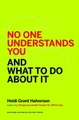
Individuals are often misunderstood by others, despite what they consider to be their best efforts to communicate clearly. This disconnect can create many issues, both in the business world and in an individual’s personal life. At the heart of the problem is the fact that many people are unable to accurately see themselves as others see them. They simply do not know how they are perceived, so they cannot make adjustments to present their true selves. In No One Understands You and What to Do About It, Heidi Grant Halvorson explains the unconscious drivers behind the misperceptions people have about one another and provides a practical guide to making sure the impressions individuals make are exactly the ones they want to make.
Halvorson provides readers with the following advice:
Misperceptions are predictable. While the way people judge other people may seem random, there are actually common thought processes underpinning these judgments, including biases, assumptions, and stereotypes. Understanding this is the first step in changing others’ perceptions.
Individuals do not see themselves as others see them. People tend to mistakenly assume others have the same view of themselves as they have. In fact, people are very complex and can be difficult to understand. It is more typical for others’ views to be quite different from one’s own.
First impressions are long-lasting impressions, and that can be detrimental. It is very difficult to overcome a first impression. Subsequent views of a person typically build on and confirm that first impression. This unconscious way of thinking thwarts people’s ability to change their opinions about someone else over time.
Overcoming biases and assumptions takes work. Biases and assumptions are largely unconscious and are part of Phase 1 thinking, which is automatic and used most of the time. Phase 2 thinking, which produces analytical thoughts, takes conscious effort and is more difficult to carry out.
To learn more, please visit http://www.bizsum.com
Jerry Eonta
.
Blog
.
<span class='date ' tip=''><i class='icon-time'></i> Nov 30, 2015 08:40pm</span>
|
|
Sometimes life’s circumstances are out of people’s control. However, how individuals think, feel, and behave as a result of those circumstances is very much within their control. It is simply a matter of learning to think, react, and respond in positive and productive ways. In Mind Gym, authors Sebastian Bailey and Octavius Black share scientifically based exercises and techniques anyone can use to train the mind to think positively and productively, including resetting thoughts, taking control, deepening connections, persuading others, resolving conflict, letting creative juices flow, and minimizing stress. The result is a more successful, fulfilling life.
Mind Gym provides techniques individuals can use to control and change their thoughts and actions in order to have more successful lives:
Resetting the mind from automatic thinking to conscious, attentive, optimistic thinking.
Taking control of actions and overcoming procrastination.
Deepening connections with others and adopting an "I’m Okay/You’re Okay" mind-set.
Persuading others in order to enhance personal relationships and achieve objectives.
Resolving conflict by breaking destructive communication patterns, engaging in authentic dialog, and removing drama from relationships.
Letting creative juices flow to accentuate inspiration and innovation.
Minimizing stress in order to maximize bliss.
To learn more, please visit http://www.bizsum.com
Jerry Eonta
.
Blog
.
<span class='date ' tip=''><i class='icon-time'></i> Nov 30, 2015 08:39pm</span>
|
|
In Yes, And, The Second City executives Kelly Leonard and Tom Yorton describe how the fundamentals of great improvisational comedy and can be applied to business. Tapping into their years of experience running the theater troupe responsible for some of today’s biggest comedy superstars, Leonard and Yorton provide leaders with a guide to using improv skills to increase their employees’ engagement and innovation output. In order to master successful improvisation, leaders must enable their employees to say, "Yes, and…" to new ideas and work as ensembles by eliminating their fear of failure.
According to Leonard and Yorton:
Leaders must embrace the fundamentals of great improvisation. By promoting the values of creativity, communication, and collaboration, organizations can improve their employee engagement, innovation output, and customer relations.
As organizations start to improvise more, they must affirm and build upon employees’ ideas. When organizations take the ideas their employees put forward under serious consideration, they embrace the two fundamental words of improvisation: "Yes, and…"
It is vital for organizations to promote their teams to work as ensembles. To work together as effective ensembles, employees must learn how to put their teams’ goals ahead of their own personal glory.
Co-creation is a powerful tool that takes improvisation to the next level. Just as improvisers take creative suggestions from other performers and audience members, organizations can improve their final products by involving their customers in the creative process.
Failure must be viewed as part of the creative process. By acknowledging that failure is not the opposite of success, organizations can produce more cutting-edge innovations.
Everyone in an organization must learn to listen deeply. Leaders can broaden their employees’ perspectives and increase their creative output by teaching them to listen for the sake of truly understanding others-not just responding.
To learn more, please visit http://www.bizsum.com
Jerry Eonta
.
Blog
.
<span class='date ' tip=''><i class='icon-time'></i> Nov 30, 2015 08:39pm</span>
|
|
In The Like Switch, former FBI Special Agent Jack Schafer and author Marvin Karlins offer proven techniques for reading people, developing mutually beneficial friendships, and influencing how people are perceived by others. Spanning both verbal and nonverbal communication cues, the authors educate readers on how to improve their likeability through body language and word choice.
Schafer and Karlins assert that:
There are four main building blocks of friendship that form the basis of the Friendship Formula. This formula states that Friendship = Proximity + Frequency + Duration + Intensity.
Friendly people are like fireflies: They capture people’s attention, even from far away. People see others before they hear them speak, so nonverbal signals are crucial in getting others’ attention and forming first impressions.
First meetings should adhere to the Golden Rule of Friendship in order to set the right tone for future encounters. This rule states, "If you want people to like you, make them feel good about themselves."
The Laws of Attraction govern the likelihood that two people will be drawn together. Using these laws can help enhance relationships, but some of the laws are not designed to work with certain personality types.
Speaking the language of friendship can ensure that friendships are stronger and last longer. The key to speaking this language is encouraging others to speak, listening carefully to what they say, displaying empathy, and responding positively to their comments.
Relationships face many kinds of peril in the digital world; however, digital relationships also have some distinct advantages, including ease of finding common ground and the ability to research others to learn about their interests.
To learn more, please visit http://www.bizsum.com
Jerry Eonta
.
Blog
.
<span class='date ' tip=''><i class='icon-time'></i> Nov 30, 2015 08:39pm</span>
|
|
"This stuff about body language is spot on, really useful," says the English guy in the audience. "But I spend most of my time on conference calls, so I don’t think it applies. Do you have anything about presence on the phone?"
I’m presenting to a group of twenty-five high potential leaders at a large pharmaceutical company in the Boston area. Everyone else in the audience nods their head vigorously at David’s comment.
"Want to try something, David?" I ask in reply. I ask him to turn his chair around, away from the group. "Can you do me a favor and sit in ‘low presence’ in your chair and we’ll improvise a phone call?"
David slumps low in his chair, puts his head back and starts to fidget with his pen.
"Ring, ring!" I say.
"This is David," he replies in a mumble, as if he I’ve just awakened him.
"We’re meeting now, right?" I ask.
"Oh, yeah. Right. Okay. I wanted to talk to you about that spreadsheet you sent last week. I just got to it…and I had some questions…and wait, let me just find it on my desktop (long pause). Here it is. I guess I sort of wanted to hear about the meeting budget for next year and I don’t really know where you got some of these numbers…."
He trails off. He has just done an impression of either a 14-year-old boy or someone who hasn’t slept in several days. His energy is low, his speech is mumbled and qualified and he keeps sighing.
We debrief. I ask the audience how they perceived David’s presence on the improvised call.
"It’s like he doesn’t care."
"He seems really disorganized."
"I wouldn’t trust him with the budget numbers."
I’m always amazed by this; people don’t say, he seems tired or he needs to sit up straight, they instead start to call into question his credibility and even his character.
Now you might say that this is an extreme example. Most professionals do not sit in their swivel chairs like they are at home watching TV. But I have witnessed managers cross their legs and lean back in their chair while they are leading a call and all of a sudden they are talking too much and too long, and a lackadaisical tone has crept into their voice.
I’m a stickler about this for myself; before I dial into the conference line I conduct this 3-point checklist -
Feet flat on the floor.
Sitting on the edge of my chair.
Straight spine.
This 3-point system helps me to breathe more deeply, speak with a stronger voice, and in general keeps me alert and present during lengthy or high-stakes calls.
Try it. It takes a bit of effort at first, but muscle memory takes over pretty quickly. I’m at the point where I automatically adjust my body language as I am dialing. The result is that I show up with more presence and energy for my clients and colleagues, which they translate into credibility and character.
The post Communicating Virtually? Body Language Counts appeared first on Ariel Group.
Related StoriesCommunicating Virtually? Body Language CountsForget WIFM, Try WIFT: The #1 Skill Millennials Need To Get PromotedGroup Presentations: Improving Your Rehearsal Process
Sean Kavanagh
.
Blog
.
<span class='date ' tip=''><i class='icon-time'></i> Nov 30, 2015 08:36pm</span>
|
|
I hate turbulence. For someone who flies regularly, I really am a baby when I’m in a shaking plane. I practice my belly breaths, I tell myself over and over that flying is the safest form of travel. I visualize we are softly bouncing from fluffy cloud to fluffy cloud - and not about to plummet 30,000 feet.
It works most of the time, but I have to work at it.
Recently I was on a flight to Phoenix. We took off in a rainstorm, so I knew what we were in for. And we bounced around for about an hour and a half.
I have to hand it to the captain—he was constantly talking to us, telling us where we were on our schedule, and how the bumpiness would let up somewhere around western New York. He even came on to tell us that we were over Albany and almost out of the woods.
I started to notice my own anxiety ebb as he checked in with us. "This is temporary," I told myself. "We’re almost there." And I had a bit of an "a-ha" in that moment:
If I know that turbulence will end, and fairly soon, I can manage it. If I don’t, I stay in "fight or flight" mode pretty much the entire time.
At a leadership training I was attending recently, the topic of change came up, and how change has changed. It used to be that an organization went through a distinct re-organization because of a merger or market shift and there was a beginning, middle and end to it, and we all hung on because we knew the turbulence was temporary and that it would end.
Now your company can experience multiple changes at once: you can finish a re-org and then enter immediately into another one; the board can acquire another business before you are finished integrating the last business; one-third of your company can resign, leaving you to hire and train new staff; in the meantime, the market is going soft and you have to re-calibrate your product strategy.
The turbulence does not end.
If you’re lucky, you’ve got a captain who is on the loudspeaker telling you exactly where you are in the journey. Maybe they are telling you when things will get better, and if they don’t know, they are trying some new altitudes to take the pressure off the plane—which they are also telling you about.
Do you sense a theme here? One of the first things to break down during change is communication, and if the communication in your company was never award-winning, you probably need to over-communicate. Here are some ideas on how to do that:
For the captain:
CEO - Communicate early and often. If it crosses your mind to share where we are in the journey, press the "talk" button on your P.A. Even if you don’t have good news, at least we’ll all know.
Your passionate purpose should be "to reassure" most of the time - keep that in mind and you’ll have a calm, soothing tone of voice that we will hold onto as we are being rattled.
Thank us for flying. The captain always comes out of the cockpit to say "thank you" as we leave the plane. He’s the one who flew us through the turbulence, but we got through it and he thanks us for doing so. Thank your team members for their work during this trying time.
For the passengers:
Deep belly breaths. The only thing that arrests the "fight or flight" response is more oxygen.
Turbulence won’t cause your business to crash. Going to a doomsday scenario does not help you or your seatmate whose hand you are crushing. Pilots are trained to deal with turbulence. Practice saying "this too shall pass" and keep the faith in your leadership.
Get some context. My husband turns to the air traffic control channel on the handset when things get rough. He hears others calmly landing planes and it calms him. Find out what’s happening in your industry—is everyone experiencing rough skies or is it just you? Might be time to switch carriers if that’s the case.
Whatever you do, don’t bank on a smooth flight. In today’s crowded skies, you very well might hit some turbulence. Have a strategy for managing that uncertainty—and keep your seat belt fastened—so you can sit back, relax, and enjoy the flight.
The post Flying Unfriendly Skies: 6 Ways to Manage Change appeared first on Ariel Group.
CommentsWell done, Kate! Great tips for fliers and leaders, both!! by Joel GluckNicely put, Kate. Perfect metaphor for what we are all looking ... by joshbroderGreat article. Communication is key, it makes you feel part of ... by Pamela De BeerGreat article, Kate. Perfect metaphor for keeping in mind how ... by KennyRelated StoriesHow to Influence Without AuthorityExtinguishing BurnoutBe Nice! It Pays
Sean Kavanagh
.
Blog
.
<span class='date ' tip=''><i class='icon-time'></i> Nov 30, 2015 08:31pm</span>
|
|
The fear of employee burnout can rattle many work environments. With the unpredictable economy, it’s become imperative for companies to strive to keep their employees highly engaged. But, as the New York Times tell us, most employees feel engagement has become synonymous with the forced expectation for them to "go the extra mile." As a result, the possibility of burnout is more imminent than it’s ever been.
What is Burnout?
What exactly is burnout? Most people think stress and burnout are the same thing. You might have thought "I’m crazy stressed out at work! I must be burnt out!" Actually, it’s the opposite.
When you’re feeling a high amount of stress it’s usually because something is too much: Too many pressures, too much demand on you physically and emotionally.
Burnout on the other hand is a result of not enough: Feeling empty, unmotivated, undervalued and basically beyond caring.
Burnout Risk in Today’s Workplace
Employees feel they are expected to "go above and beyond the call of duty." They feel compelled to work longer hours than needed. They feel they’ll get reprimanded if they aren’t always logged on—even on nights and weekends. This "always on" routine will ultimately lead once enthusiastic employees to feel nothing but apathy.
Stress is something many of us deal with on a daily basis. Whether it’s in the workplace or at home—it’s inevitable. It causes us to feel hyperactive, over reactive and anxious.
When you are experiencing the characteristics of burnout, those indicators show up as disengaged, hopeless and detached: A complete lack of passion and motivation. Here is a handy chart to show some other differences:
STRESS VS BURNOUT
Stress
Burnout
Characterized by over engagement
Characterized by disengagement
Emotions are over reactive
Emotions are blunted
Produces urgency and hyperactivity
Produces helplessness and hopelessness
Loss of energy
Loss of motivation, ideals, and hope
Leads to anxiety disorders
Leads to detachment and depression
Primary damage is physical
Primary damage is emotional
How to Avoid Burnout
How can you avoid the feeling of wanting to strap a smoke detector to your head? Here are some ideas for combating burnout:
Understand what makes you tick: The "S" in our PRES model represents self-knowing and this is hugely important when it comes to avoiding burnout. If you’re someone who is usually energetic, creative and quick-witted, and you start to notice a melting sensation in your brain, perhaps it’s time to do a temperature check. By understanding how you function and thrive as a professional, you’ll create greater awareness of when your personality and motivation start to shift.
Find projects that can help you re-energize: A project where you feel more productive or gets your creative juices flowing can help you feel like an important member of the team.
Connect with someone you trust: Individuals should have the courage to approach their manager or mentor and open up about their challenges at work, especially if they feel lost. A good manager or mentor will listen and offer solutions or suggestions to help ease the difficulties.
Remember—it’s a two-way street: Individuals need to speak up when they feel like they’re drowning. And managers need to create an open door of communication and trust. This can lead to easier professional balance and better completion of projects.
Managers: How You Can Help Your Team
I’m not letting you off the hook so easily managers! One of the indicators of burnout is not feeling valued. If managers provide specific, timely praise—allowing the employee to feel valued—it may help to shift the tide. Spontaneous praise can go a long way to make employees feel engaged.
You should also take a note from your direct reports. According to a Towers Watson survey, leaders who demonstrate a healthy work life balance and take a sincere interest in their employees’ emotional welfare, tend to lead more financially successful organizations. "Wait a second Drew, are you saying that if I don’t work nights and weekends consistently, AND allow myself and my team to take that summer vacation my company will make more money?"
Yes person I just made up in my head, that’s exactly what I’m saying.
The study stated that companies with the highest profit margins are those where leadership demonstrated a healthy equilibrium in their careers and personal life. And instilling a trusting and stable environment that allows others to do the same, lead to a more productive and successful outcome financially.
By taking care of your physical and emotional state you will ultimately be your most productive self. Leading to a thriving and successful professional culture and outcome.
The post Extinguishing Burnout appeared first on Ariel Group.
Related StoriesClaim It until You Make ItBe Nice! It PaysFlying Unfriendly Skies: 6 Ways to Manage Change
Sean Kavanagh
.
Blog
.
<span class='date ' tip=''><i class='icon-time'></i> Nov 30, 2015 08:23pm</span>
|
|
As a founder of a startup, I don't have a lot of time to slow down and relax and most days feel like high stakes gambits. So, whenever I have the opportunity, I push myself to go to the gym to disconnect while my batteries recharge. Exercise is both a stress reliever and a way for me to fuel myself to endure the highs and lows of the entrepreneurial roller coaster ride.One of my favorite classes at the gym is Burn, a mix of cardio and strength training, performed in circuits. The intensity level is very high, the pace is fast and there is simply no room to think about anything but getting through the class alive. One of my favorite instructors is Jonathan who teaches an early Saturday morning class. Jonathan comes in the exact package you would expect of a high-intensity fitness instructor - muscular and toned with a lot of energy. However, Jonathan is missing a key skill that I look for in an instructor - he never looks anyone in the eye. The studio at the gym holds about 40-50 people when at max capacity but, on most Saturdays, the class has an average attendance of about 20-25 people. It is a relatively intimate setting and Jonathan leads us from the front of the class, facing the group and expertly demonstrating the exercises we are to perform. While he is going through the routines, he tends to look out into space, always averting the eyes of his students which, for me, continually creates a level of disconnect. Because of the speed of the class and the demands of the participants, I find it off-putting to have the instructor, with whom I am trying desperately to connect to ensure that I am performing the exercises properly, to never connect with me. Without looking me in the eye, I feel like he never sees me and is completely disengaged. And, it is entirely possible that I am the only one in the class that feels that way but I tend to doubt it. Good eye contact is, undoubtedly, one of the most critical skills we employ to make a connection with another person. Looking someone in the eye demonstrates sincerity and authenticity. How many times have you heard or said "look me in the eye when you say that," as a way to provide evidence that you are telling the truth. We use eye contact as a way to ensure that the person with whom we are communicating is listening and engaged. "Look at me when I am talking to you," is a constant refrain when I am talking to my children. When we are presenting to a group of people, we can make each and every person in the room feel like we are attending to them by briefly but consistently making eye contact while sharing a thought or idea. And, we feel like our message is resonating when our audience looks back at us, rather than staring off into space or looking at their mobile device while we are speaking.Admittedly, Jonathan's lack of eye contact is not making me perform any less vigorously in my class and I am still getting a great workout. However, I am less likely to ask him a question or request assistance because I feel like I am invisible to him and his inability to connect visually makes me feel like he is disinterested in my experience. I am sure that is likely not the case for him and, because of what I do for a living, each week I find myself a little bit more preoccupied with what barriers exist for him to look at us straight on. I'm sure he is just a little bit shy and probably much prefers his 1:1 personal training over leading a large group. Yet, for most of the others in the class, they may never give it much more thought and will come to their own conclusions. And those conclusions may keep them from returning to class the following week which is certainly not a good outcome.For now, I am going to keep focused on working hard in my class and will try to encourage him to look at me by continually looking at him while he talks. Perhaps one day he will feel comfortable enough to match my behavior.
Tammy Palazzo
.
Blog
.
<span class='date ' tip=''><i class='icon-time'></i> Nov 30, 2015 07:49pm</span>
|